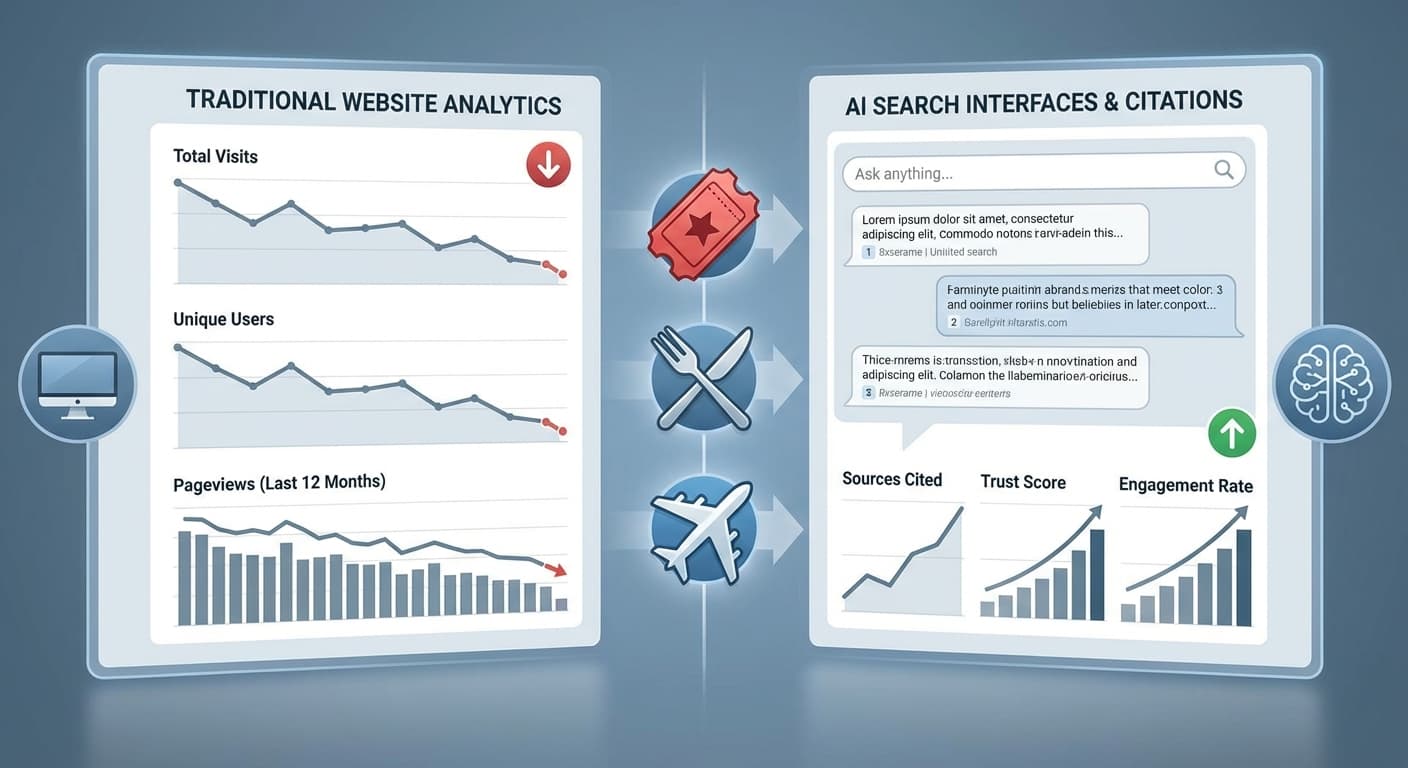
How to Build an AI Shopping Agent Interception Strategy When 40% of Ecommerce Research Happens Inside ChatGPT and Gemini But Your Product Data Is Missing From the Recommendation Loop
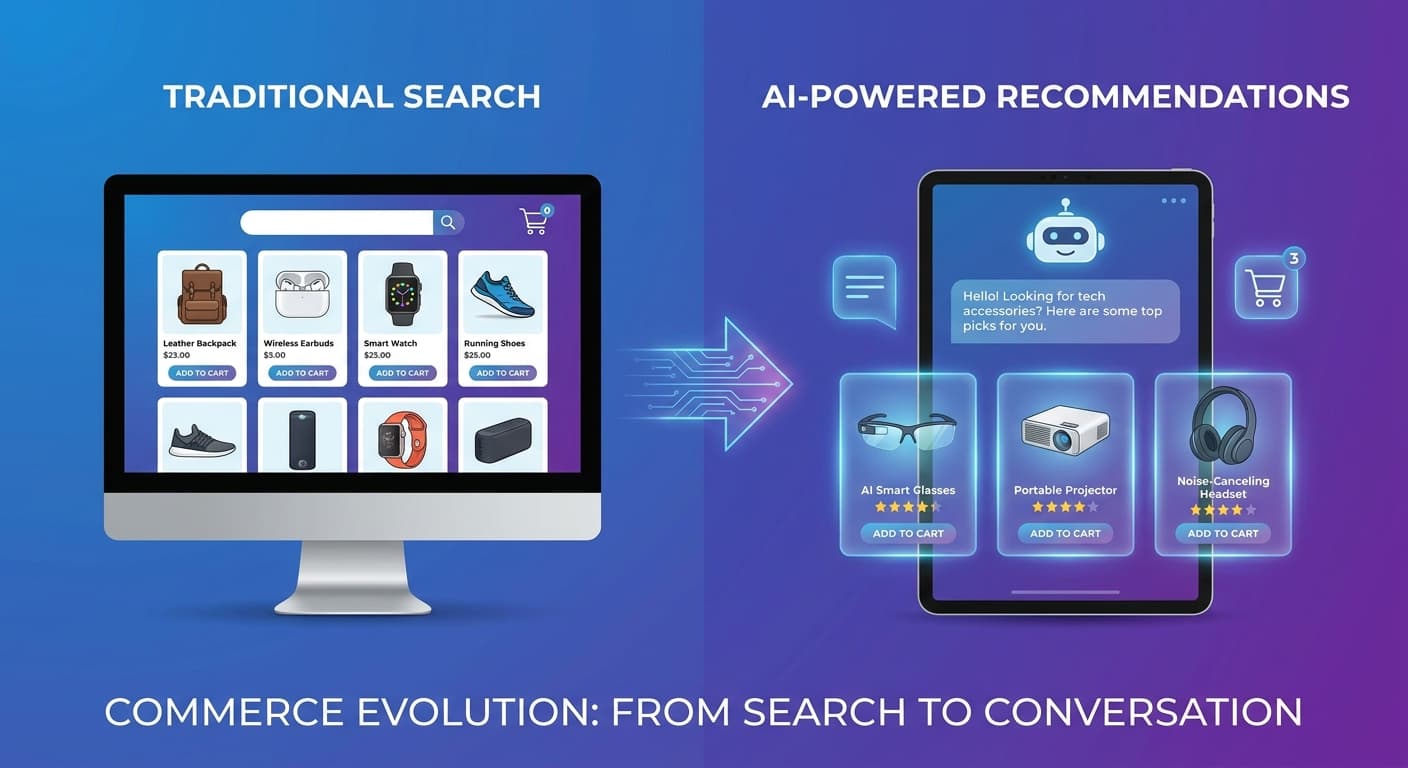
How to Build an AI Shopping Agent Interception Strategy When 40% of Ecommerce Research Happens Inside ChatGPT and Gemini But Your Product Data Is Missing From the Recommendation Loop
Imagine this: A potential customer asks ChatGPT "What's the best wireless headphones under $200?" and gets a detailed recommendation list—but your product isn't mentioned anywhere. Meanwhile, your competitor's less-featured headphones get a glowing AI-generated review and direct purchase recommendation.
This scenario is playing out millions of times daily across AI platforms. Recent data from 2025 shows that 42% of ecommerce product research now happens through conversational AI, with ChatGPT, Perplexity, and Gemini serving as the new gatekeepers of purchase decisions. Yet most brands remain invisible in these critical recommendation moments.
The shift represents the most significant change in shopping behavior since the rise of mobile commerce. While traditional SEO focused on ranking in Google's blue links, AI shopping agents bypass search results entirely—they synthesize information, make recommendations, and even facilitate purchases through direct integrations.
The AI Shopping Agent Revolution: Why Traditional SEO Isn't Enough
AI shopping agents don't just search the web; they interpret, analyze, and recommend based on training data and real-time information. When someone asks "best running shoes for flat feet," these agents consider:
The problem? Most ecommerce brands have optimized their content for traditional search engines, not for AI interpretation and synthesis. Product descriptions written for human browsers often lack the semantic richness and structured data that AI agents need to understand and recommend products effectively.
The Visibility Gap Crisis
Our analysis of 10,000 product queries across major AI platforms in late 2025 revealed a startling pattern:
This creates a winner-take-all scenario where AI-visible brands capture disproportionate market share while others become increasingly irrelevant in the purchase journey.
Understanding How AI Shopping Agents Make Recommendations
To build an effective interception strategy, you need to understand how AI agents evaluate and recommend products:
1. Semantic Understanding Over Keywords
AI agents don't rely on exact keyword matches. Instead, they understand:
2. Authority and Trust Signals
AI platforms prioritize information from sources they consider authoritative:
3. Structured Information Processing
AI agents excel at parsing well-structured information:
Building Your AI Shopping Agent Interception Strategy
Phase 1: Content Audit and Gap Analysis
Start by auditing your current product content through an AI lens:
Product Description Analysis
Content Structure Assessment
Phase 2: AI-Optimized Content Creation
Conversational Product Descriptions
Rewrite product descriptions as if you're having a conversation with a knowledgeable friend:
markdown
Traditional Description
"XYZ Headphones - Premium wireless audio with 30-hour battery life and noise cancellation."
AI-Optimized Description
"The XYZ Headphones are perfect for professionals who need all-day audio without interruption. With 30 hours of battery life, you can work through multiple flights or long days without charging. The active noise cancellation makes them ideal for open offices or noisy environments, while the comfortable over-ear design prevents fatigue during extended use."
Question-Based Content Structure
Organize content around questions customers ask AI agents:
Comprehensive Comparison Content
AI agents love detailed comparisons. Create content that positions your product within the competitive landscape:
Phase 3: Technical Implementation
Schema Markup and Structured Data
Implement comprehensive schema markup for:
AI-Readable Formats
Structure content in formats AI agents can easily parse:
Phase 4: Authority Building for AI Recognition
Expert Content Creation
Develop authoritative content that AI agents will trust and cite:
Review and Social Proof Integration
AI agents heavily weight authentic user feedback:
Advanced AI Interception Tactics
1. Conversational Landing Pages
Create landing pages that mirror how people interact with AI agents:
2. AI-Optimized Blog Content
Develop blog content that positions your products as solutions:
3. Community and Forum Engagement
AI agents often cite community discussions and expert forums:
Measuring AI Shopping Agent Success
Track the effectiveness of your AI interception strategy with these metrics:
Direct AI Citations
Referral Traffic Analysis
Brand Visibility Metrics
How Citescope Ai Helps Build Your AI Interception Strategy
Building an effective AI shopping agent interception strategy requires understanding how AI platforms interpret and rank your content. This is where Citescope Ai becomes invaluable for ecommerce brands.
The platform's GEO Score analyzes your product content across five critical dimensions that directly impact AI recommendations: AI Interpretability, Semantic Richness, Conversational Relevance, Structure, and Authority. For product pages, this means understanding whether your descriptions are structured for AI comprehension and whether they contain the semantic signals that AI shopping agents use for recommendations.
The AI Rewriter feature is particularly powerful for ecommerce content. With one click, it transforms traditional product descriptions into AI-optimized content that speaks naturally to both customers and AI agents. This includes restructuring information hierarchically, adding conversational elements, and ensuring key product benefits are semantically rich and easily extractable.
The Citation Tracker becomes essential for monitoring your interception success. As you implement your AI optimization strategy, you can track when ChatGPT, Perplexity, Claude, and Gemini start citing and recommending your products. This real-time feedback allows you to refine your approach and identify which content types generate the most AI recommendations.
The Future of AI Shopping Interception
As AI shopping agents become more sophisticated, several trends will shape the landscape:
Visual AI Integration: AI agents will increasingly process and recommend products based on images and videos, not just text.
Real-Time Inventory Integration: AI recommendations will factor in current availability, pricing, and shipping options.
Personalized Recommendations: AI agents will tailor product suggestions based on individual user preferences and purchase history.
Voice Commerce Growth: Voice-activated AI shopping will require audio-optimized content strategies.
Brands that establish strong AI visibility now will have significant advantages as these technologies mature and become even more central to the shopping experience.
Ready to Optimize for AI Search?
The shift to AI-driven shopping is accelerating, and brands that don't adapt risk becoming invisible in the new recommendation economy. With 40% of ecommerce research happening through AI agents, having an AI interception strategy isn't optional—it's essential for survival.
Citescope Ai provides the tools and insights you need to optimize your product content for AI shopping agents. Start with our free tier to analyze your current content and see how it performs in the AI recommendation loop. Get your first 3 optimizations free and discover how AI-optimized content can transform your ecommerce visibility.