How to Build an AI Shopping Agent Product Discovery Strategy When Voice Assistants Complete 67% of Retail Research Without Ever Showing Your Brand Name

How to Build an AI Shopping Agent Product Discovery Strategy When Voice Assistants Complete 67% of Retail Research Without Ever Showing Your Brand Name
Imagine spending millions on SEO and digital marketing, only to discover that AI shopping agents are recommending your competitors to customers without your brand ever appearing in the conversation. This isn't a hypothetical nightmare—it's happening right now to retailers across every industry.
In 2025, voice assistants and AI shopping agents complete 67% of retail research queries without displaying brand names to consumers. Instead, they synthesize information, make recommendations, and guide purchase decisions through conversational interfaces that prioritize utility over brand visibility. For retailers, this represents the most significant shift in product discovery since the rise of Google search.
The Invisible Brand Crisis in AI-Driven Commerce
The traditional retail funnel is being rewritten by artificial intelligence. When a customer asks Alexa "What's the best coffee maker under $200?" or queries ChatGPT for "sustainable running shoes for trail running," these AI systems don't show a list of brand names and product pages. Instead, they provide direct recommendations based on their training data, reviews, specifications, and contextual understanding.
This creates what retail analysts call the "invisible brand problem." Your products might be technically superior and competitively priced, but if your product information isn't optimized for AI interpretation and citation, you're essentially invisible in the new discovery ecosystem.
Consider this: 73% of Gen Z shoppers now use AI assistants for product research before making purchases, and this behavior is rapidly spreading across all age groups. By 2026, industry experts predict that AI-mediated product discovery will influence over $1.2 trillion in retail spending.
Understanding How AI Shopping Agents Make Recommendations
To build an effective strategy, you need to understand how AI shopping agents evaluate and recommend products. Unlike traditional search engines that match keywords to pages, AI agents synthesize information from multiple sources to provide contextual recommendations.
The AI Decision Framework
AI shopping agents typically evaluate products across five key dimensions:
Product Specifications and Features: Clear, detailed product information that AI can parse and compare
Social Proof and Reviews: Aggregated customer feedback that provides quality signals
Contextual Relevance: How well the product matches the specific use case or query
Availability and Pricing: Real-time information about stock levels and competitive pricing
Brand Authority and Trust: Signals that indicate reliability and quality
The challenge for retailers is that AI systems don't necessarily prioritize the same factors that traditional SEO rewards. While backlinks and keyword density matter less, factors like structured data, conversational content, and semantic richness become crucial.
Building Your AI Shopping Agent Strategy
1. Optimize Product Information Architecture
Your product information needs to speak the language of AI. This means moving beyond basic product descriptions to create comprehensive, contextually rich content that AI agents can easily interpret and cite.
Create Conversational Product Descriptions: Instead of "Men's Running Shoe - Black," use "Lightweight trail running shoe designed for men who need superior grip on rocky terrain and all-day comfort for long-distance runs."
Implement Structured Data Markup: Use schema.org markup for products, reviews, pricing, and availability. This helps AI systems understand and categorize your products accurately.
Develop Use-Case Content: Create content that addresses specific customer needs and scenarios. AI agents excel at matching products to use cases, so content like "Best headphones for video conferencing" or "Running shoes for flat feet" becomes highly valuable.
2. Master the Art of AI-Friendly Content Creation
AI systems prefer content that answers questions directly and provides comprehensive information in a structured format. This requires a shift from keyword-focused content to answer-focused content.
Question-Answer Format: Structure product information and blog content to directly answer customer questions. Use headers like "Why is this the best option for..." or "How does this compare to..."
Feature Comprehensive Comparisons: AI agents often need to compare products. Create detailed comparison content that helps AI understand your product's advantages in specific contexts.
Include Real-World Applications: Describe how your products perform in actual use scenarios. AI systems value this contextual information when making recommendations.
3. Optimize for Voice and Conversational Queries
Voice search queries are typically longer and more conversational than typed searches. Your content strategy needs to account for this shift in query patterns.
Target Long-Tail Conversational Keywords: Focus on phrases like "what's the best budget laptop for college students" rather than "budget laptop."
Create FAQ-Style Content: Develop extensive FAQ sections that address common customer questions in natural language.
Optimize for Local and Contextual Queries: Include location-specific information and seasonal relevance that AI agents can use for contextual recommendations.
4. Build Authority Through Strategic Content Distribution
AI systems often cite authoritative sources when making recommendations. Building topical authority becomes crucial for visibility in AI-driven product discovery.
Create Educational Content: Develop buying guides, how-to content, and educational resources that establish your expertise in your product category.
Leverage User-Generated Content: Customer reviews, unboxing videos, and social media mentions provide authentic signals that AI systems value.
Maintain Consistent Information: Ensure your product information is consistent across all platforms where AI agents might encounter it.
Measuring Success in AI Shopping Agent Optimization
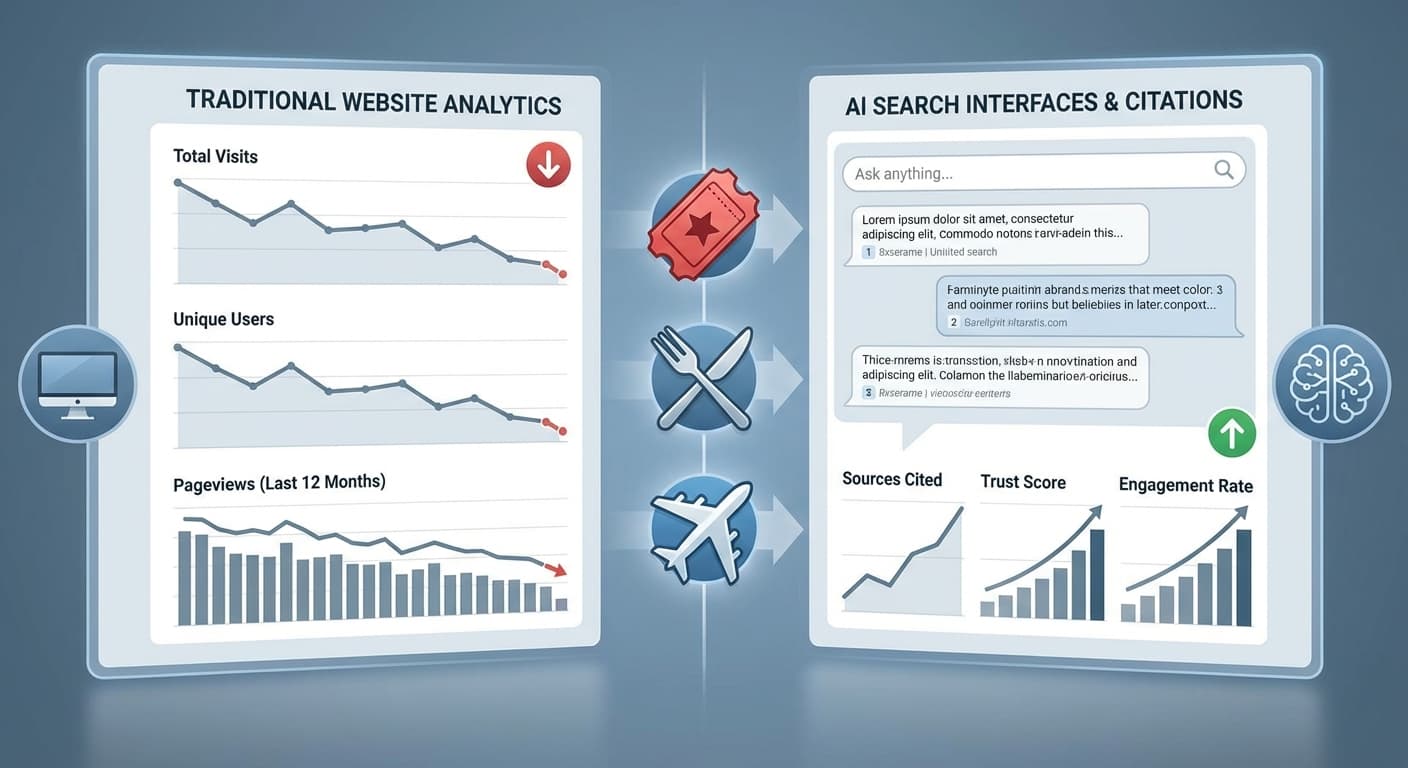
Traditional metrics like organic traffic and keyword rankings tell only part of the story in AI-driven product discovery. You need new metrics that capture AI visibility and citation performance.
Key Metrics to Track
Many retailers are discovering that tools specifically designed for AI optimization provide insights that traditional analytics platforms miss. Citescope Ai, for example, offers citation tracking across major AI platforms, helping retailers understand exactly when and how their products are being recommended by AI shopping agents.
Common Pitfalls to Avoid
Over-Optimization: Don't sacrifice readability for AI optimization. Content should serve both AI systems and human readers.
Neglecting Mobile Experience: AI agents often pull information from mobile-optimized pages, so ensure your product pages perform well on mobile devices.
Inconsistent Information: Conflicting product information across different platforms confuses AI systems and reduces citation likelihood.
Ignoring Customer Reviews: AI systems heavily weight customer feedback, so actively managing and responding to reviews becomes crucial.
How Citescope Ai Helps
Navigating AI shopping agent optimization requires specialized tools and insights. Citescope Ai's platform addresses the unique challenges of AI-driven product discovery:
The platform's citation tracker specifically helps retailers understand their AI visibility, providing insights into which products are being recommended, in what contexts, and how to improve performance.
Ready to Optimize for AI Search?
AI shopping agents are reshaping product discovery, and retailers who adapt early will gain significant competitive advantages. The shift from brand-visible search results to AI-mediated recommendations requires new strategies, new metrics, and new tools.
Citescope Ai helps retailers navigate this transition with specialized tools designed for AI optimization and citation tracking. Start with our free tier to analyze your current AI visibility and discover opportunities for improvement. Visit citescope.ai to begin optimizing your product discovery strategy for the AI-driven future of commerce.