How to Build an AI Visibility Dashboard Strategy When 60% of Searches Are Zero-Click
How to Build an AI Visibility Dashboard Strategy When 60% of Searches Are Zero-Click
By 2026, a staggering 60% of all searches end without a click to any website. Meanwhile, AI search engines like ChatGPT, Perplexity, Claude, and Gemini are processing over 15 billion queries monthly. For software marketers, this presents a critical challenge: how do you measure and prove ROI when traditional metrics fail to capture AI-driven visibility?
The answer lies in building a comprehensive AI visibility dashboard that tracks the metrics that matter in this new search landscape. But here's the problem most marketers face: they can't measure citation frequency or agent retrieval rates—the very metrics that determine success in AI search.
The Zero-Click Search Reality for Software Companies
Zero-click searches aren't just a trend—they're the new normal. Recent data from 2025 shows that:
For software marketers, this shift means traditional SEO dashboards are becoming obsolete. You need visibility into how AI engines discover, interpret, and cite your content.
Why Traditional Analytics Fall Short in AI Search
The Attribution Gap
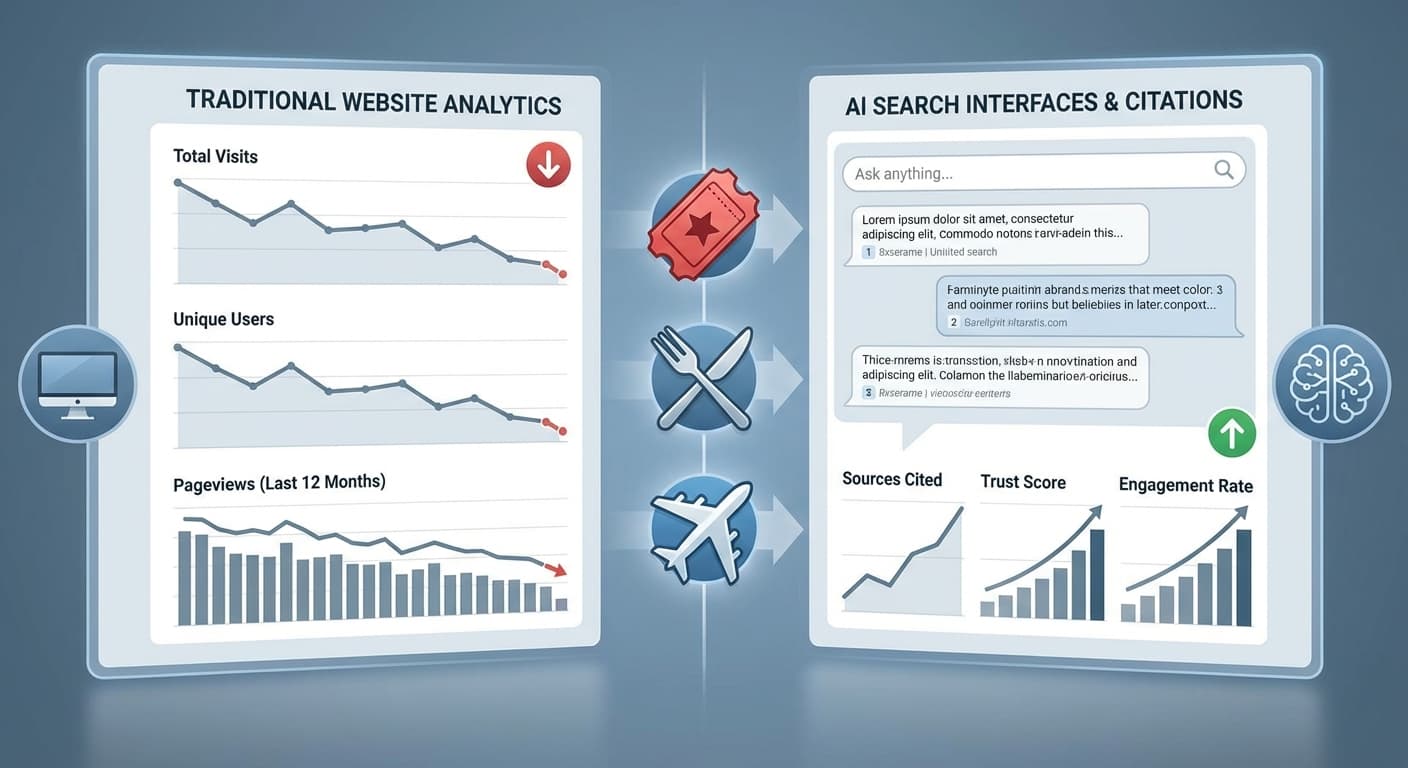
Traditional analytics tools like Google Analytics track clicks and conversions, but they're blind to AI interactions. When a potential customer asks ChatGPT "What's the best project management software for remote teams?" and receives an answer citing your product, that valuable brand impression goes unmeasured.
The Citation Blindspot
Software companies are missing critical data points:
The ROI Measurement Crisis
CMOs are struggling to justify content marketing budgets when they can't connect AI visibility to pipeline metrics. Without proper measurement, it's impossible to optimize for AI search effectively.
Building Your AI Visibility Dashboard: Essential Metrics
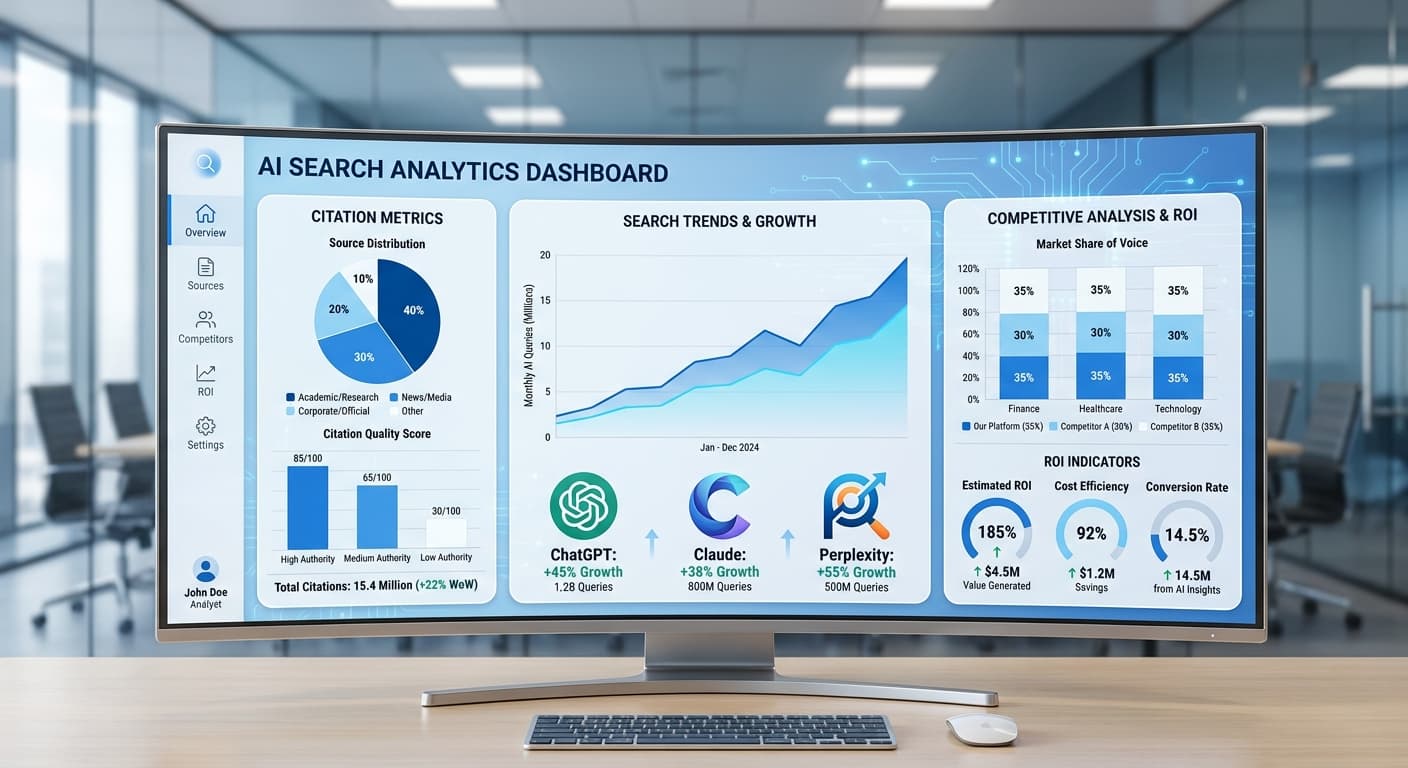
1. Citation Tracking Metrics
Primary KPIs:
Why it matters: Citations in AI responses are the new backlinks. They drive brand awareness and consideration even without direct traffic.
2. Content Performance in AI Context
Key measurements:
Implementation tip: Use tools that can analyze how well your content performs across different AI models, as each has unique preferences for content structure and depth.
3. Competitive Intelligence Metrics
Track these elements:
4. Pipeline Impact Indicators
Connect AI visibility to business outcomes:
Setting Up Your AI Visibility Measurement Framework
Phase 1: Baseline Assessment (Weeks 1-2)
- Manually test key buyer journey queries across AI platforms
- Document current citation frequency
- Identify content gaps where competitors appear but you don't
- Set up citation tracking systems
- Create competitive monitoring protocols
- Define success metrics aligned with business goals
Phase 2: Content Optimization (Weeks 3-6)
- Restructure for AI interpretability
- Add semantic richness and conversational elements
- Improve authority signals and citations
- Develop FAQ-style resources
- Build comparison guides and feature explanations
- Craft case studies with clear problem-solution narratives
Phase 3: Scaling and Refinement (Ongoing)
- Set up automated citation alerts
- Create weekly AI visibility reports
- Build executive dashboards connecting AI metrics to revenue metrics
- A/B test different content approaches
- Refine based on citation performance
- Expand into new query categories
Connecting AI Visibility to Revenue Impact
Attribution Modeling for AI Search
Traditional last-click attribution doesn't work in an AI-first world. Instead, implement:
Influence-based attribution:
Multi-touch analysis:
ROI Calculation Framework
Direct impact metrics:
Indirect impact metrics:
Overcoming Common Implementation Challenges
Challenge 1: Executive Buy-In
Solution: Start with a pilot program focusing on your highest-value content. Demonstrate correlation between citation increases and brand search growth within 30 days.
Challenge 2: Resource Allocation
Solution: Begin with manual monitoring of 10-15 key queries. Use findings to justify investment in automated tools and expanded tracking.
Challenge 3: Integration with Existing Systems
Solution: Build bridges between AI visibility metrics and existing marketing attribution models. Show how AI citations influence traditional funnel metrics.
How Citescope Ai Helps
Building an effective AI visibility dashboard requires specialized tools designed for the AI search era. Citescope Ai provides the infrastructure software marketers need:
With Citescope Ai's dashboard, you can finally measure what matters in AI search and prove marketing ROI to leadership.
Ready to Optimize for AI Search?
The shift to AI-first search isn't coming—it's here. Software companies that build comprehensive AI visibility strategies now will dominate mindshare in AI responses for years to come.
Start building your AI visibility dashboard today with Citescope Ai. Our free tier includes 3 content optimizations per month, plus access to our citation tracking tools. See exactly how your content performs in AI search engines and start connecting AI visibility to revenue impact.
Try Citescope Ai free today and transform how you measure marketing success in the age of AI search.