How to Build an AI Visibility Index That Actually Predicts Revenue When Traditional Traffic Metrics Are Failing

How to Build an AI Visibility Index That Actually Predicts Revenue When Traditional Traffic Metrics Are Failing
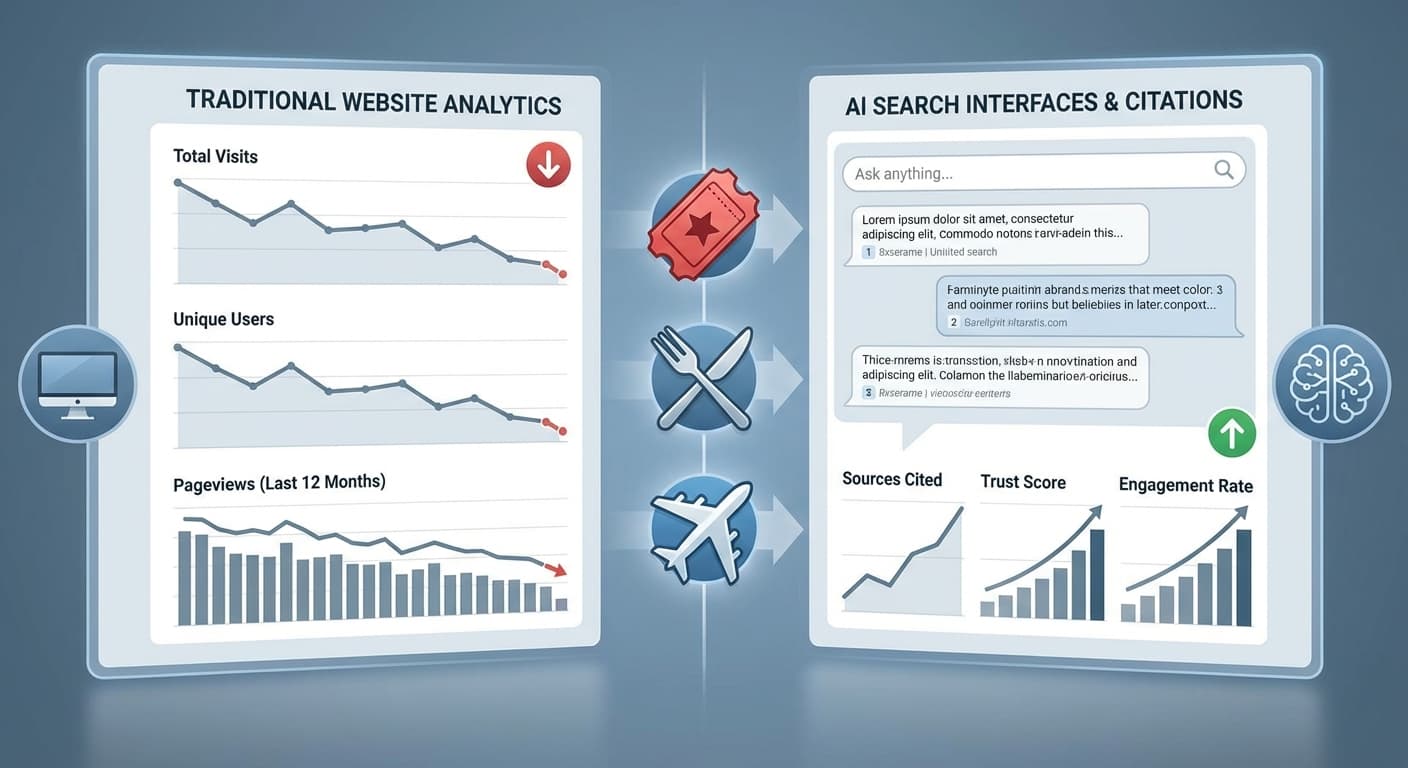
By 2026, over 35% of all search queries now happen through AI engines like ChatGPT, Perplexity, Claude, and Gemini. Yet most businesses are still measuring success with Google Analytics metrics that tell them nothing about their AI visibility. The harsh reality? Your website traffic might be declining while your actual influence and revenue potential are skyrocketing through AI citations.
Traditional metrics like page views, bounce rate, and even search rankings are becoming increasingly disconnected from real business outcomes. Meanwhile, companies that understand AI visibility are seeing 2-3x higher conversion rates from AI-referred traffic compared to traditional search.
Why Traditional Traffic Metrics Are Failing in the AI Era
The shift to AI search has fundamentally broken our measurement systems. Here's what's happening:
The Attribution Gap
When someone asks ChatGPT for business advice and gets your insights cited, there's no direct traffic to measure. Yet that citation might influence a $50,000 purchasing decision. Traditional analytics can't capture this invisible influence.
Quality Over Quantity
AI engines don't just count links—they evaluate the semantic richness, authority, and relevance of your content. A single high-quality citation in an AI response can be worth more than 1,000 traditional page views.
The New Customer Journey
Modern buyers research through AI conversations before ever visiting websites. They might interact with your content through AI engines 5-10 times before making direct contact. Traditional funnel metrics miss this entirely.
Building Your AI Visibility Index: The Framework
Step 1: Define Your AI Visibility Dimensions
An effective AI Visibility Index should measure five core dimensions:
AI Interpretability (25% weight): How easily can AI engines understand and process your content?
Citation Authority (30% weight): How often and in what contexts are you being cited?
Conversational Relevance (20% weight): How well does your content match natural language queries?
Content Structure (15% weight): How well-organized is your content for AI consumption?
Semantic Richness (10% weight): How comprehensive and contextually rich is your content?
Step 2: Collect the Right Data Points
Direct AI Citations
Indirect Influence Signals
Content Performance Indicators
Step 3: Weight Metrics by Business Impact
Not all visibility is created equal. Weight your metrics based on their correlation with actual revenue:
High Revenue Correlation (3x weight):
Medium Revenue Correlation (2x weight):
Low Revenue Correlation (1x weight):
Practical Implementation Guide
Week 1: Baseline Assessment
Week 2-3: Data Collection Setup
Week 4+: Optimization and Measurement
Advanced AI Visibility Strategies
Create Citation-Worthy Content Formats
Framework Posts: AI engines love to cite structured frameworks and methodologies
Data-Driven Insights: Original research and statistics get cited frequently
Expert Roundups: Curated expert opinions become go-to sources
Optimize for Question Intent
AI engines excel at answering direct questions. Structure content around:
How Citescope Ai Helps Build Your AI Visibility Index
While you can manually track some of these metrics, the complexity of monitoring AI citations across multiple platforms while optimizing content for maximum visibility requires specialized tools.
Citescope Ai's GEO Score automatically analyzes your content across all five AI visibility dimensions, giving you a clear 0-100 score that correlates with citation potential. The Citation Tracker monitors your mentions across ChatGPT, Perplexity, Claude, and Gemini in real-time, while the AI Rewriter optimizes your content with one click to maximize AI visibility.
This allows you to focus on strategy and content creation while the platform handles the technical optimization and monitoring that makes your AI Visibility Index actionable.
Measuring ROI and Business Impact
Leading Indicators
Lagging Indicators
Monthly Reporting Framework
Executive Summary:
Detailed Metrics:
Action Items:
Common Pitfalls to Avoid
Over-Optimizing for Vanity Metrics
Don't chase citation volume at the expense of quality. One citation in a high-value purchasing context is worth more than dozens of general mentions.
Ignoring Context
The context of your citations matters enormously. Track not just frequency but sentiment, relevance, and positioning within AI responses.
Forgetting the Human Element
AI visibility should enhance, not replace, human-centered content strategy. The goal is to be helpful and authoritative, not just algorithmically optimized.
The Future of AI Visibility Measurement
As AI search continues to evolve, expect to see:
Ready to Optimize for AI Search?
Building an effective AI Visibility Index requires the right tools, metrics, and optimization strategies. Citescope Ai provides everything you need to track, analyze, and improve your AI search performance with automated GEO scoring, real-time citation monitoring, and one-click content optimization.
Start building your AI Visibility Index today with Citescope Ai's free tier—get 3 content optimizations per month and begin tracking your citations across all major AI platforms. See how your content performs and discover optimization opportunities that can drive real revenue growth in the AI search era.