How to Build an AI Visibility Measurement Strategy When 60% of AI Search Results Are Zero-Click But Your AI-Referred Customers Convert 3x Better Than Organic Traffic

How to Build an AI Visibility Measurement Strategy When 60% of AI Search Results Are Zero-Click But Your AI-Referred Customers Convert 3x Better Than Organic Traffic
Here's a paradox that's keeping content marketers awake at night in 2026: 60% of AI search results never generate a click to your website, yet customers who do arrive from AI search engines convert at 3x the rate of traditional organic traffic. Welcome to the new reality of AI-driven search, where visibility doesn't always equal visits, but when it does, the quality is unmatched.
With over 500 million weekly active users on ChatGPT alone and 70% of Gen Z now using AI for their primary search needs, understanding how to measure and optimize for AI visibility has become critical for business success. The challenge? Traditional metrics like click-through rates and organic rankings tell only half the story.
The AI Search Measurement Paradox
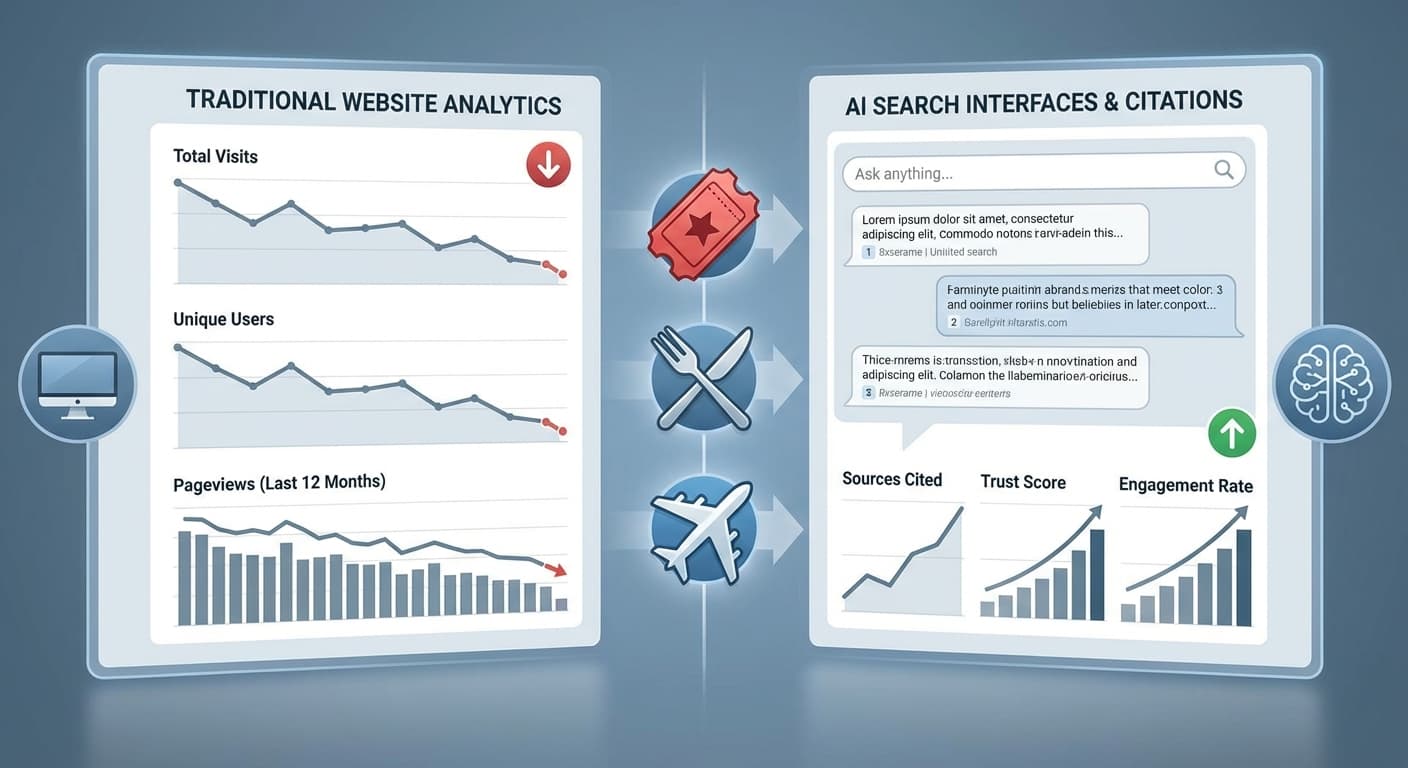
Traditional SEO taught us to chase clicks, but AI search engines fundamentally changed the game. When someone asks Claude "What's the best project management software for remote teams?" they often get their answer without ever visiting your website. Your brand might be mentioned, your expertise cited, and your authority established – but your Google Analytics remains silent.
This creates a measurement blind spot that's costing businesses millions in missed opportunities. Research from 2025 shows that brands appearing in AI search results see:
Yet most companies are flying blind because they're still measuring success with 2020s metrics.
Understanding the Zero-Click Value Proposition
Zero-click results aren't the enemy – they're an opportunity for brand building at scale. When ChatGPT cites your company as "a leading provider of cybersecurity solutions" or Perplexity references your research in response to industry questions, you're building authority and trust with potential customers who may convert weeks or months later.
The key is recognizing that AI search creates a new customer journey:
Traditional Search Journey:
Query → Click → Browse → Consider → Convert
AI Search Journey:
Query → AI Response (Brand Exposure) → Research Phase → Direct Visit → Convert
This extended journey means attribution becomes more complex, but the end results are often higher-value customers who arrive with greater intent and trust.
Building Your AI Visibility Measurement Framework
1. Track Citation Frequency Across AI Platforms
Your first metric should be citation frequency – how often your brand, content, or expertise appears in AI responses across different platforms. This requires monitoring:
A robust citation tracking system should capture not just frequency, but context – are you being mentioned as an authority, a solution provider, or just a data point?
2. Measure Brand Sentiment in AI Responses
Not all citations are created equal. Being mentioned negatively or in a neutral context provides different value than being positioned as an industry leader. Your measurement strategy should include:
3. Monitor the AI Attribution Funnel
Since AI-referred traffic converts at 3x the rate, understanding this funnel becomes crucial:
Top of Funnel: Citation frequency and reach
Middle of Funnel: Engagement indicators
Bottom of Funnel: Conversion tracking
4. Content Performance Analysis
Not all content performs equally in AI search. Your measurement strategy should identify which content types and topics generate the most valuable citations:
Practical Implementation Steps
Phase 1: Baseline Measurement (Weeks 1-4)
Phase 2: Systematic Tracking (Weeks 5-12)
Phase 3: Advanced Analytics (Months 4-6)
Key Metrics to Track
Primary KPIs:
Secondary Metrics:
Overcoming Common Measurement Challenges
Challenge 1: Attribution Complexity
AI-influenced customers often don't convert immediately. Use customer surveys, extended attribution windows, and brand lift studies to capture the full impact.
Challenge 2: Platform Variation
Different AI engines cite sources differently. Develop platform-specific measurement approaches while maintaining overall consistency.
Challenge 3: Data Volume
Manual monitoring becomes impossible at scale. Invest in automated tools that can track citations across multiple platforms simultaneously.
How Citescope Ai Helps
Building an effective AI visibility measurement strategy requires more than just manual monitoring. Citescope Ai provides the comprehensive tracking and optimization tools needed to succeed in this new landscape:
Citation Tracker: Automatically monitors when your content gets cited by ChatGPT, Perplexity, Claude, and Gemini, providing real-time visibility into your AI search presence.
GEO Score Analysis: Evaluates your content across five key dimensions that impact AI visibility – AI Interpretability, Semantic Richness, Conversational Relevance, Structure, and Authority – giving you actionable insights for improvement.
Performance Analytics: Track citation frequency, sentiment, and context across all major AI platforms in one unified dashboard, making it easy to measure ROI and optimize strategy.
AI Rewriter: One-click optimization that restructures your content for better AI visibility, helping you move from zero-click citations to high-converting traffic.
The Future of AI Visibility Measurement
As AI search continues to evolve, measurement strategies must adapt. We're already seeing:
The brands that build robust AI visibility measurement strategies now will have a significant competitive advantage as this channel continues to grow.
Ready to Optimize for AI Search?
Don't let the AI search revolution catch you unprepared. With 60% of AI results being zero-click but converting 3x better when they do click, measurement and optimization are more critical than ever. Citescope Ai helps you track citations across all major AI platforms, optimize your content for better visibility, and measure the real business impact of your AI search presence. Start with our free tier and get 3 content optimizations to see the difference proper AI visibility measurement can make for your business.