How to Build an Intent-Aligned Multi-Engine AEO Strategy When Your Brand Citation Rates Vary 9x Between ChatGPT and Google AI Overviews
How to Build an Intent-Aligned Multi-Engine AEO Strategy When Your Brand Citation Rates Vary 9x Between ChatGPT and Google AI Overviews
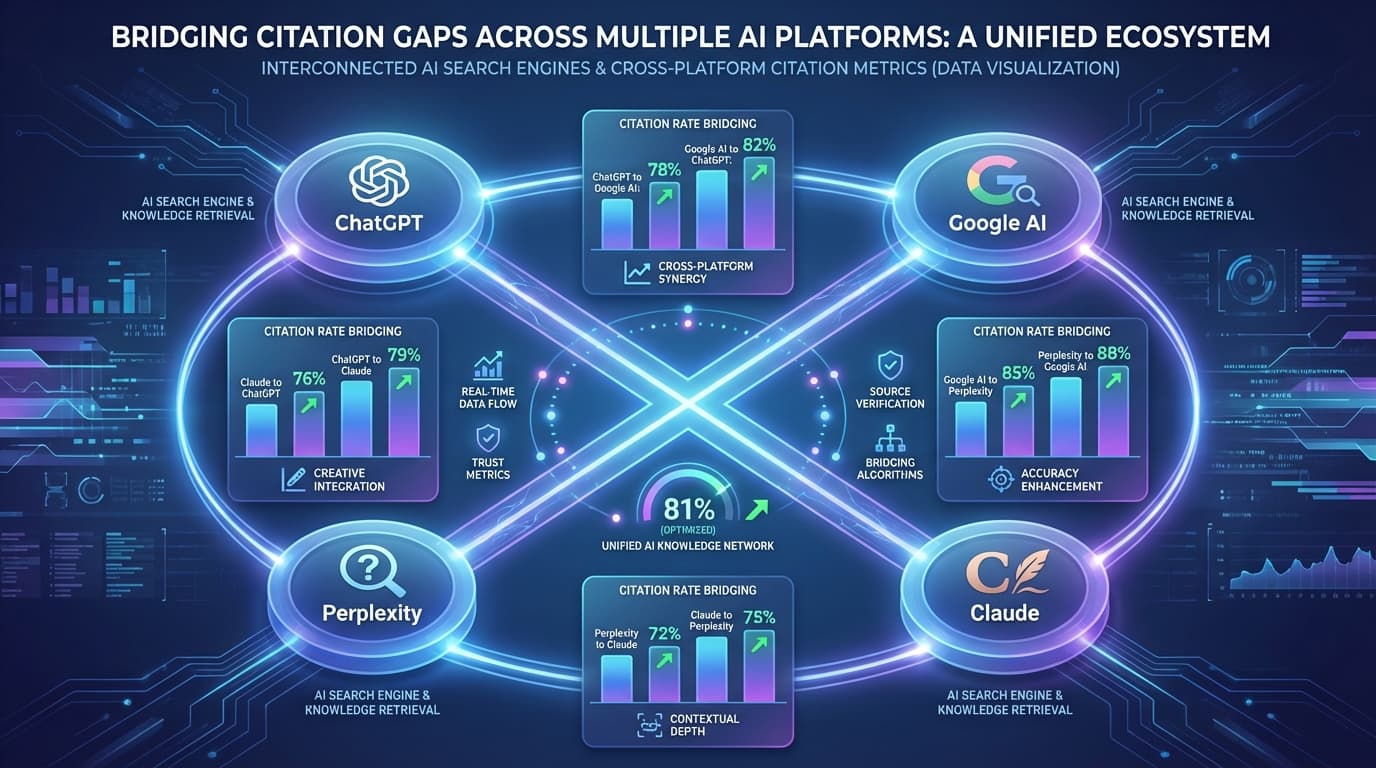
Here's a stat that might shock you: 73% of brands report citation rates that vary by 5-10x between different AI search engines, with some seeing extreme variations of 9x or more between ChatGPT and Google AI Overviews. If you're seeing wildly different citation performance across AI engines, you're not alone—and more importantly, you can fix it.
As AI search continues to dominate how people discover information in 2026, with over 500 million weekly ChatGPT users and AI Overviews appearing in 65% of Google searches, understanding why your brand performs differently across engines has become critical for maintaining competitive visibility.
Why Citation Rates Vary So Dramatically Between AI Engines
The reality is that each AI search engine operates with different algorithms, training data, and ranking factors. What makes your content citation-worthy for ChatGPT might be completely different from what Google AI Overviews prioritizes.
Key Differences in AI Engine Preferences
ChatGPT and Claude tend to favor:
Google AI Overviews prioritize:
Perplexity looks for:
Building Your Intent-Aligned Multi-Engine Strategy
Step 1: Audit Your Current Citation Performance
Before optimizing, you need to understand where you stand. Track your citation rates across all major AI engines for at least 30 days. Look for patterns in:
Many brands using citation tracking tools report discovering that their technical documentation gets heavily cited by Claude, while their how-to guides dominate ChatGPT results.
Step 2: Map Content to User Intent by Engine
Different AI engines serve different user intents, even for the same query. Here's how to align your content:
For Informational Queries:
For Commercial Queries:
For Transactional Queries:
Step 3: Create Engine-Specific Content Variations
Rather than creating entirely new content for each engine, develop a core piece and create variations optimized for each platform:
#### The Hub-and-Spoke Approach
Step 4: Optimize for Multi-Engine Semantic Understanding
AI engines use different approaches to understanding context and relevance. Your content needs to speak all their languages:
#### Semantic Richness Strategies
Citescope Ai's GEO Score analyzes your content across these semantic richness factors, helping identify gaps in your multi-engine optimization.
Advanced Tactics for Closing Citation Gaps
Leverage Cross-Engine Citation Opportunities
When one engine cites you frequently, use that momentum to improve performance on others:
Time-Sensitive Optimization
AI engines update their training data and algorithms at different frequencies:
Time your content publication and updates to align with these cycles for maximum impact.
Technical Implementation Tips
#### Structured Data Optimization
#### Content Architecture
Measuring and Adjusting Your Multi-Engine Strategy
Key Metrics to Track
Optimization Cycles
Implement a quarterly optimization cycle:
Month 1: Audit and analyze current performance
Month 2: Implement optimizations and new content
Month 3: Monitor results and refine strategy
This approach ensures you're continuously improving while giving enough time to see meaningful results from your changes.
How Citescope Ai Helps Bridge Citation Gaps
Building an effective multi-engine AEO strategy requires deep insights into how each AI engine interprets your content. Citescope Ai's comprehensive platform addresses this challenge through:
The platform's citation tracker helps you identify exactly where those 9x performance gaps exist and provides actionable recommendations for closing them.
Common Pitfalls to Avoid
Over-Optimization for One Engine
Focusing too heavily on your best-performing engine can hurt performance elsewhere. Maintain a balanced approach that considers all major platforms.
Ignoring Content Freshness
AI engines increasingly favor current, updated information. Regularly refresh your content with new data, examples, and insights.
Neglecting User Experience
While optimizing for AI engines, don't forget that real humans will ultimately consume your content. Maintain readability and value.
Ready to Optimize for AI Search?
Building an intent-aligned multi-engine AEO strategy doesn't have to be overwhelming. With the right tools and approach, you can close those citation gaps and achieve consistent visibility across all major AI search platforms.
Citescope Ai makes it simple to track, analyze, and optimize your content for maximum AI engine visibility. Start with our free tier to see exactly how your content performs across ChatGPT, Perplexity, Claude, and Google AI Overviews—then let our AI-powered optimization tools help you close those performance gaps.
Start your free trial today and discover why leading brands trust Citescope Ai to optimize their AI search strategy.