How to Build an Organizational Alignment Strategy When AI Search Blurs Responsibility Between SEO, Content, Product, and PR Teams
How to Build an Organizational Alignment Strategy When AI Search Blurs Responsibility Between SEO, Content, Product, and PR Teams
Here's a statistic that should wake up every CMO: 78% of companies report that AI search optimization requires cross-team coordination, yet only 23% have established clear ownership models for AI visibility initiatives. Welcome to 2026, where the lines between SEO, content marketing, product development, and PR have become so blurred that nobody knows who's driving the AI search strategy ship.
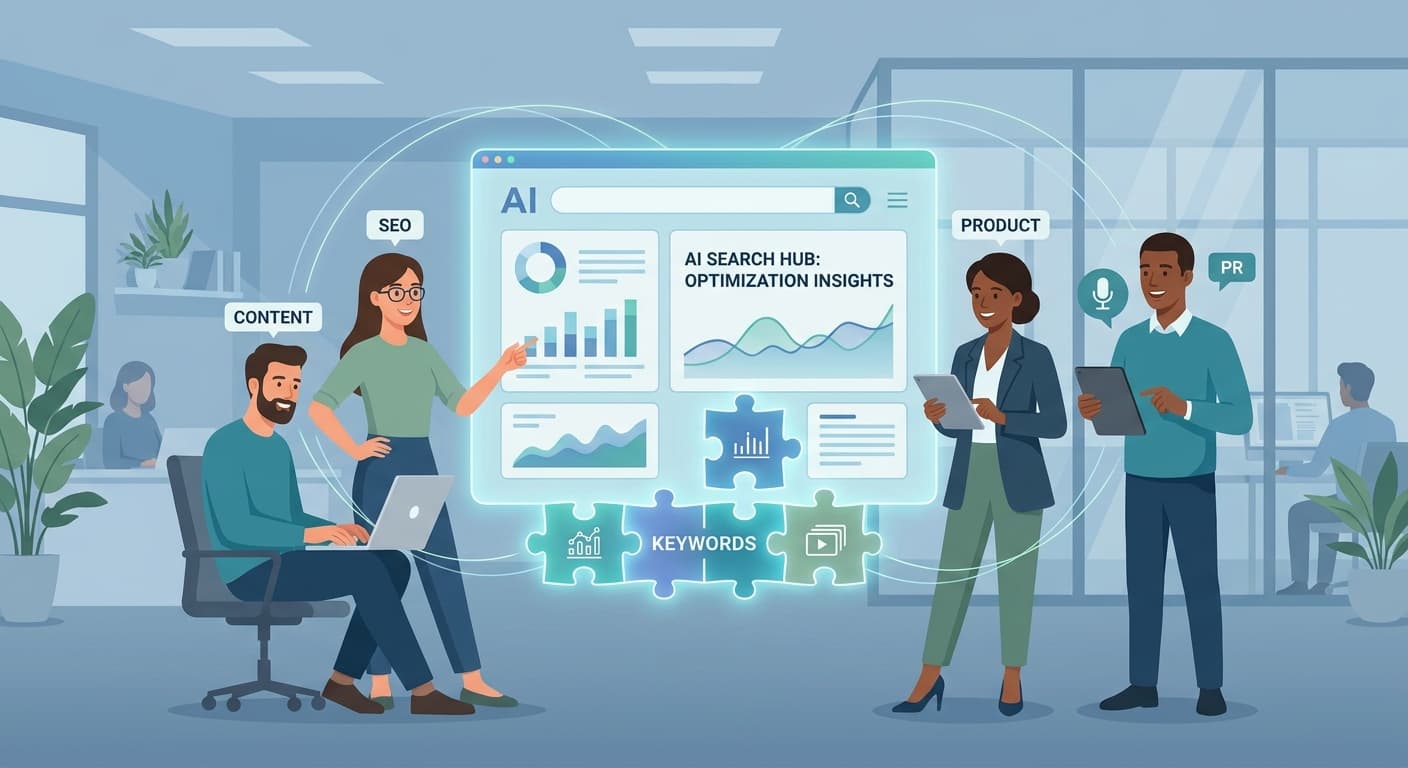
If your organization is struggling to define who owns AI search optimization while everyone scrambles to claim credit (or avoid blame) for ChatGPT and Perplexity citation performance, you're not alone. The rise of AI search engines has created a perfect storm of overlapping responsibilities that traditional org charts weren't designed to handle.
The AI Search Accountability Crisis
The problem isn't that teams don't understand AI search importance—it's that AI search optimization touches every department's core functions simultaneously. Consider what happens when ChatGPT cites your content:
Meanwhile, executives want a single throat to choke when AI search performance dips, creating organizational tension that actually hurts your AI visibility efforts.
Why Traditional KPI Ownership Models Fail in AI Search
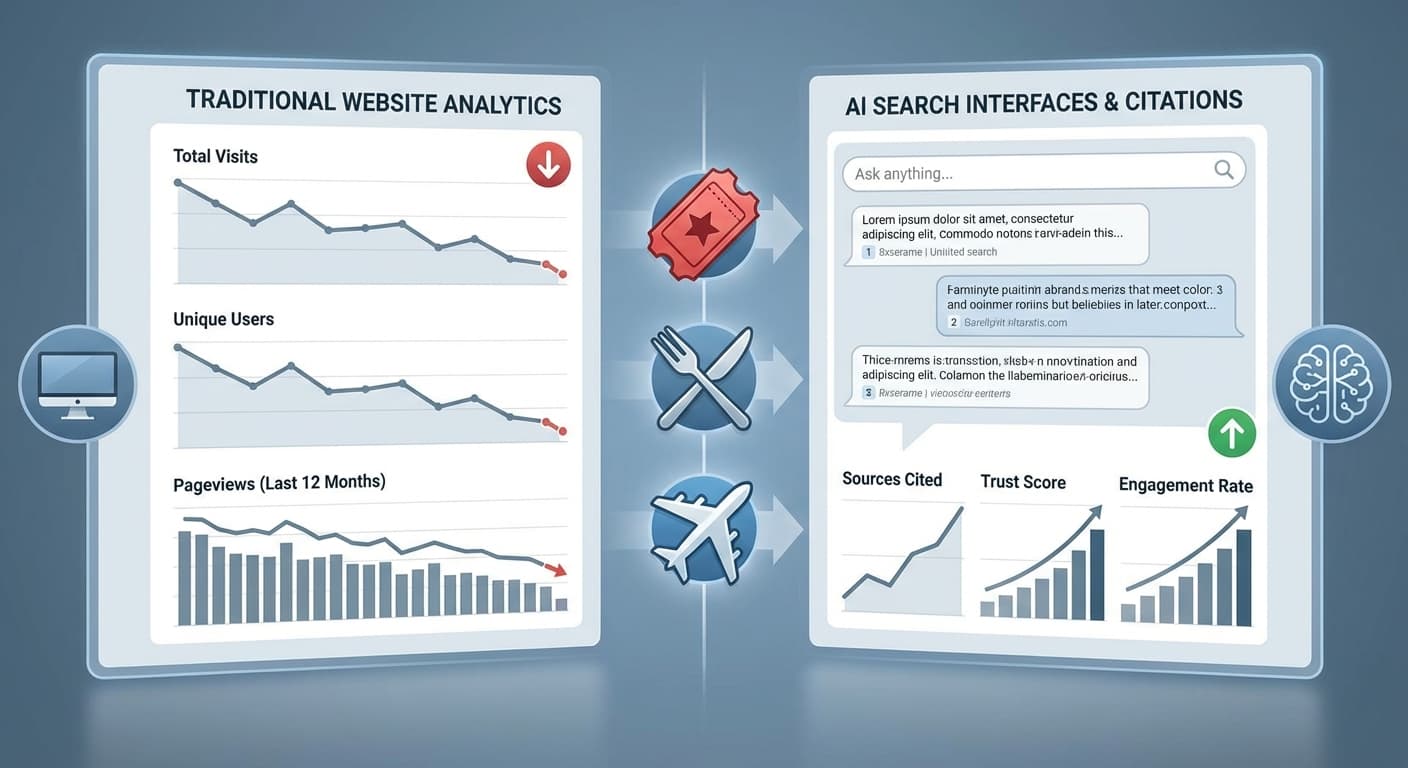
Traditional digital marketing operated in silos. SEO owned rankings, content owned engagement, PR owned mentions. But AI search engines don't respect these boundaries.
When Perplexity cites your product documentation in response to a competitive research query, which team deserves credit? When Claude references your thought leadership piece while answering a customer support question, who owns that conversion?
The answer: everyone and no one, which is exactly why you need a new approach.
The RACE Framework for AI Search Accountability
Successful companies in 2026 are adopting the RACE framework (Responsible, Accountable, Consulted, Executed) specifically adapted for AI search optimization:
R - Responsible Party (The AI Search Champion)
Designate one person—typically a senior marketing manager or director—as the AI Search Champion. This person doesn't own all execution but coordinates cross-team efforts and reports unified metrics to leadership.
A - Accountable Teams (Shared Ownership Model)
Instead of single-team ownership, establish shared accountability across:
C - Consulted Stakeholders (Internal Expertise)
Identify internal experts who provide strategic input:
E - Execution Partners (Operational Support)
Define who handles day-to-day implementation:
Building Your Cross-Team AI Search Strategy
Step 1: Map Current AI Search Touchpoints
Audit where your organization currently intersects with AI search:
Step 2: Establish Shared Success Metrics
Move beyond individual team KPIs to shared objectives:
Step 3: Create AI Search Governance Structure
Establish regular cross-team coordination:
Step 4: Implement Collaborative Tools and Processes
Use shared platforms for coordination:
Practical Implementation: The 30-60-90 Day Rollout
Days 1-30: Foundation Setting
Days 31-60: Process Integration
Days 61-90: Optimization and Scaling
Common Pitfalls to Avoid
The Blame Game: When AI search performance drops, avoid finger-pointing. Focus on collaborative problem-solving.
Over-Coordination: Don't create so many meetings that teams can't execute. Balance coordination with autonomy.
Metric Confusion: Resist the urge to track everything. Focus on metrics that drive business outcomes.
Tool Proliferation: Don't let each team use different AI search tracking tools. Standardize on platforms that provide unified visibility.
How Citescope Ai Helps Unify Your AI Search Strategy
While organizational alignment is crucial, having the right tools makes coordination significantly easier. Citescope Ai's platform provides the unified visibility that cross-functional teams need:
This unified approach eliminates the tool fragmentation that often creates organizational silos and provides the shared metrics foundation that successful cross-team coordination requires.
Measuring Success: KPIs That Unite Rather Than Divide
The key to successful organizational alignment around AI search is choosing KPIs that reward collaboration:
Primary Shared Metrics:
Secondary Team-Specific Metrics:
The Future of AI Search Organization
As we move deeper into 2026, companies that successfully navigate AI search organizational challenges will have significant competitive advantages. The ability to coordinate across traditional team boundaries while maintaining clear accountability will become a core business capability.
Start with small, cross-functional experiments. Test different coordination models. Find what works for your organization's culture and structure. The companies that figure this out first will dominate AI search visibility while their competitors are still arguing about who owns what.
Ready to Optimize for AI Search?
Building organizational alignment around AI search doesn't have to be overwhelming. Citescope Ai provides the unified platform that makes cross-team coordination natural and effective. With shared dashboards, standardized metrics, and collaborative optimization tools, your teams can focus on what they do best while contributing to overall AI search success.
Start with our free tier to see how unified AI search optimization works, then scale with Pro ($39/month) or Enterprise ($99/month) plans as your cross-team coordination matures. Try Citescope Ai free today and transform organizational confusion into competitive advantage.