How to Build Cross-Functional AI Search Teams When Traditional SEO Siloes Are Costing You 34.5% CTR
How to Build Cross-Functional AI Search Teams When Traditional SEO Siloes Are Costing You 34.5% CTR
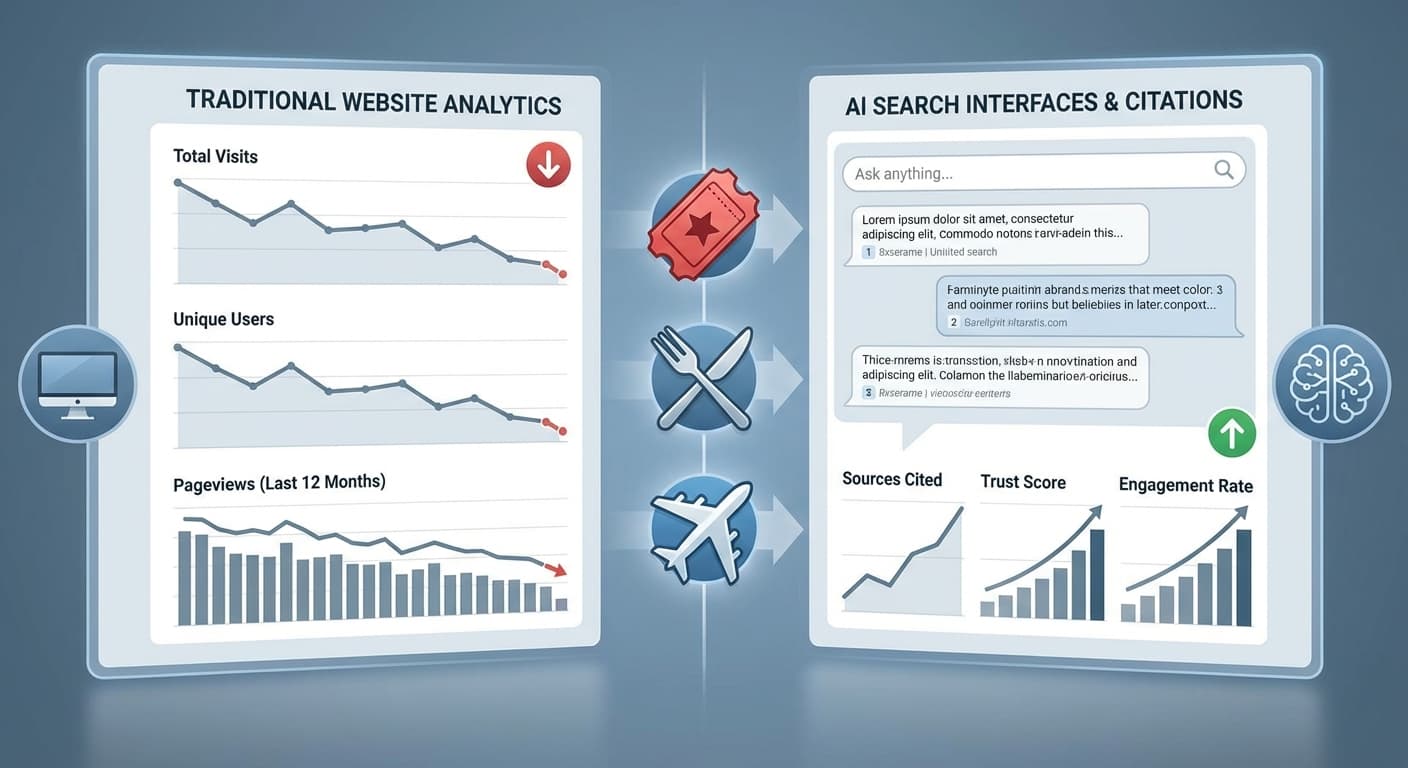
Imagine this: Your carefully crafted content strategy is performing well in traditional search rankings, but 34.5% of your potential clicks are vanishing into thin air. Welcome to the reality of 2026, where zero-click AI summaries from ChatGPT, Perplexity, Claude, and Gemini are reshaping how users consume information.
With over 600 million weekly ChatGPT users and 73% of Gen Z preferring AI search over traditional search engines, the writing is on the wall. Traditional SEO silos between IT, UX, and PR teams aren't just inefficient anymore—they're actively costing you visibility and revenue.
The Hidden Cost of Departmental Silos in AI Search
In 2026's AI-first search landscape, the old model of siloed departments is breaking down. Here's what's happening:
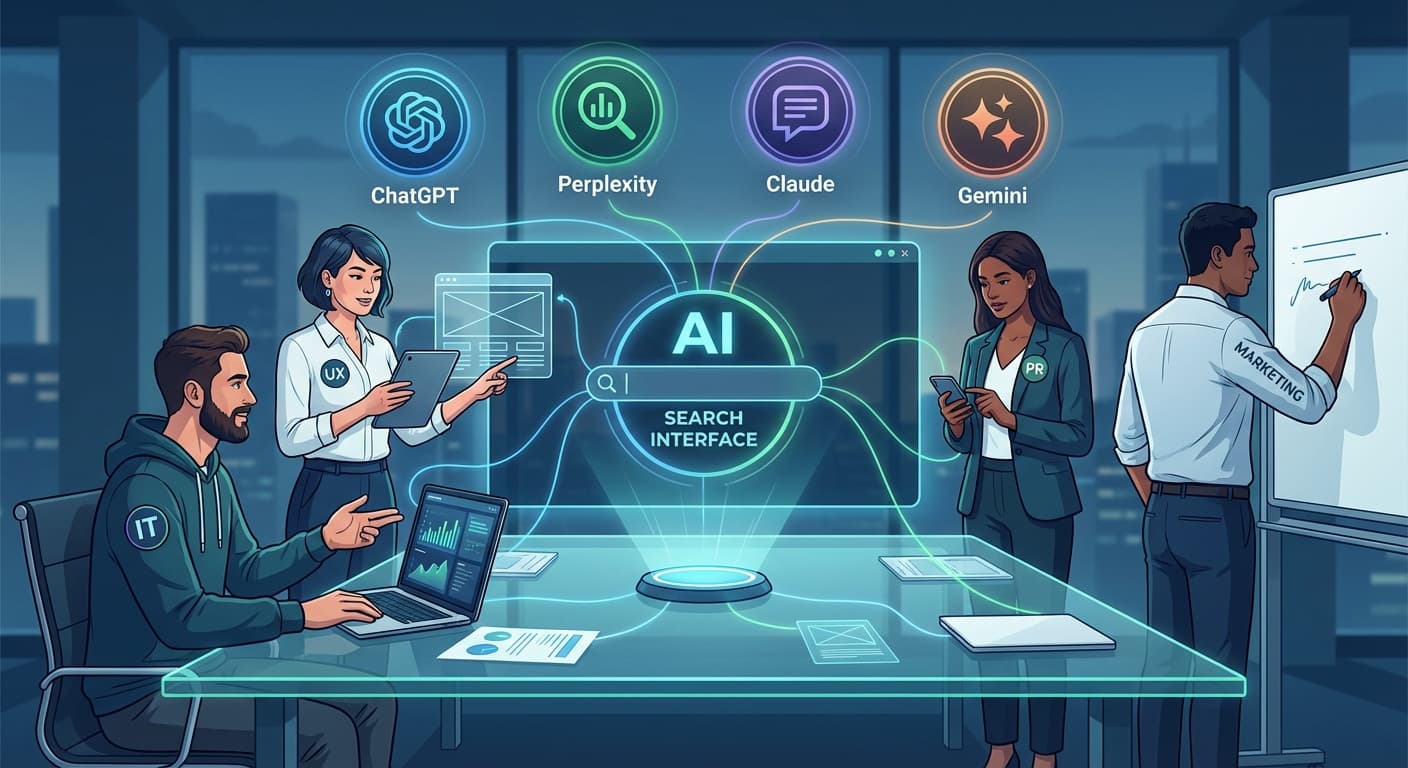
IT teams focus on technical implementation and structured data, but often lack understanding of content strategy and user intent.
UX teams design for human users but may not consider how AI engines parse and interpret content structure.
PR and content teams create compelling narratives but often miss the technical optimization needed for AI visibility.
This fragmentation leads to:
Recent studies show that brands with integrated AI search teams see 47% higher citation rates in AI responses compared to those operating in silos.
Why AI Search Demands Cross-Functional Collaboration
AI Engines Process Information Holistically
Unlike traditional search engines that primarily focus on keywords and backlinks, AI search engines evaluate content across multiple dimensions simultaneously:
No single department has expertise across all these areas, making collaboration essential.
The Speed of AI Algorithm Changes
AI search algorithms evolve rapidly. In 2025 alone, major AI platforms rolled out 23 significant updates affecting content visibility. Cross-functional teams can respond faster because they don't need to coordinate across departmental boundaries for every change.
Building Your Cross-Functional AI Search Team
Step 1: Identify Key Stakeholders
Your AI search team should include representatives from:
Technical Side:
Content Side:
Strategy Side:
Step 2: Establish Shared Goals and Metrics
Move beyond traditional SEO metrics to include AI-specific KPIs:
Step 3: Create Integrated Workflows
Content Planning:
Content Creation:
Performance Monitoring:
Overcoming Common Collaboration Challenges
Challenge 1: Different Success Metrics
Solution: Create shared OKRs that align departmental goals. For example, instead of IT focusing solely on page speed and content teams focusing only on engagement, both contribute to "AI citation rate improvement."
Challenge 2: Technical vs. Creative Tensions
Solution: Implement "AI-first" content reviews where technical and creative requirements are evaluated together. Tools like Citescope Ai's GEO Score help bridge this gap by providing objective metrics that both sides can understand.
Challenge 3: Resource Competition
Solution: Establish clear resource allocation frameworks and shared project management systems. When teams see how their contributions directly impact shared goals, competition decreases.
Practical Implementation Framework
Phase 1: Foundation (Weeks 1-4)
Phase 2: Process Integration (Weeks 5-8)
Phase 3: Optimization and Scale (Weeks 9-12)
Tools and Technologies for Cross-Functional Success
The right technology stack can make or break your cross-functional AI search efforts:
Collaboration Platforms:
AI Search Optimization:
Analytics and Reporting:
Measuring Success: Key Performance Indicators
Track these metrics to measure your cross-functional team's impact:
Team Efficiency Metrics:
AI Search Performance Metrics:
Business Impact Metrics:
How Citescope Ai Helps Bridge the Gap
Building cross-functional teams requires tools that speak to both technical and creative stakeholders. Citescope Ai's platform serves as a common language between departments:
For Technical Teams: The GEO Score provides objective metrics across AI Interpretability, Semantic Richness, Conversational Relevance, Structure, and Authority—helping developers understand content optimization needs.
For Content Teams: The AI Rewriter offers one-click optimization suggestions that maintain brand voice while improving technical performance.
For Strategy Teams: Citation Tracker provides real-time monitoring of how your content performs across ChatGPT, Perplexity, Claude, and Gemini, offering clear ROI metrics.
For Everyone: Multi-format export capabilities (Markdown, HTML, WordPress blocks) ensure optimized content works across all team workflows.
The Future of AI Search Teams
As AI search continues evolving, successful brands will be those that break down silos and create truly integrated optimization teams. The 34.5% CTR loss to zero-click summaries isn't just a challenge—it's an opportunity for organizations nimble enough to adapt.
Companies implementing cross-functional AI search teams in early 2026 are already seeing:
Ready to Optimize for AI Search?
Breaking down silos and building effective cross-functional AI search teams isn't just about organizational structure—it's about having the right tools to measure, optimize, and track your success across all AI platforms.
Citescope Ai provides the unified platform your cross-functional team needs to succeed in the AI search landscape. From our comprehensive GEO Score analysis to real-time citation tracking across ChatGPT, Perplexity, Claude, and Gemini, we help teams collaborate effectively while driving measurable results.
Start building your competitive advantage today with a free Citescope Ai account. Get 3 free optimizations to see how cross-functional collaboration and AI-first optimization can transform your search visibility.