How to Calculate ROI from AI Search Optimization When Your Boss Still Measures Success by Keyword Rankings Instead of Citations
How to Calculate ROI from AI Search Optimization When Your Boss Still Measures Success by Keyword Rankings Instead of Citations
By 2026, over 35% of search queries now happen through AI engines like ChatGPT, Perplexity, and Claude—yet 78% of marketing teams still report success using traditional keyword ranking metrics. If you're reading this, you're probably caught in the middle: you understand that AI citations are the new backlinks, but your boss is still asking for Google position reports.
Here's the reality: while your competitors chase page one rankings, smart marketers are already capturing qualified traffic through AI search citations. The question isn't whether AI optimization delivers ROI—it's how to measure and communicate that value in terms your leadership team will understand and approve.
The Measurement Gap: Why Traditional Metrics Fall Short
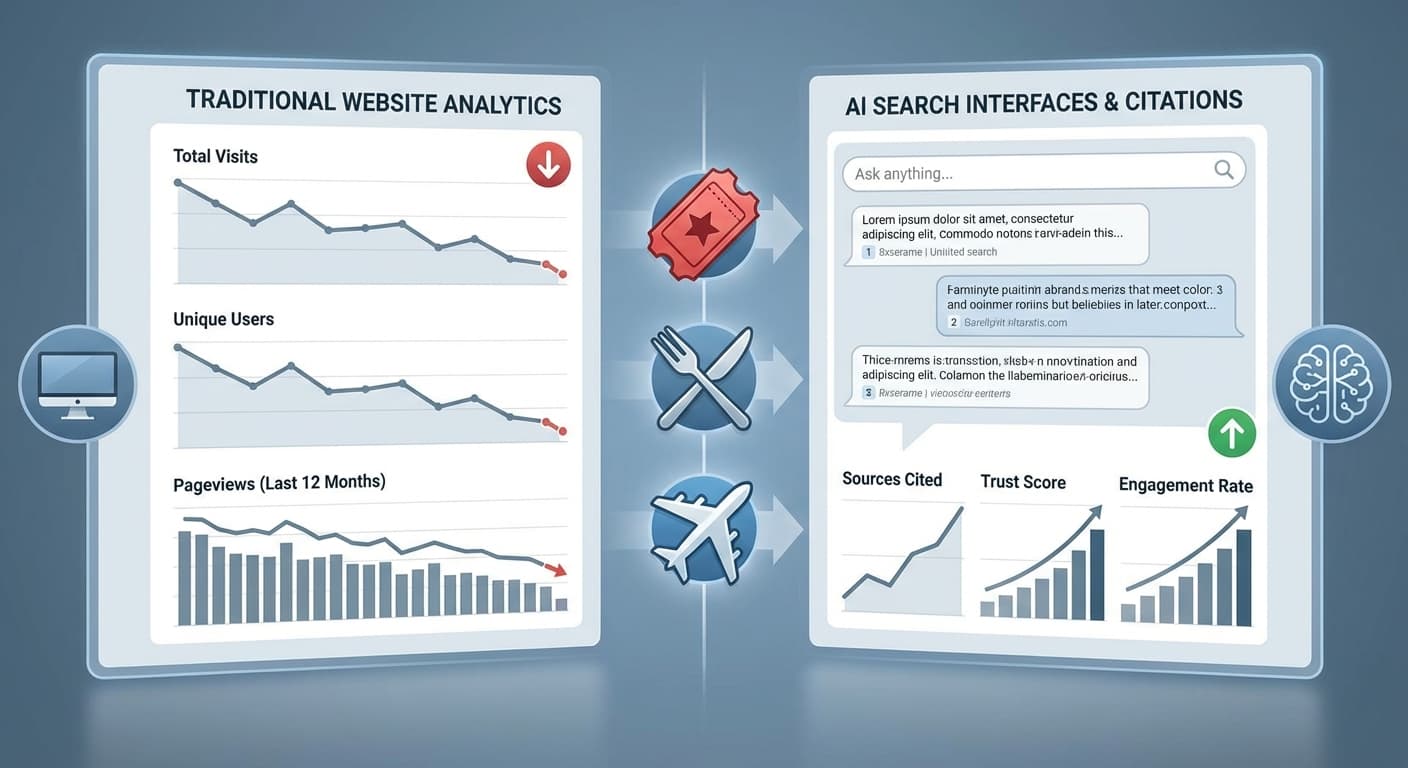
Traditional SEO metrics were built for a world where users clicked through search results pages. But AI search fundamentally changes user behavior:
Yet most analytics dashboards still show:
None of these capture the value of AI visibility.
Building Your AI ROI Framework: The CITE Method
To bridge this gap, successful teams are using the CITE framework:
C - Citations Tracked
Monitor when and how often AI engines reference your content. This includes:
I - Influence Measured
Quantify the downstream impact of AI citations:
T - Traffic Attribution
Connect AI visibility to business outcomes:
E - Engagement Quality
Measure the depth of interaction from AI-driven awareness:
Practical ROI Calculation Models
Model 1: Citation Value Estimation
Calculate the equivalent advertising cost of AI citations:
Example: If your paid search CAC is $150 and your AI optimization generates qualified leads at $75 each, that's a 100% ROI improvement.
Model 2: Authority Acceleration
Measure how AI citations accelerate other marketing efforts:
Model 3: Competitive Displacement
Quantify market share captured through AI dominance:
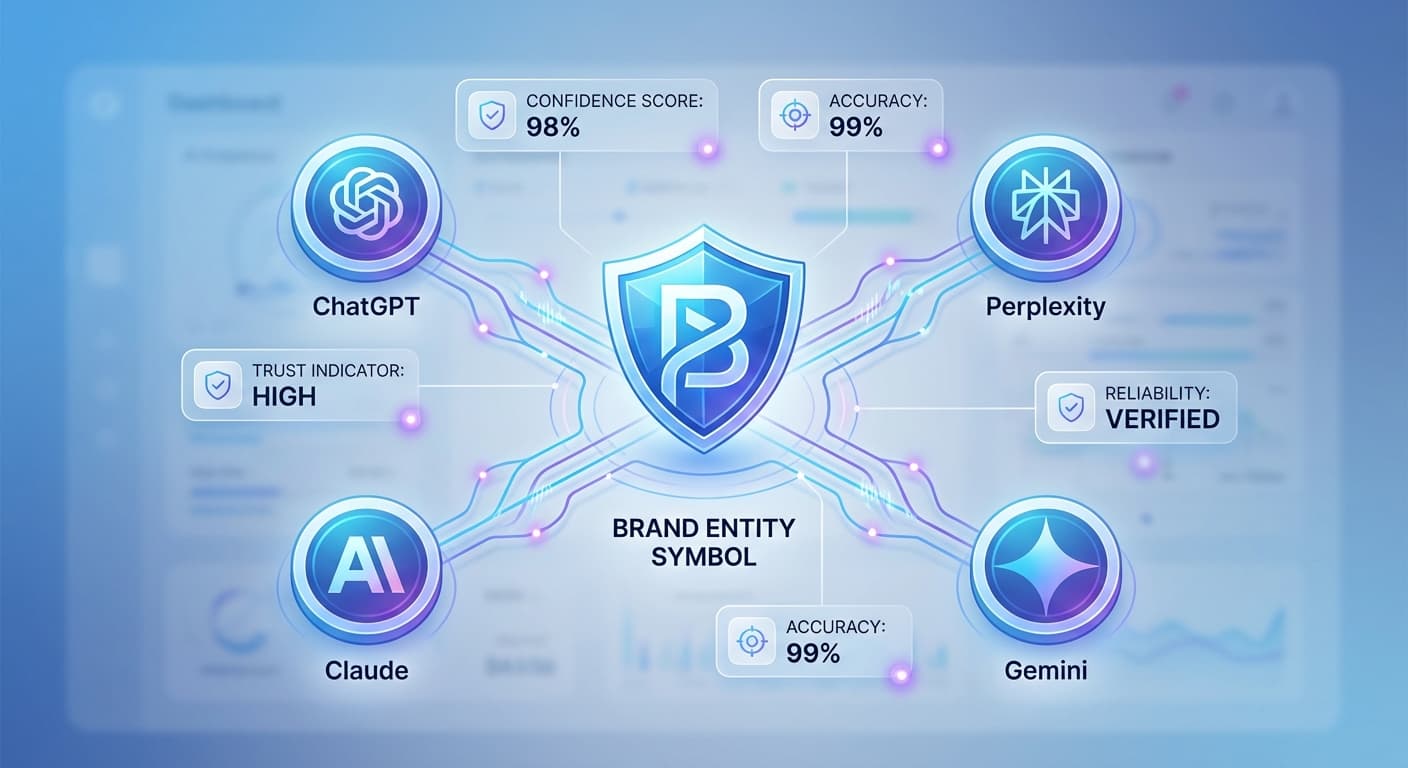
Tools like Citescope Ai make this process systematic by tracking citations across ChatGPT, Perplexity, Claude, and Gemini automatically, giving you the data foundation for these calculations.
Translating AI Metrics for Traditional Leadership
Create Equivalent Metrics
Help your boss understand AI success in familiar terms:
Build Comparative Dashboards
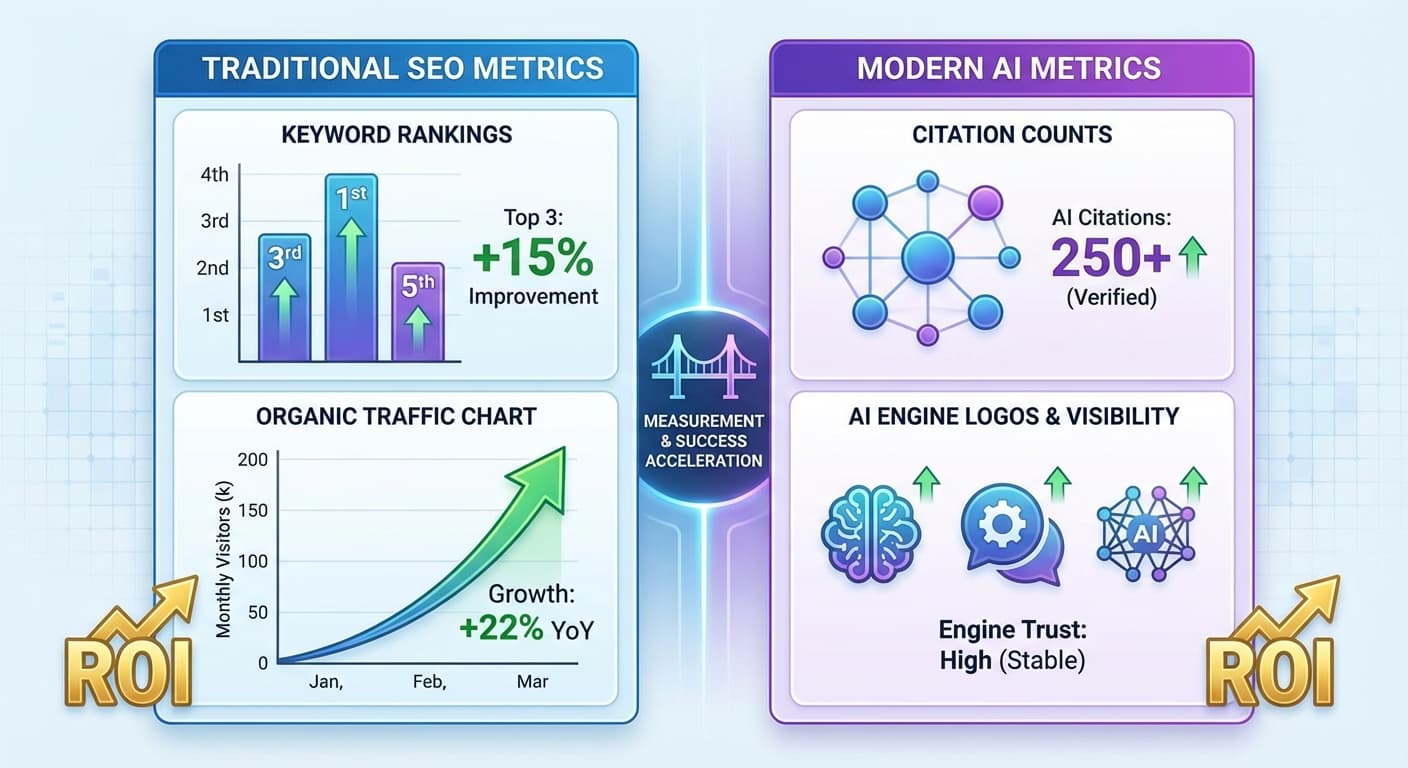
Show traditional and AI metrics side-by-side:
| Metric Type | Traditional | AI Equivalent | Current Performance |
|-------------|-------------|---------------|-----------|
| Visibility | Keyword Rankings | Citation Frequency | 127 citations/month |
| Traffic Quality | Organic CTR | AI Referral Rate | 23% conversion rate |
| Authority | Backlink Profile | Citation Network | Featured in 15 AI responses |
Connect to Revenue Impact
Always tie AI metrics back to business outcomes:
Building Internal Buy-In: A Step-by-Step Approach
Phase 1: Pilot Program (Months 1-2)
Phase 2: Proof of Concept (Months 3-4)
Phase 3: Scale and Integration (Months 5-6)
Common Objections and Responses
"How do we know AI search isn't just a fad?"
Show the data: AI search queries grew 340% in 2025, and 67% of users under 30 now prefer AI engines for research.
"We can't track conversions from AI citations."
Implement attribution tracking: Use unique UTM parameters, dedicated landing pages, and survey new customers about discovery methods.
"Our industry is too technical for AI optimization."
Actually, technical content performs exceptionally well: AI engines need authoritative sources for complex topics, making expertise-driven content highly citable.
How Citescope Ai Helps Bridge the Measurement Gap
While you can track some AI metrics manually, scaling this approach requires specialized tools. Citescope Ai addresses the core challenge by:
The platform's Citation Tracker eliminates the manual work of monitoring AI engines, while the GEO Score gives you a clear benchmark for optimization success—metrics your boss can understand and track over time.
Ready to Optimize for AI Search?
The shift to AI search isn't coming—it's here. While your competitors debate whether to optimize for AI engines, you can start building measurable ROI from citations today. Citescope Ai's free tier includes 3 content optimizations per month, giving you everything you need to prove the concept and build internal support for a larger AI optimization strategy.
Start your free trial today and turn AI citations into your competitive advantage.