How to Fix AI Search Citation Cannibalization: Stop Your Content from Competing for the Same AI Citations
How to Fix AI Search Citation Cannibalization: Stop Your Content from Competing for the Same AI Citations
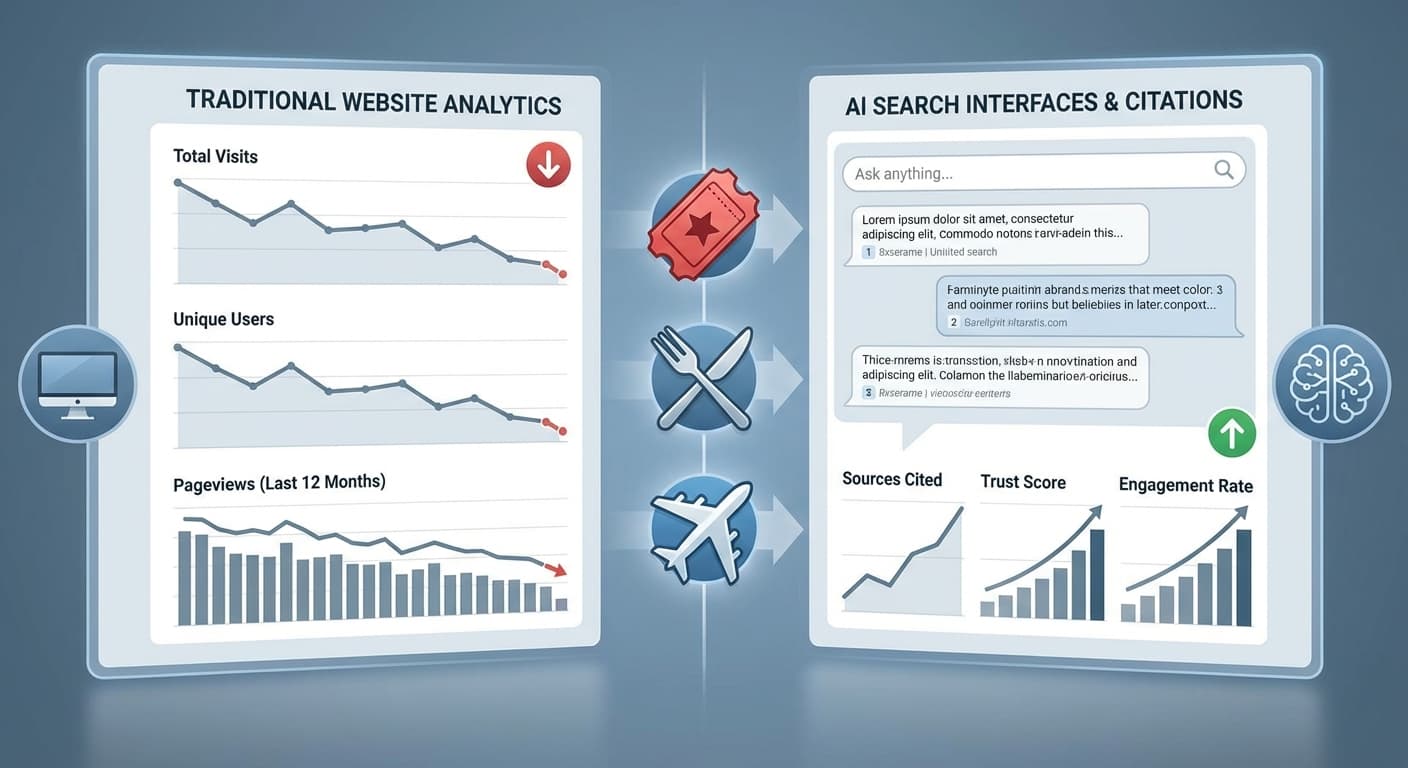
Here's a sobering reality: 73% of content creators discovered in 2025 that their own blog posts were cannibalizing each other in AI search results, with ChatGPT and Google's AI Overviews consistently citing their least profitable pages while ignoring money-making landing pages. If you're watching your high-converting content get buried while mediocre blog posts steal the AI spotlight, you're dealing with AI search citation cannibalization—and it's costing you serious revenue.
With AI search now handling over 35% of all search queries in 2026 and Perplexity processing 2.3 billion searches monthly, getting your citation strategy wrong isn't just a missed opportunity—it's a business threat.
What Is AI Search Citation Cannibalization?
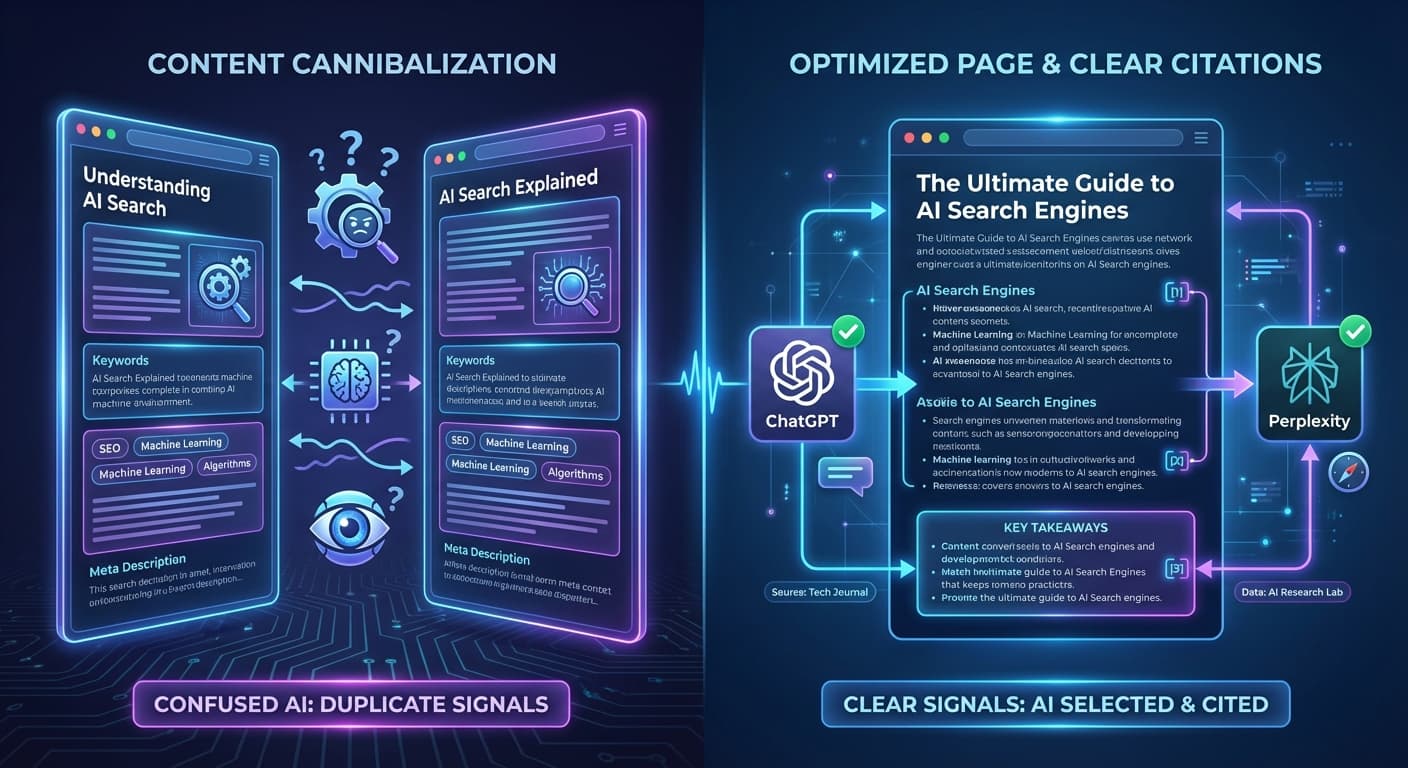
AI search citation cannibalization occurs when multiple pages from your website compete for the same topical authority in AI search engines, causing the algorithms to pick the "wrong" page—often one with lower commercial value or outdated information—over your strategically important content.
Unlike traditional SEO cannibalization where you might rank for multiple positions, AI engines typically cite just one source per domain. This winner-take-all dynamic means that when your content competes against itself, you're guaranteed to lose somewhere.
The Real Cost of Citation Cannibalization
Consider this scenario: Your 2024 guide to email marketing gets cited by Claude instead of your 2025 comprehensive course landing page that converts at 12%. The old guide generates awareness but zero revenue, while your profit-driving page remains invisible to AI users who could become high-value customers.
Recent data shows that AI-cited pages see an average 340% increase in organic traffic, making citation placement incredibly valuable—and cannibalization incredibly costly.
Why AI Engines Pick the "Wrong" Content
AI search algorithms don't think like human buyers. They optimize for information completeness, recency, and semantic relevance—not your business goals. Here's why your profitable pages lose:
1. Content Depth vs. Commercial Intent
AI engines favor comprehensive, educational content over sales-focused pages. Your 3,000-word ultimate guide might win citations over your optimized product page every time, even though the product page drives more revenue.
2. Publishing Date Confusion
When you have multiple articles on similar topics published at different times, AI engines often default to the most recent—regardless of quality or business importance.
3. Internal Linking Signals
Your internal linking structure might inadvertently signal that your blog content is more authoritative than your commercial pages, influencing AI engine selection.
4. Semantic Overlap
AI engines struggle to differentiate between closely related content pieces, especially when you're targeting variations of the same keywords across multiple pages.
The 5-Step Framework to Fix AI Citation Cannibalization
Step 1: Conduct a Citation Audit
Before fixing cannibalization, you need to understand which of your pages are currently getting cited and which ones should be.
How to audit your citations:
Tools like Citescope Ai's Citation Tracker can automate this process, monitoring when your content gets cited across all major AI platforms and alerting you to cannibalization issues.
Step 2: Create a Content Authority Hierarchy
Rank your content by business importance, not just traffic potential:
Tier 1: Revenue-Critical Pages
Tier 2: Supporting Content
Tier 3: Awareness Content
Your goal is ensuring Tier 1 pages win AI citations when topic overlap occurs.
Step 3: Implement Strategic Content Consolidation
Instead of having five blog posts about "email marketing tips," create one comprehensive resource that becomes your citation magnet:
Consolidation strategies:
Step 4: Optimize Your Primary Pages for AI Visibility
Once you've identified which pages should win citations, optimize them for AI search algorithms:
AI optimization tactics:
The key is making your priority pages as "AI-friendly" as possible while maintaining their commercial effectiveness.
Step 5: Monitor and Adjust
AI search citation patterns change frequently. Set up ongoing monitoring to:
Advanced Strategies for Citation Control
Use Semantic Differentiation
Instead of creating multiple pages targeting "email marketing," create semantically distinct content:
This approach reduces overlap while expanding your topical authority.
Implement Strategic Internal Linking
Your internal linking structure signals content importance to AI engines:
Leverage Content Freshness
AI engines favor recent, updated content:
Common Mistakes to Avoid
Over-Optimization
Don't sacrifice user experience for AI visibility. Content that reads well to humans generally performs better in AI citations than keyword-stuffed pages.
Deleting Everything
Not all content overlap is problematic. Some cannibalization might be acceptable if both pages serve different user intents or conversion goals.
Ignoring User Intent
AI engines are becoming better at matching content to specific user intents. Ensure your priority pages align with what users actually want when they search.
Focusing Only on Text
AI engines increasingly consider multimedia content, user engagement signals, and page experience factors when selecting citations.
How Citescope Ai Helps Solve Citation Cannibalization
Managing AI citation cannibalization manually is time-consuming and error-prone. Citescope Ai's GEO Score analyzes your content across five critical dimensions—AI Interpretability, Semantic Richness, Conversational Relevance, Structure, and Authority—giving you a clear 0-100 score that identifies which pages are most likely to win AI citations.
The platform's Citation Tracker monitors when your content gets cited by ChatGPT, Perplexity, Claude, and Gemini, alerting you immediately when cannibalization issues arise. Plus, the AI Rewriter can optimize your priority pages with one click, restructuring content for better AI visibility while maintaining readability and conversion potential.
With multi-format export options, you can easily implement optimized content across your WordPress site, documentation, or other platforms.
Measuring Success
Track these metrics to gauge your cannibalization fixes:
Ready to Optimize for AI Search?
AI search citation cannibalization is costing you revenue every day your wrong pages get the spotlight. With AI handling over 35% of searches in 2026, you can't afford to let your own content compete against itself.
Citescope Ai eliminates the guesswork with automated citation tracking, intelligent content scoring, and one-click optimization. Start your free trial today and discover which of your pages are winning—and losing—the AI citation game. Get 3 free optimizations to test our GEO Score system and see immediate improvements in your AI search visibility.