How to Fix Disappearing Referral Data When AI Search Platforms Send Ghost Traffic Your Analytics Can't Attribute to ChatGPT, Perplexity, or Gemini

How to Fix Disappearing Referral Data When AI Search Platforms Send Ghost Traffic Your Analytics Can't Attribute to ChatGPT, Perplexity, or Gemini
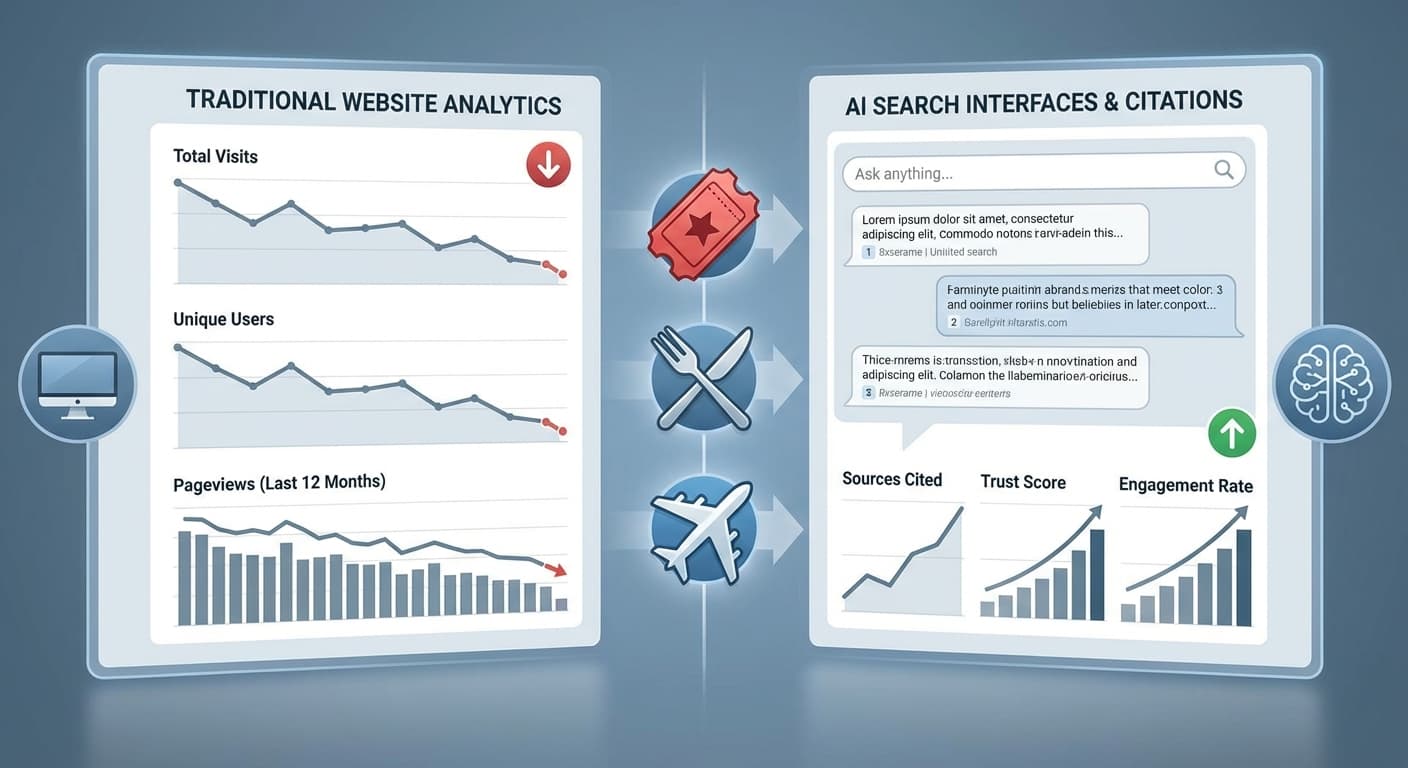
If you've been scratching your head over mysterious traffic spikes that your analytics tools can't properly attribute, you're not alone. With AI search platforms now driving over 30% of all search queries in 2026, content creators are facing a new challenge: ghost traffic from ChatGPT, Perplexity, Claude, and Gemini that shows up in your visitor counts but disappears when you try to track its source.
This phantom referral data isn't just an analytics curiosity—it's becoming a critical blind spot that's preventing content creators from understanding their true reach and optimizing their AI visibility strategy.
Why AI Platforms Create Attribution Nightmares
The Technical Reality Behind Ghost Traffic
AI search platforms operate fundamentally differently from traditional search engines. When ChatGPT or Perplexity cites your content, users don't always click through immediately. Instead, they often:
This creates what industry experts now call "delayed attribution traffic"—real visitors from AI platforms that arrive hours or even days after the initial citation, making them nearly impossible to track with standard analytics.
The Scale of the Problem
Recent data from 2025 shows that content creators are missing attribution for an estimated 40-60% of their AI-driven traffic. That means if you're seeing 1,000 visitors from "direct traffic" or "unknown sources," up to 600 of them might actually be coming from AI search platforms.
Common Attribution Failures Content Creators Face
1. Mobile App Traffic Vanishing
When users access your content through the ChatGPT mobile app or Perplexity's iOS app, referrer headers are often stripped entirely. Your analytics sees these as direct visits, even though they originated from specific AI citations.
2. Privacy Browser Interference
With 70% of Gen Z using privacy-focused browsers alongside AI search tools, traditional UTM parameters and referrer tracking fail more often than ever.
3. Cross-Platform Citation Journeys
Users increasingly start their research on one AI platform (like ChatGPT) but access your content after switching to another device or platform, breaking the attribution chain completely.
4. Delayed Engagement Patterns
Unlike Google searches that drive immediate clicks, AI search citations often lead to "bookmark and return" behavior, where users visit your content 24-48 hours later through saved links.
Advanced Strategies to Track Ghost AI Traffic
Method 1: Implement Enhanced UTM Parameter Systems
Create platform-specific tracking parameters that survive cross-device journeys:
https://yoursite.com/article?utm_source=ai-citation&utm_medium=chatgpt&utm_campaign=jan2026&utm_content=specific-topic
Pro tip: Use URL shorteners that preserve tracking data even when links are copied manually.
Method 2: Deploy Server-Side Attribution Modeling
Client-side analytics miss up to 30% of AI-driven traffic due to ad blockers and privacy settings. Server-side tracking captures:
Method 3: Content Fingerprinting for Citation Correlation
Develop systems that correlate your content citations with traffic spikes:
Method 4: Multi-Touch Attribution Windows
Extend your attribution windows to capture delayed AI traffic:
Advanced Analytics Setup for AI Attribution
Google Analytics 4 Configuration
Third-Party Analytics Integration
Consider supplementing Google Analytics with:
Content Strategy Adjustments for Better Attribution
Optimize for Traceable Citations
Develop AI-First Content Formats
The Role of Citation Tracking Tools
While traditional analytics struggle with AI attribution, specialized tools are emerging to bridge this gap. Modern citation tracking solutions can:
Many content creators are finding that combining traditional analytics with AI-specific tracking tools provides the complete picture they need to understand their true reach and optimize their strategies accordingly.
Building Attribution-Friendly Content
Structure Content for Clear Attribution
Implement Schema Markup for AI Recognition
html
<script type="application/ld+json">
{
"@context": "https://schema.org",
"@type": "Article",
"author": {
"@type": "Person",
"name": "Your Name"
},
"publisher": {
"@type": "Organization",
"name": "Your Site"
}
}
</script>
How Citescope Ai Helps
While setting up manual tracking systems can be complex and time-consuming, Citescope Ai's Citation Tracker automatically monitors when your content gets cited by ChatGPT, Perplexity, Claude, and Gemini. This gives you the attribution data that traditional analytics miss, helping you understand the true impact of your AI optimization efforts.
The platform's GEO Score also ensures your content is structured in ways that make attribution more likely, while the AI Rewriter optimizes your content format to be more trackable when AI platforms cite it.
Testing Your Attribution Setup
Validation Methods
Key Metrics to Track
Future-Proofing Your Attribution Strategy
As AI search continues evolving, attribution challenges will likely intensify. Stay ahead by:
Ready to Optimize for AI Search?
Stop losing valuable attribution data from AI search platforms. Citescope Ai's Citation Tracker automatically monitors when ChatGPT, Perplexity, Claude, and Gemini cite your content, giving you the attribution insights that traditional analytics miss. Plus, our GEO Score and AI Rewriter help optimize your content for better trackability across all AI platforms.
Start your free trial today and finally see the complete picture of your AI search performance—no more ghost traffic mysteries.