GEO Strategy

How to Fix the AI Search Recency Gap When 68% of Your Content Gets Filtered Out for Not Publishing Within the Last 90 Days
February 18, 20267 min read
How to Fix the AI Search Recency Gap When 68% of Your Content Gets Filtered Out for Not Publishing Within the Last 90 Days

How to Fix the AI Search Recency Gap When 68% of Your Content Gets Filtered Out for Not Publishing Within the Last 90 Days

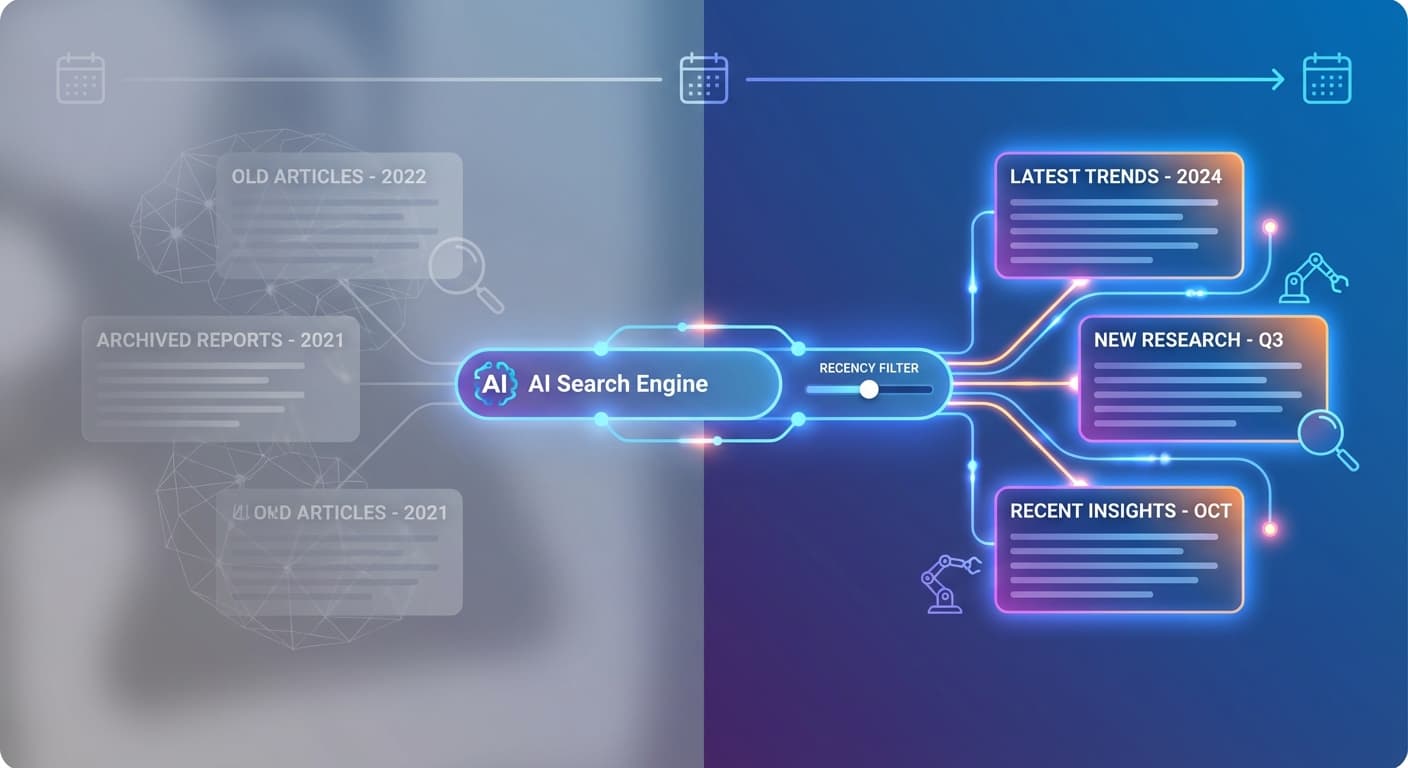
Here's a sobering reality check: if you published a comprehensive guide six months ago, there's a 68% chance AI search engines like ChatGPT and Perplexity are completely ignoring it when users ask related questions. Despite containing valuable, evergreen insights, your content is being filtered out simply because it wasn't published within the last 90 days.

This "recency gap" has become one of the most significant challenges facing content creators in 2026. As AI search continues to capture over 35% of all search queries, understanding and addressing this bias toward fresh content isn't just important—it's essential for maintaining visibility in an AI-driven search landscape.

Understanding the AI Search Recency Bias

AI search engines prioritize recent content for several logical reasons. They're designed to provide the most current information, especially for rapidly evolving topics like technology, news, and trends. However, this creates an unintended consequence: valuable evergreen content gets systematically overlooked.

Recent analysis of AI citation patterns reveals some striking statistics:

  • 68% of content older than 90 days receives significantly fewer citations

  • Content published within the last 30 days is 3.4x more likely to be cited

  • Evergreen topics see a 45% drop in AI visibility after the 90-day mark

  • Only 12% of content older than 6 months maintains consistent AI search visibility
  • Why This Matters More Than Ever in 2026

    With over 600 million weekly ChatGPT users and Perplexity handling 150 million monthly queries, AI search has fundamentally changed how people discover content. When your existing content library becomes invisible to these platforms, you're essentially losing access to a massive audience that could benefit from your expertise.

    The financial impact is real. Companies are reporting 30-40% drops in organic traffic from older content as users increasingly turn to AI search for answers. This forces content teams into a expensive cycle of constantly creating new content to maintain visibility, rather than leveraging their existing content investments.

    The Root Causes of the Recency Gap

    Algorithmic Preferences

    AI models are trained to prioritize freshness signals, including:

  • Publication dates and last-modified timestamps

  • Recent social media engagement

  • Current backlink velocity

  • Updated statistics and data points
  • Content Staleness Indicators

    AI engines look for signs that content might be outdated:

  • References to old statistics or studies

  • Mentions of discontinued products or services

  • Outdated screenshots or examples

  • Links to pages that no longer exist
  • Technical Factors

    Several technical elements contribute to the recency bias:

  • Schema markup showing original publication dates

  • Lack of "last updated" timestamps

  • Static content structure with no fresh elements

  • Missing current-year references in titles and headings
  • Proven Strategies to Bridge the Recency Gap

    1. Strategic Content Refreshing

    The most effective approach is systematic content updating that signals freshness to AI engines:

    Update Statistics and Data Points

  • Replace outdated statistics with current figures

  • Add 2025-2026 data points and trends

  • Include recent case studies and examples

  • Reference current industry reports
  • Refresh Examples and Screenshots

  • Update product screenshots to current interfaces

  • Replace discontinued tools with current alternatives

  • Add new case studies from the past 12 months

  • Include recent company or industry examples
  • Modernize Language and References

  • Update cultural references to current events

  • Revise outdated terminology or industry jargon

  • Add current-year context to evergreen advice

  • Include recent regulatory or industry changes
  • 2. Technical Optimization for Freshness Signals

    Implement Last-Modified Schema
    html
    <script type="application/ld+json">
    {
    "@context": "https://schema.org",
    "@type": "Article",
    "dateModified": "2026-01-15T10:30:00Z",
    "datePublished": "2024-03-15T14:20:00Z"
    }
    </script>


    Add "Last Updated" Timestamps

  • Display visible update dates prominently

  • Use structured data to communicate freshness

  • Update meta tags with revision dates

  • Implement automatic "last reviewed" timestamps
  • Create Dynamic Content Elements

  • Add auto-updating copyright years

  • Include current date references in introductions

  • Implement dynamic "as of [current date]" disclaimers

  • Add real-time data feeds where relevant
  • 3. Content Expansion and Enhancement

    Add New Sections

  • Include "2026 Updates" sections in older posts

  • Add current trend analyses

  • Create "What's Changed" summaries

  • Include recent FAQ additions
  • Enhance with Current Context

  • Add pandemic and post-pandemic perspectives

  • Include remote work considerations

  • Reference current economic conditions

  • Incorporate new technology adoptions
  • Strengthen Authority Signals

  • Add recent expert quotes and interviews

  • Include new research citations

  • Reference current thought leaders

  • Add testimonials from recent clients or users
  • 4. Strategic Republishing Approaches

    Selective Republishing

  • Republish top-performing content with substantial updates

  • Change publication dates after significant revisions

  • Create "updated editions" of popular guides

  • Split comprehensive posts into current mini-series
  • Content Syndication Strategy

  • Republish updated content on different platforms

  • Create derivative pieces for social media

  • Develop webinar or video content from updated posts

  • Transform evergreen posts into current newsletter content
  • Advanced Techniques for AI Visibility

    1. Seasonal and Cyclical Updates

    Create a content calendar that aligns with natural refresh cycles:

  • Quarterly Reviews: Update industry statistics and trends

  • Annual Overhauls: Comprehensive refreshes of cornerstone content

  • Seasonal Updates: Add current seasonal context and examples

  • Event-Triggered Updates: Refresh content around major industry events
  • 2. AI-Optimized Content Structure

    When refreshing content, optimize for AI comprehension using tools like Citescope Ai's GEO Score analysis. This ensures your updated content not only appears fresh but also ranks higher for semantic richness and AI interpretability.

    3. Cross-Content Linking Strategy

  • Link older refreshed content to newer posts

  • Create content clusters around updated topics

  • Build internal link networks that boost collective freshness

  • Implement topic-based content hubs with regular updates
  • Measuring Success: KPIs for Recency Gap Fixes

    Primary Metrics


  • AI Citation Rate: Track mentions in ChatGPT, Perplexity, and Claude responses

  • Organic Traffic Recovery: Monitor traffic improvements to refreshed content

  • Search Visibility: Track ranking improvements for target keywords

  • Engagement Metrics: Measure time on page and interaction rates
  • Secondary Indicators


  • Social Sharing: Monitor increased social media engagement

  • Backlink Acquisition: Track new links to refreshed content

  • Brand Mentions: Monitor increased brand visibility in AI responses

  • Lead Generation: Measure conversion improvements from updated content
  • Creating a Sustainable Refresh Schedule

    Content Audit and Prioritization

  • Identify High-Value Content: Focus on posts that historically drove traffic and conversions

  • Assess Refresh Complexity: Categorize content by update difficulty

  • Create Update Templates: Develop standardized refresh checklists

  • Set Refresh Frequencies: Establish update schedules based on content type
  • Resource Allocation

  • Daily: Quick stat updates and link checks

  • Weekly: Screenshot updates and example refreshes

  • Monthly: Comprehensive content reviews and additions

  • Quarterly: Full content overhauls and republishing
  • How Citescope Ai Helps Bridge the Recency Gap

    Citescope Ai's Citation Tracker specifically monitors when your refreshed content starts getting cited by AI engines, helping you measure the direct impact of your recency gap fixes. The platform's GEO Score analyzes your updated content across five dimensions, ensuring your refreshed posts aren't just newer—they're optimized for maximum AI visibility.

    The AI Rewriter feature can help you quickly modernize older content by restructuring it for better AI comprehension while maintaining your original insights and value. This makes the refresh process more efficient while ensuring your updates actually improve AI search performance.

    Ready to Optimize for AI Search?

    The recency gap is real, but it's not insurmountable. With the right strategy and tools, you can ensure your valuable content remains visible to AI search engines regardless of publication date. Citescope Ai helps you track, optimize, and measure your success in bridging this gap.

    Start your free trial today and see which of your existing content pieces are being filtered out—and more importantly, learn how to fix them. Get 3 free content optimizations to test how refreshed content performs in AI search engines.

    AI SearchContent FreshnessSEO StrategyContent MarketingAI Visibility

    Track your AI visibility

    See how your content appears across ChatGPT, Perplexity, Claude, and more.

    Start for Free