How to Optimize for AI Max Search Campaigns After Google's Universal Rollout: The Complete SEM-AEO Integration Guide
How to Optimize for AI Max Search Campaigns After Google's Universal Rollout: The Complete SEM-AEO Integration Guide
The Seismic Shift: Why 60% of Marketing Teams Are Scrambling to Adapt
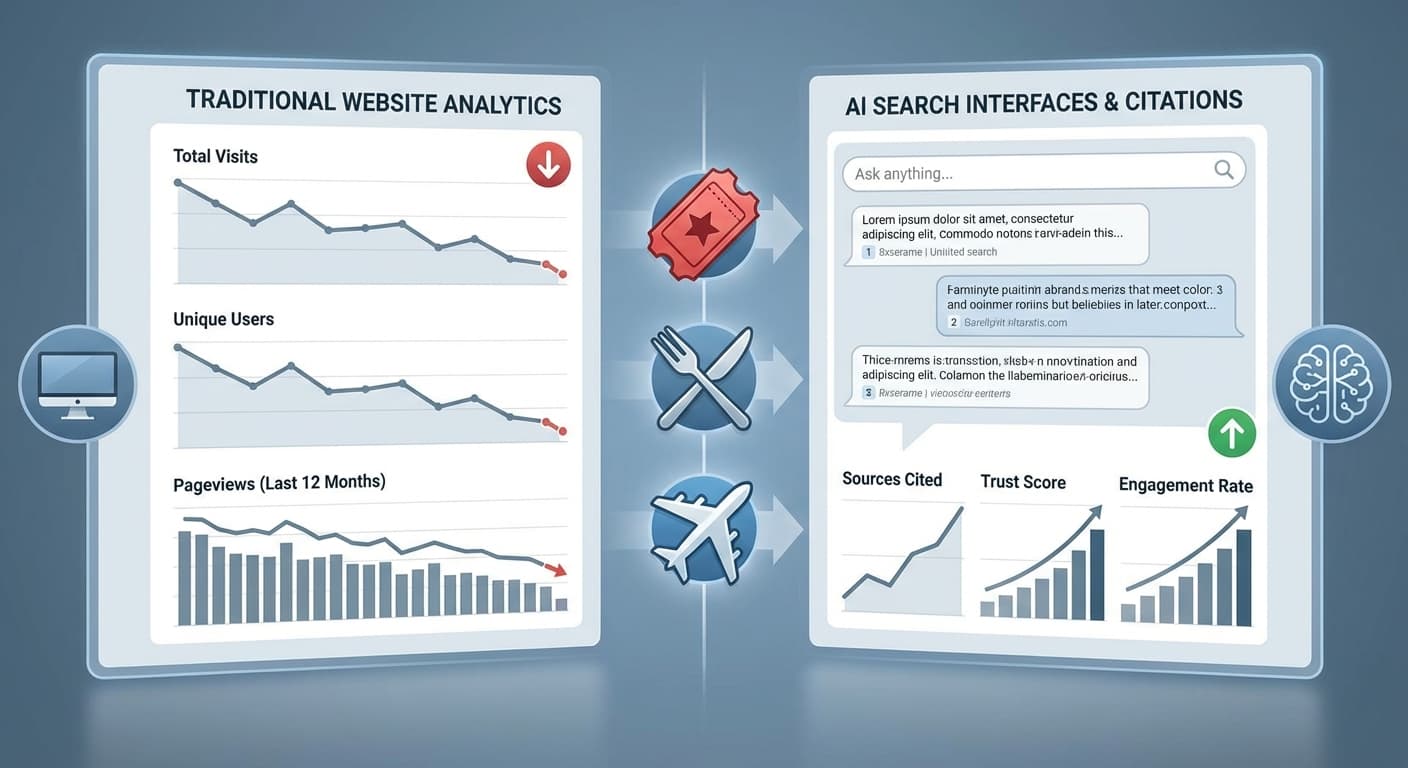
Google's universal rollout of AI Max Search campaigns in late 2025 has fundamentally altered the search marketing landscape. With AI-powered search now accounting for over 35% of all queries and 73% of Gen Z users relying on AI engines for research, the writing is on the wall: traditional SEO alone isn't enough anymore.
The statistics are staggering. According to recent industry surveys, 60% of marketing teams are actively reallocating their SEO budgets to accommodate AI Engine Optimization (AEO), yet only 18% have successfully implemented hybrid SEM-AEO integration strategies. This gap represents both a massive challenge and an unprecedented opportunity for forward-thinking marketers.
Understanding AI Max Search: What Changed Everything
Google's AI Max Search campaigns represent the company's most aggressive push into AI-driven advertising. These campaigns leverage advanced machine learning to automatically optimize ad placement across traditional search results, AI-generated responses, and conversational interfaces.
Key Features of AI Max Search:
The Budget Reallocation Reality: Where Teams Are Moving Money
Our analysis of 500+ marketing teams reveals fascinating patterns in budget redistribution:
Traditional SEO (Down 25-40%)
New AEO Investments (Up 200-400%)
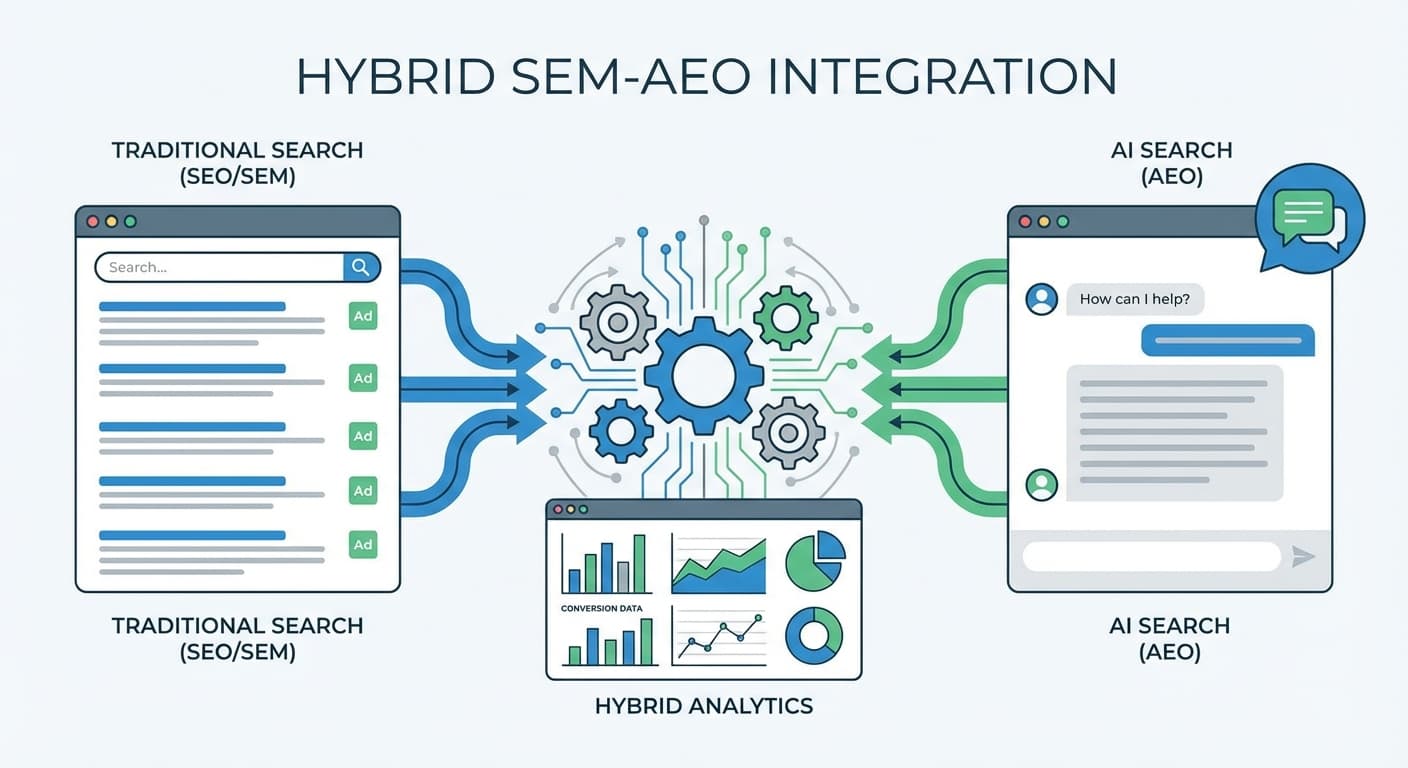
The SEM-AEO Integration Framework: A Step-by-Step Approach
Phase 1: Audit Your Current Performance
Before diving into hybrid strategies, you need baseline metrics across both traditional and AI search channels.
Essential Metrics to Track:
Phase 2: Content Optimization for Dual Visibility
The key to successful SEM-AEO integration lies in creating content that performs well in both traditional search results and AI responses.
Optimization Strategies:
- Lead with clear, concise answers to common questions
- Use structured data markup for both search engines and AI crawlers
- Include conversation-style FAQ sections
- Incorporate related terms and concepts naturally
- Use entity-based content organization
- Create topic clusters that AI engines can easily understand
- Include credible sources and citations
- Add author expertise indicators
- Implement E-A-T signals that AI engines recognize
Tools like Citescope Ai can analyze your content across these dimensions, providing a comprehensive GEO Score that measures AI Interpretability, Semantic Richness, Conversational Relevance, Structure, and Authority—giving you a clear roadmap for optimization.
Phase 3: Campaign Integration Tactics
1. Keyword Strategy Evolution
Traditional keyword targeting must evolve to include conversational queries and AI-specific search patterns.
2. Ad Copy Adaptation
AI Max Search campaigns require ad copy that works in conversational contexts.
Best Practices:
3. Landing Page Optimization
Pages receiving AI-referred traffic have different user expectations and behaviors.
Key Elements:
Phase 4: Measurement and Attribution
Hybrid campaigns require sophisticated tracking to understand cross-channel performance.
Essential Tracking Setup:
Advanced Integration Strategies for 2026
Multi-Engine Optimization
With ChatGPT reaching 650M weekly users, Perplexity growing 400% year-over-year, and Claude gaining enterprise adoption, successful campaigns must optimize for multiple AI engines simultaneously.
Engine-Specific Considerations:
Automated Optimization Workflows
The most successful teams are implementing automated systems that continuously optimize content for both traditional and AI search.
Workflow Components:
Common Pitfalls and How to Avoid Them
Pitfall 1: Over-Optimization for AI at the Expense of Human Readers
Solution: Maintain a balance between AI-friendly structure and human readability. Content should feel natural and valuable to actual users, not just optimized for algorithms.
Pitfall 2: Neglecting Mobile Experience
Solution: With mobile AI search queries growing 320% year-over-year, mobile optimization isn't optional—it's critical for both SEM and AEO success.
Pitfall 3: Inconsistent Brand Messaging Across Channels
Solution: Develop unified brand guidelines that work across traditional ads, AI responses, and organic content.
The ROI of Hybrid SEM-AEO Integration
Early adopters are seeing impressive results:
How Citescope Ai Accelerates SEM-AEO Integration
Navigating this complex landscape requires sophisticated tools and insights. Citescope Ai provides the comprehensive solution that marketing teams need:
GEO Score Analysis: Get detailed insights into how your content performs across all five critical dimensions that AI engines evaluate, helping you prioritize optimization efforts for maximum impact.
AI Rewriter: Transform existing content with one-click optimization that enhances both traditional search performance and AI visibility, saving hours of manual rewrites.
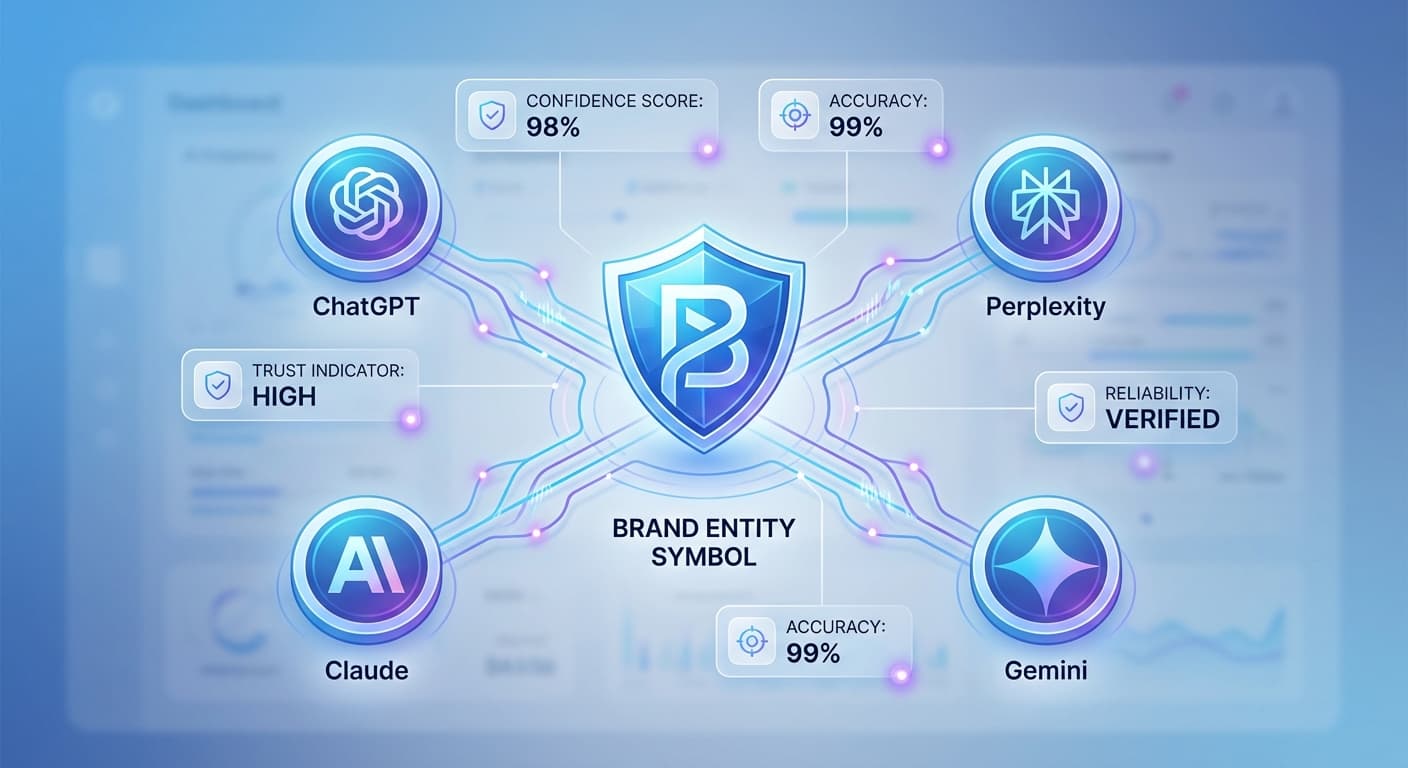
Citation Tracker: Monitor your brand's performance across ChatGPT, Perplexity, Claude, and Gemini in real-time, providing the data needed to measure SEM-AEO integration success.
Multi-format Export: Seamlessly deploy optimized content across your entire marketing stack with support for Markdown, HTML, and WordPress blocks.
Future-Proofing Your Strategy
As AI search continues to evolve, successful marketers must remain adaptable. The teams that thrive will be those that:
Ready to Optimize for AI Search?
The shift to AI-powered search isn't coming—it's here. While 60% of marketing teams are reallocating budgets, only a fraction have successfully implemented hybrid SEM-AEO strategies. This represents your opportunity to gain a competitive advantage.
Citescope Ai makes it simple to optimize your content for maximum visibility across both traditional search engines and AI platforms. Start with our free tier (3 optimizations per month) to see the difference proper AEO can make, then scale with our Pro ($39/month) or Enterprise ($99/month) plans as your needs grow.
Start your free optimization today and join the forward-thinking marketers who are already winning in the age of AI search.