How to Optimize for AI Search Intent Gaps When Your Product Pages Rank in Traditional Google But Get Completely Ignored in ChatGPT Search and Perplexity AI Answers
How to Optimize for AI Search Intent Gaps When Your Product Pages Rank in Traditional Google But Get Completely Ignored in ChatGPT Search and Perplexity AI Answers
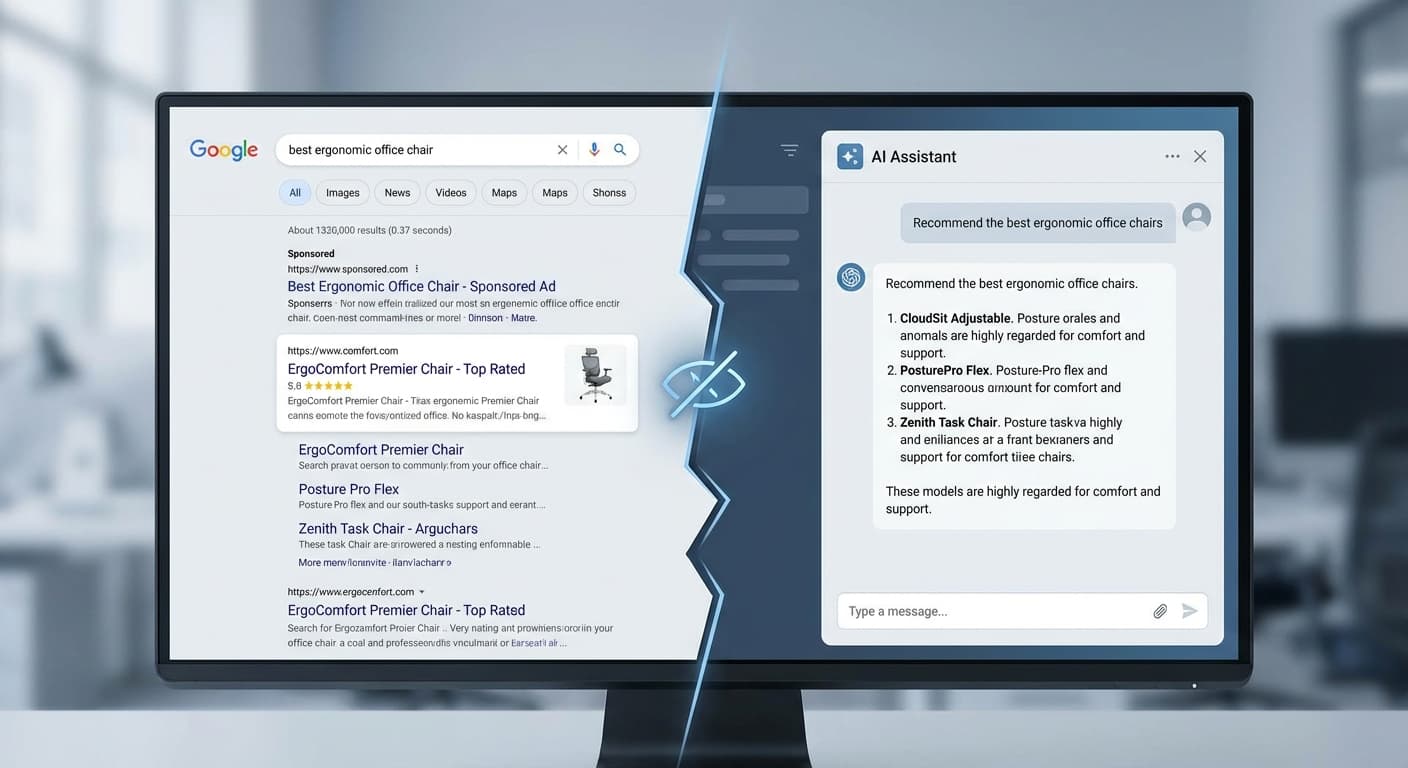
Your product page sits pretty at position #3 on Google for "best project management software," generating steady organic traffic month after month. But when someone asks ChatGPT or Perplexity the same question, your brand doesn't even get a mention. Sound familiar?
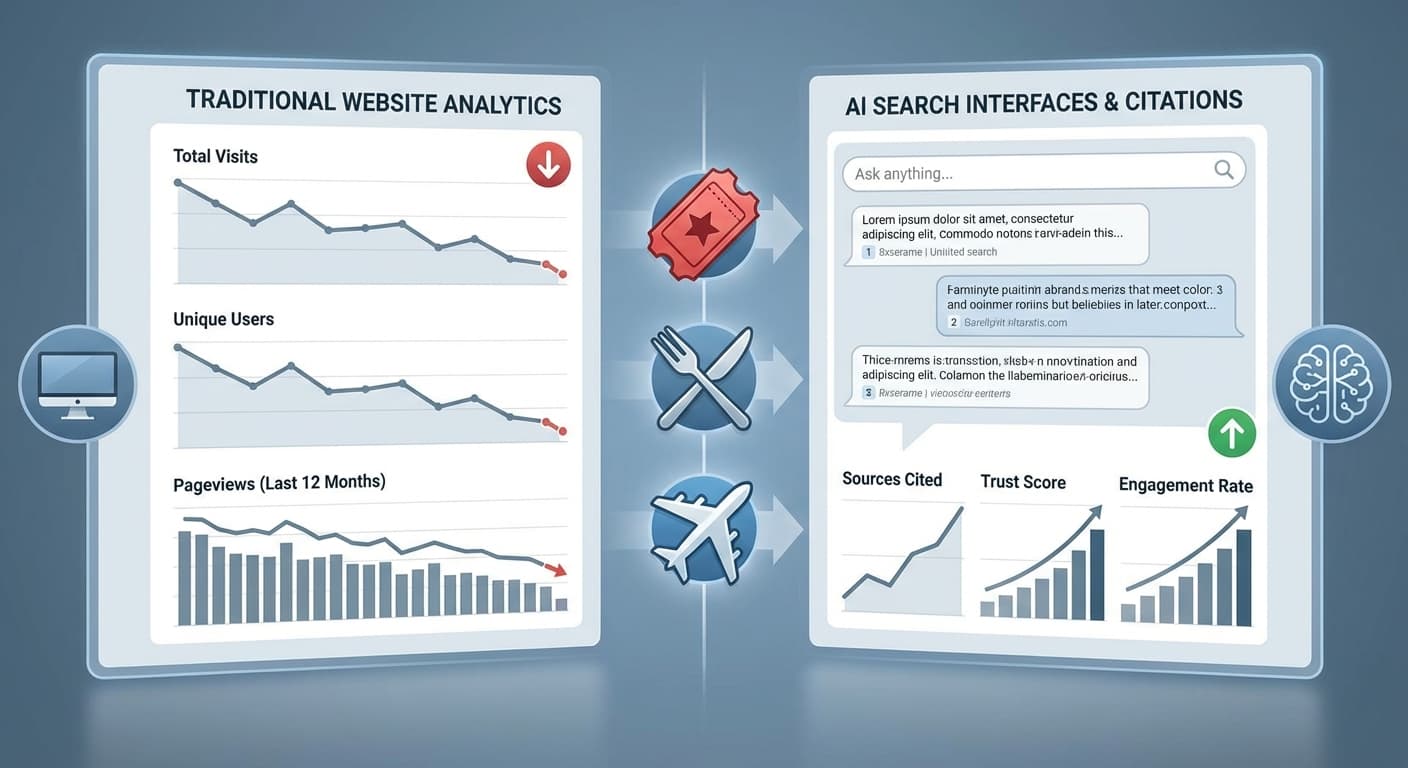
You're not alone. A recent 2025 study by Search Engine Land revealed that 73% of pages ranking in the top 10 on Google receive zero citations in AI search engines. This creates what we call an "AI search intent gap" – a disconnect between what traditional SEO optimizes for and what AI engines actually cite and recommend.
With AI search now accounting for over 35% of all search queries in 2026 and ChatGPT alone serving 600+ million weekly users, ignoring this gap isn't just leaving money on the table – it's potentially handing your market share to competitors who understand how AI engines think.
Why Traditional SEO Success Doesn't Guarantee AI Visibility
The Intent Processing Difference
Traditional search engines like Google primarily match keywords and evaluate authority through backlinks. AI search engines, however, process intent differently:
The Product Page Problem
Most product pages are optimized for conversion, not citation. They're built with:
AI engines prefer content that educates first and sells second – which creates a fundamental misalignment with traditional product page optimization.
Identifying Your AI Search Intent Gaps
Step 1: Audit Your Current AI Visibility
Before fixing the gap, you need to understand its scope:
Step 2: Compare Intent Satisfaction
Examine how AI engines interpret search intent differently:
The key difference? AI engines answer the implied "why" and "how" behind every query, while traditional search matches explicit keywords.
Strategies to Bridge the AI Search Intent Gap
1. Transform Product Features into Educational Content
Instead of just listing features, explain their practical applications:
Traditional Product Page:
AI-Optimized Version:
2. Answer the "Adjacent Questions"
AI engines love content that anticipates follow-up questions. For each product feature, address:
3. Create Conversational Content Architecture
Use Natural Question-Answer Patterns:
Structure for AI Consumption:
4. Implement the "Context-First" Approach
Start product descriptions with context, not features:
Instead of: "Our AI-powered analytics engine provides real-time insights..."
Try: "When your marketing campaigns aren't converting, you need immediate visibility into what's working and what's not. Our analytics engine processes campaign data in real-time, highlighting the specific touchpoints where prospects drop off..."
Advanced AI Optimization Techniques
1. Semantic Clustering
Organize content around semantic themes rather than individual keywords:
2. Authority Through Association
AI engines value content that references authoritative sources:
3. Multi-Format Content Integration
AI engines increasingly favor content that works across formats:
Common Pitfalls to Avoid
Over-Optimization for AI
Don't sacrifice human readability for AI visibility. The best AI-optimized content serves both audiences effectively.
Neglecting Update Frequency
AI engines prioritize fresh, current information. Regularly update product pages with new use cases, customer examples, and market insights.
Ignoring User Intent Evolution
As AI search grows, user intent becomes more specific and contextual. Monitor how people ask about your product category and adjust accordingly.
How Citescope Ai Helps Bridge Your Intent Gap
Optimizing for AI search intent requires a different approach than traditional SEO – and that's where Citescope Ai becomes invaluable. Our platform specifically addresses the challenges outlined in this post:
GEO Score Analysis: Our 5-dimension scoring system (AI Interpretability, Semantic Richness, Conversational Relevance, Structure, Authority) identifies exactly where your product pages fall short in AI visibility. You'll see precisely which elements need adjustment to bridge the intent gap.
AI Rewriter Tool: Transform your product pages with one-click optimization that restructures content for better AI comprehension while maintaining your core messaging and conversion goals.
Citation Tracker: Monitor when your optimized content gets cited by ChatGPT, Perplexity, Claude, and Gemini, giving you real-time feedback on your AI optimization efforts.
Multi-Format Export: Download your optimized content as Markdown, HTML, or WordPress blocks, making implementation seamless across your tech stack.
Measuring Success in AI Search
Key Metrics to Track
Long-term Monitoring
AI search optimization is an ongoing process. Set up regular audits to:
Ready to Optimize for AI Search?
The gap between traditional SEO success and AI search visibility is only widening. Companies that bridge this gap now will capture disproportionate market share as AI search continues to grow.
Citescope Ai makes this transition seamless with tools specifically designed for AI search optimization. Start with our free tier (3 optimizations per month) to test the impact on your most important product pages, then scale with our Pro plan ($39/month) as you see results.
Try Citescope Ai free today and discover which of your high-performing Google pages are invisible to AI engines – then fix the gap with one-click optimization.