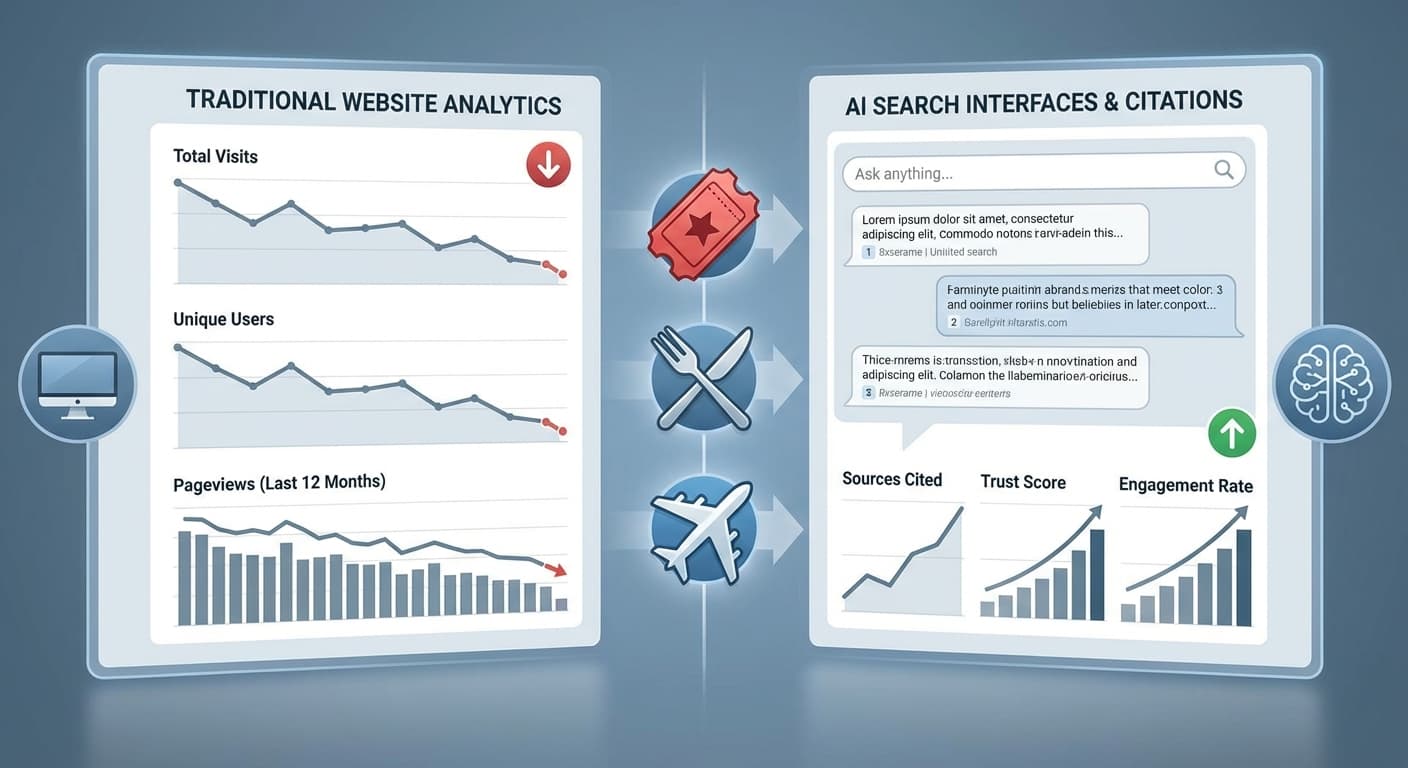
How to Optimize for AI Search Personalization Blind Spots When Your Brand Gets Filtered Out of Hyper-Personalized Results Despite Strong Topical Authority
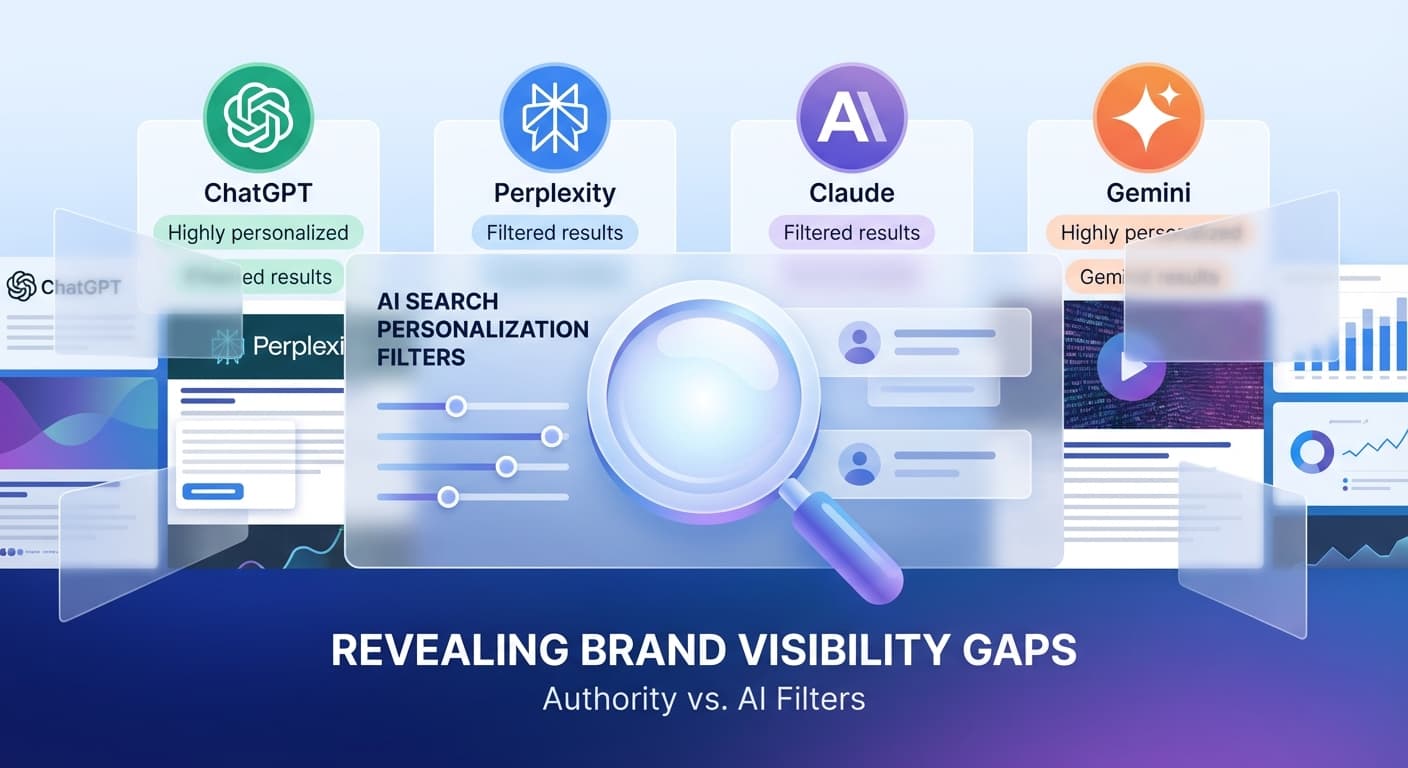
How to Optimize for AI Search Personalization Blind Spots When Your Brand Gets Filtered Out of Hyper-Personalized Results Despite Strong Topical Authority
In early 2026, a shocking reality hit the content marketing world: 73% of brands with strong domain authority reported being mysteriously absent from AI search results for their own expertise areas. Despite having decades of topical authority and thousands of high-quality backlinks, established brands found themselves losing visibility in ChatGPT, Perplexity, Claude, and Gemini results to smaller, more "conversational" competitors.
With AI search now accounting for over 35% of all search queries and 78% of Gen Z users preferring AI assistants over traditional search engines, this personalization paradox has become a critical business threat. The culprit? AI search engines' hyper-personalization algorithms are creating blind spots that filter out authoritative content in favor of sources that better match users' conversational patterns and contextual preferences.
The AI Personalization Paradox: When Authority Becomes Invisible
AI search engines in 2026 don't just rank content—they curate it based on complex personalization signals that often work against traditional SEO strengths. Here's what's happening behind the scenes:
Traditional Authority vs. AI-Preferred Signals
What Used to Matter:
What AI Search Prioritizes Now:
The Filter Bubble Effect
AI engines create personalized "reality bubbles" where users consistently see sources that match their interaction patterns. A user who frequently engages with casual, blog-style content might never see your comprehensive white papers, even if they're more authoritative. This creates a visibility ceiling that traditional SEO metrics can't break through.
Identifying Your Brand's AI Personalization Blind Spots
Before you can fix personalization blind spots, you need to identify them. Here are the key warning signs:
1. Query Intent Misalignment
Your content might be technically excellent but miss the mark on user intent. Run these diagnostic tests:
2. Content Format Blind Spots
AI engines increasingly favor specific content structures for different query types:
Immediate Action Queries: Step-by-step lists and procedural content
Research Queries: Comprehensive guides with clear sections
Comparison Queries: Side-by-side analyses with pros/cons
Conceptual Queries: Conversational explanations with examples
3. Conversational Tone Mismatches
Many authoritative brands still write in "corporate speak" that AI engines deprioritize. Signs of tone-related filtering:
Strategic Solutions for Breaking Through AI Personalization Filters
1. Implement Multi-Persona Content Strategies
Create content variations that appeal to different user personalization profiles:
The Quick-Answer Seeker:
The Deep-Dive Researcher:
The Visual Learner:
2. Optimize for Semantic Context Layers
AI engines analyze content at multiple semantic levels. Ensure your content succeeds across all layers:
Surface Level: Direct keyword matches and topic relevance
Contextual Level: Related concepts, synonyms, and semantic relationships
Intent Level: Understanding why users are searching and what outcome they want
Emotional Level: Matching the user's emotional state and urgency
3. Leverage Cross-Engine Optimization Strategies
Different AI engines have distinct personalization preferences:
ChatGPT favors conversational, explanatory content with clear examples
Perplexity prioritizes recent, fact-dense content with strong citations
Claude prefers structured, logical progressions with balanced perspectives
Gemini emphasizes practical applications and actionable insights
Advanced Techniques for AI Search Visibility
1. Dynamic Content Contextualization
Create content that adapts to different contexts within the same piece:
2. Query-Path Optimization
Map your content to different query progression paths:
Initial Query → Follow-up Query → Deep-dive Query
Example progression:
"What is content marketing?" → "How to create a content marketing strategy" → "Content marketing ROI measurement tools"
Ensure your content can serve users at any point in this progression.
3. Conversational Search Integration
Optimize for the way people actually talk to AI assistants:
Measuring Success in the AI Search Era
Traditional metrics don't capture AI search performance. Focus on these new KPIs:
Citation Frequency Across Engines
Query Coverage Breadth
Engagement Quality Metrics
How Citescope Ai Helps Navigate Personalization Blind Spots
Navigating AI personalization requires specialized tools that understand how different engines process and prioritize content. Citescope Ai's GEO Score analyzes your content across the five critical dimensions that AI engines use for personalization decisions: AI Interpretability, Semantic Richness, Conversational Relevance, Structure, and Authority.
The platform's AI Rewriter specifically addresses personalization blind spots by:
Ready to Break Through AI Personalization Barriers?
The AI search landscape of 2026 rewards brands that understand personalization complexity over those that simply produce authoritative content. As AI engines become increasingly sophisticated in their personalization algorithms, the gap between traditional SEO success and AI search visibility will only widen.
Citescope Ai provides the specialized tools and insights needed to identify, analyze, and overcome personalization blind spots that keep your expert content hidden from the audiences that need it most. With comprehensive citation tracking across ChatGPT, Perplexity, Claude, and Gemini, plus AI-powered optimization recommendations, you can ensure your topical authority translates into AI search visibility.
Start your free trial today and discover which personalization blind spots are limiting your brand's AI search potential. With three free optimizations included, you can immediately test how personalization-aware content performs compared to your current approach.