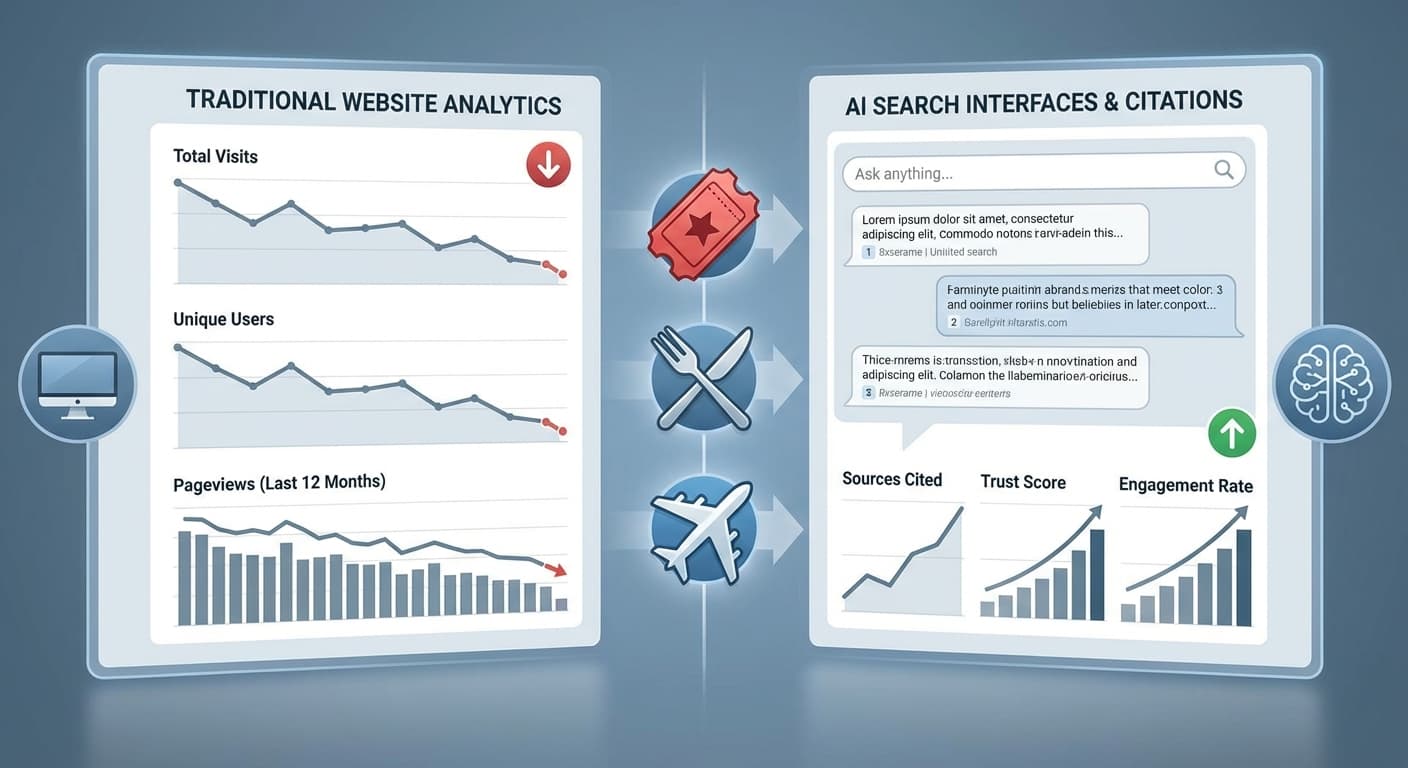
How to Optimize for AI Search Personalization Without Access to User Context Data
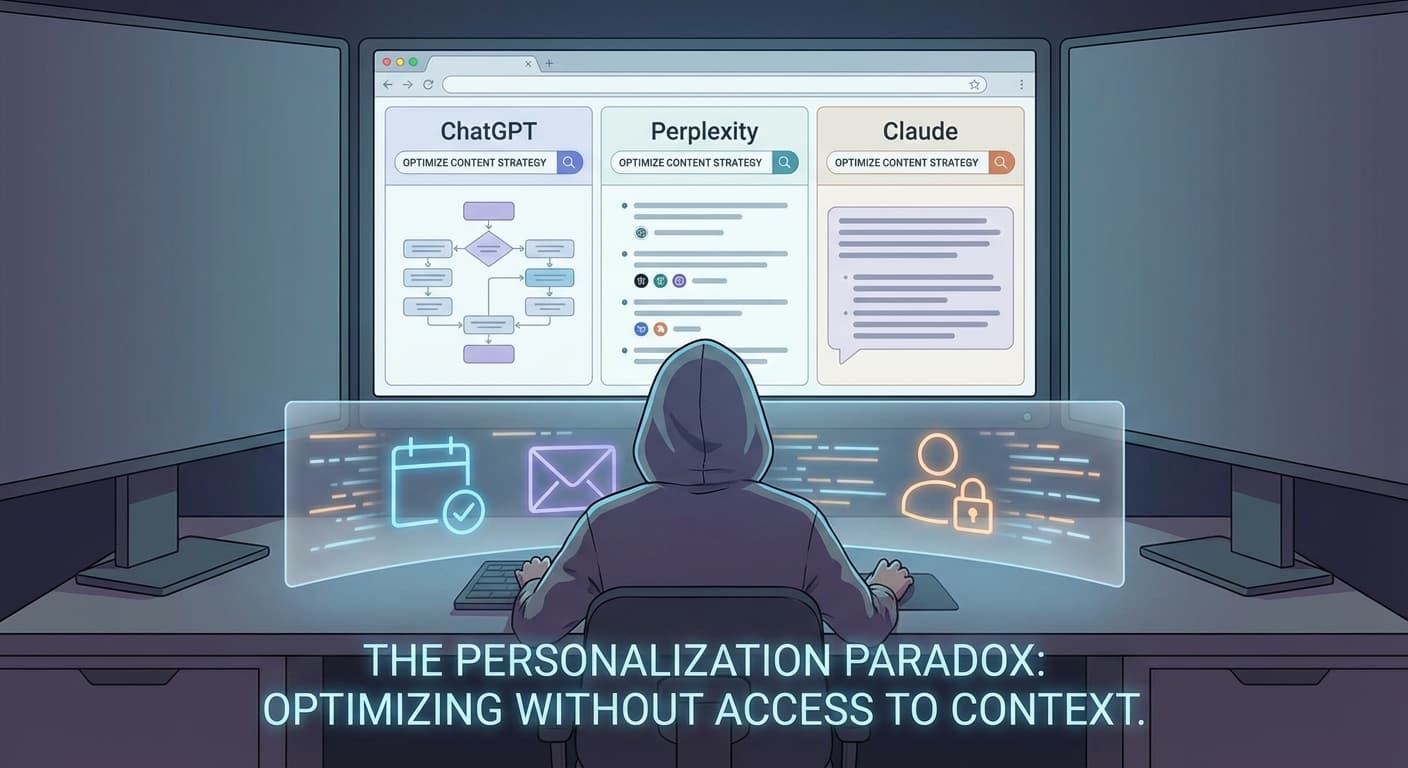
How to Optimize for AI Search Personalization Without Access to User Context Data
By 2026, AI search platforms process over 40 billion personalized queries monthly, with engines like ChatGPT, Perplexity, and Claude increasingly factoring in user context from Gmail, calendar data, search history, and behavioral patterns. Yet here's the challenge: while AI platforms know their users intimately, content creators are essentially operating blind.
This creates a fascinating paradox in modern SEO. AI search engines deliver hyper-personalized results based on data you can't see, from sources you can't access, for audiences you can't fully understand. So how do you optimize content for personalization algorithms when you're locked out of the very data that drives them?
The New Reality of AI-Driven Personalization
Recent studies show that 78% of AI search results now incorporate some form of personalization, drawing from:
When someone asks ChatGPT "What's the best project management tool?", the AI doesn't just pull generic recommendations. It considers their recent emails about team coordination, upcoming calendar deadlines, industry context from previous queries, and even time-sensitive project mentions.
Understanding the Black Box: How Personalization Impacts Citations
AI personalization engines work through what researchers call "contextual citation weighting." Your content might be perfectly optimized for general search, but personalization algorithms can dramatically shift citation probability based on:
User Context Signals
The Citation Multiplier Effect
When your content aligns with a user's personal context, citation probability can increase by 340%. Conversely, context misalignment can make even well-optimized content invisible to specific user segments.
Strategic Approaches for Context-Blind Optimization
1. Create Multi-Context Content Layers
Since you can't target specific personal contexts, build content that serves multiple scenarios simultaneously:
Example Structure:
2. Leverage Semantic Clustering
AI personalization relies heavily on semantic relationships. Optimize by:
3. Optimize for Question Intent Diversity
Personalization algorithms surface different question formulations based on user context. Address multiple intent patterns:
Single Topic, Multiple Intents:
4. Implement Time-Sensitive Content Strategies
Calendar integration means timing matters more than ever:
Advanced Techniques for Personalization-Friendly Content
Conversational Context Optimization
AI platforms remember conversation history. Optimize for:
Authority Signal Diversification
Personalization algorithms weigh authority differently based on user context:
Metadata and Structure for AI Understanding
While you can't see user context, you can help AI engines understand your content's contextual flexibility:
markdown
Content Structure Example:
Measuring Success in a Personalized World
Traditional metrics fall short when personalization creates dramatically different user experiences. Focus on:
Advanced Citation Analytics
Content Resilience Metrics
How Citescope Ai Helps Navigate Personalization Challenges
While you can't access user context data, Citescope Ai's GEO Score analyzes your content across the five key dimensions that AI personalization algorithms prioritize: AI Interpretability, Semantic Richness, Conversational Relevance, Structure, and Authority.
The platform's Citation Tracker monitors performance across ChatGPT, Perplexity, Claude, and Gemini, helping you identify when personalization algorithms favor your content and when they don't. This visibility lets you reverse-engineer successful patterns even without direct access to user context data.
The AI Rewriter specifically optimizes for personalization flexibility, restructuring content to serve multiple user contexts simultaneously – maximizing your chances of citation regardless of individual user personalization factors.
Future-Proofing Your Personalization Strategy
As AI platforms become increasingly sophisticated, expect:
Strategic Recommendations for 2026 and Beyond
The Path Forward: Embracing Uncertainty
Personalization without user context access requires a fundamental shift from precision targeting to comprehensive coverage. Success comes from creating content so valuable and contextually flexible that it earns citations regardless of individual user circumstances.
This approach demands higher content quality, deeper topic expertise, and more sophisticated optimization strategies. But it also creates more sustainable competitive advantages, as comprehensive value is harder to replicate than narrow keyword targeting.
Ready to Optimize for AI Search?
Personalization algorithms may be complex, but your optimization strategy doesn't have to be. Citescope Ai helps you navigate the challenges of context-blind optimization with tools designed specifically for AI search success. Our GEO Score, Citation Tracker, and AI Rewriter give you the insights and optimization power you need to succeed in an increasingly personalized search landscape.
Start optimizing for AI search personalization today with Citescope Ai's free tier – no user context required, just better content that works across all scenarios.