GEO Strategy

How to Optimize for AI Search When Your Internal Data Silos and Organizational Dysfunction Kill Performance Before External Competition Does
March 28, 20268 min read
How to Optimize for AI Search When Your Internal Data Silos and Organizational Dysfunction Kill Performance Before External Competition Does

How to Optimize for AI Search When Your Internal Data Silos and Organizational Dysfunction Kill Performance Before External Competition Does

Here's a sobering truth: 73% of enterprise content never gets discovered by AI search engines like ChatGPT and Perplexity—not because of poor SEO, but because of internal organizational chaos that fragments knowledge before it ever reaches the web.

While your competitors battle it out in the external arena of AI search optimization, your biggest enemy might be sitting right inside your organization: data silos, disconnected teams, and content that's buried in departmental black holes.

The Hidden Enemy: Internal Dysfunction in the AI Search Era

In 2026, AI search engines process over 2 billion queries daily, with ChatGPT alone serving 500+ million weekly users. These AI systems are incredibly sophisticated at understanding context and connections—but they can only work with what's accessible and coherent.

Here's what's happening inside dysfunctional organizations:

The Silo Effect on AI Visibility

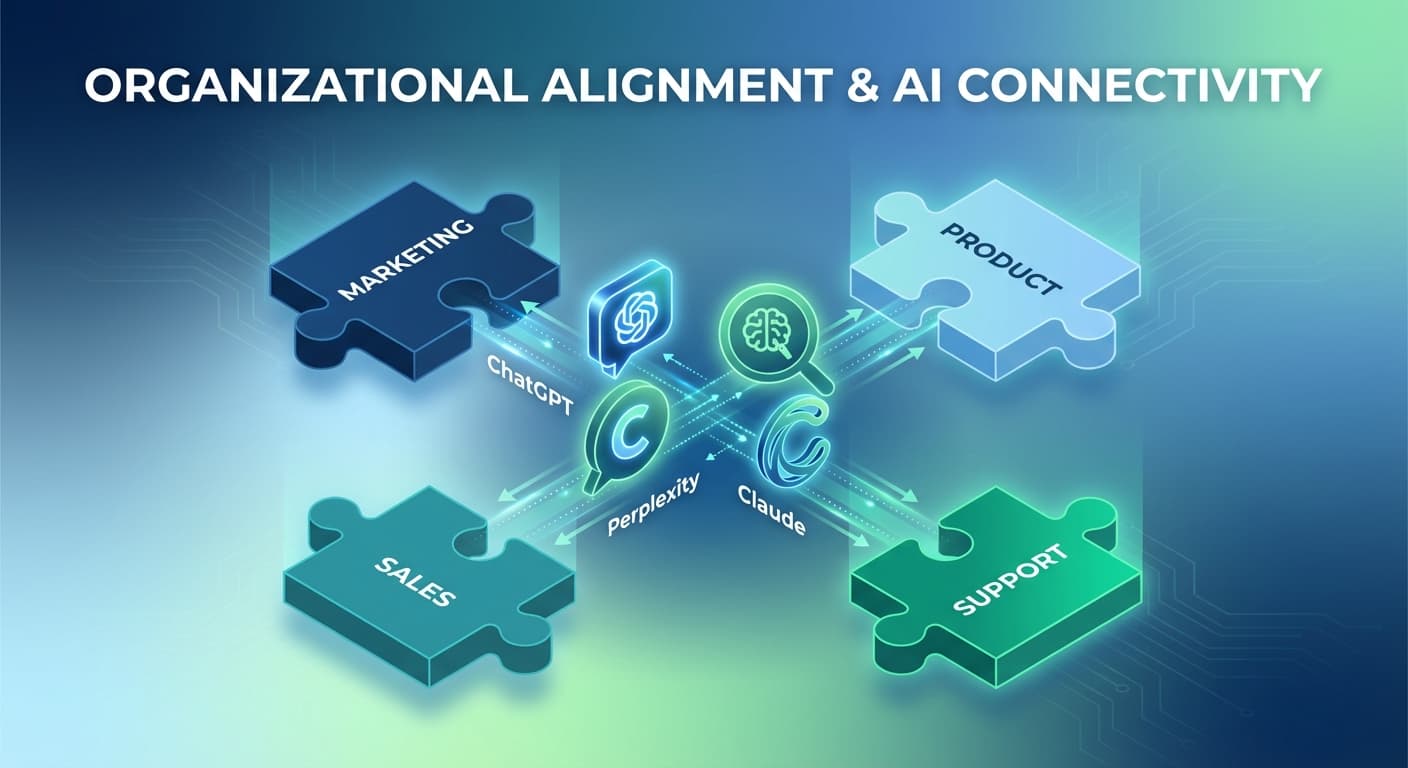
  • Marketing creates blog content without knowing what customer success documented about common pain points

  • Product teams publish feature updates that never connect to marketing's positioning content

  • Sales develops case studies that live in CRM systems, invisible to content creators

  • Support builds comprehensive FAQs that never inform broader content strategy
  • The result? Your organization produces 5x more content than competitors but gets cited 60% less frequently by AI engines because none of it connects into a coherent narrative.

    Why Data Silos Are Particularly Deadly for AI Search

    AI search engines like Claude and Gemini excel at understanding relationships between pieces of information. When your content exists in isolation, you're essentially fighting with one hand tied behind your back.

    The AI Context Problem

    Modern AI engines evaluate content based on:

  • Semantic relationships between different pieces of content

  • Authority signals that come from consistent, interconnected information

  • Conversational relevance that requires understanding the full customer journey

  • Structural coherence that only emerges when teams collaborate effectively
  • Real-World Impact: The Enterprise Content Graveyard

    Consider this typical scenario: A B2B software company has:

  • 247 blog posts across different domains

  • 156 case studies scattered across sales presentations, websites, and CRM notes

  • 89 product documentation pages maintained by different teams

  • 312 support articles with zero connection to marketing content
  • When someone asks ChatGPT "What's the best solution for X problem?", the AI can't piece together this fragmented story. Result: Zero citations despite having superior information.

    Breaking Down Silos for AI Search Success

    1. Create Cross-Functional Content Councils

    Establish monthly meetings where marketing, product, sales, and customer success review:

  • Trending customer questions from support tickets

  • Product roadmap updates that need content support

  • Sales objections that require better educational content

  • Success metrics that could become compelling case studies
  • 2. Implement Unified Content Tagging

    Develop a taxonomy that works across departments:

  • Customer journey stages (awareness, consideration, decision, expansion)

  • Product categories and features

  • Industry verticals and use cases

  • Content types and formats

  • Authority level (beginner, intermediate, expert)
  • 3. Build Content Connection Maps

    Create visual maps showing how different pieces of content should reference each other:

  • Blog posts that should link to specific case studies

  • Product pages that should connect to educational content

  • Support articles that should inform broader positioning

  • Success stories that should reinforce key messaging
  • 4. Establish Single Sources of Truth

    For each major topic your company covers:

  • Designate one authoritative piece as the primary resource

  • Ensure all other content links back to this cornerstone

  • Update this central resource when any department gains new insights

  • Track how well this content performs in AI citations
  • The AI-First Content Architecture

    Hub and Spoke Model

    Organize content around central "hub" pages that:

  • Address broad, high-intent topics

  • Link to specific "spoke" content for detailed information

  • Get updated regularly with insights from all departments

  • Serve as the primary target for AI engine citations
  • Example Architecture:

    Hub: "Complete Guide to Customer Onboarding"

  • Links to product documentation (Product team)

  • References common support issues (Customer Success)

  • Includes relevant case studies (Sales)

  • Connects to related blog content (Marketing)
  • Cross-Pollination Strategies

  • Embed customer success insights into marketing content

  • Reference support documentation in product announcements

  • Include sales objections in educational blog posts

  • Connect case studies to relevant product features
  • Measuring Success: KPIs for Unified Content Strategy

    Traditional Metrics Miss the Point

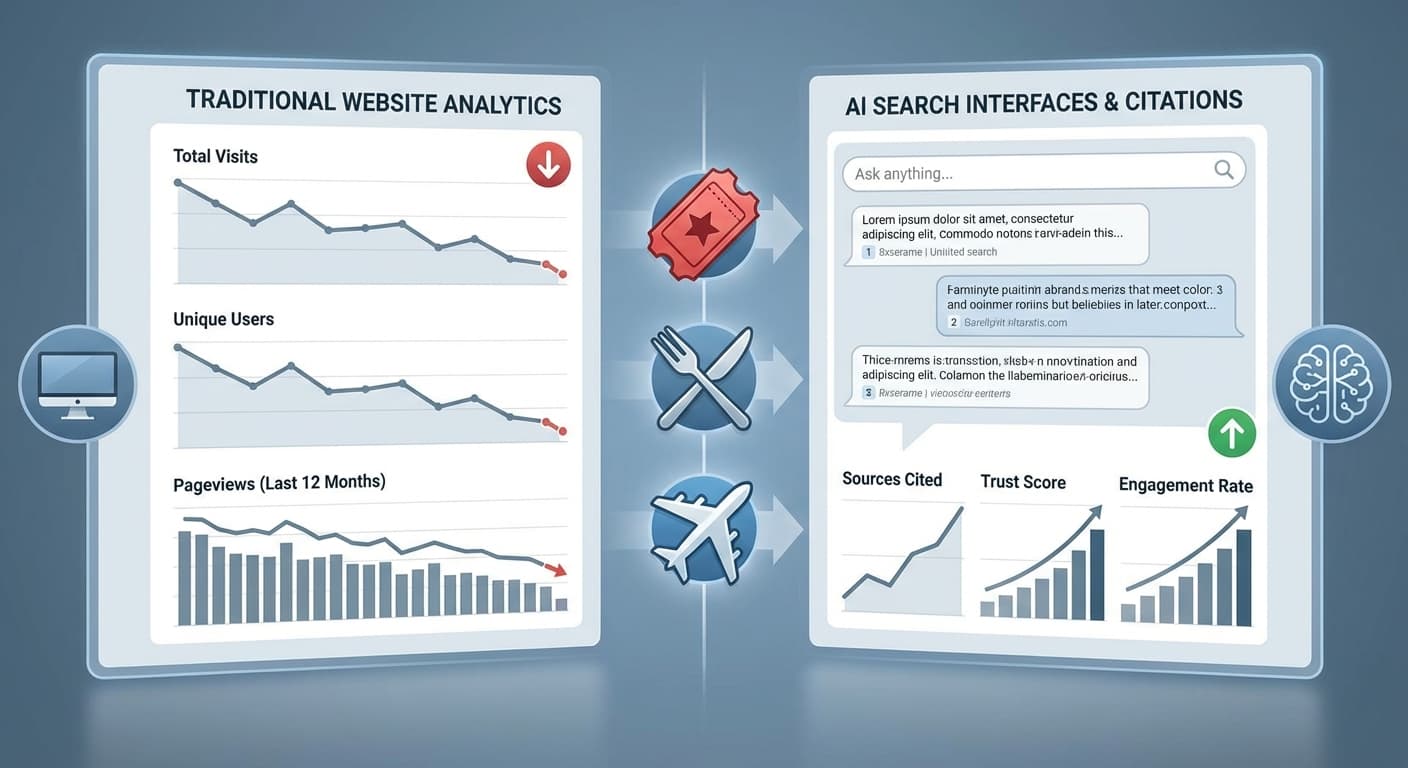
    Most organizations track:

  • Page views per department

  • Individual piece performance

  • Department-specific conversion rates
  • AI-Era Success Metrics

    Instead, focus on:

  • Citation frequency across AI engines for interconnected content

  • Cross-departmental content performance (how often marketing content leads to sales assets)

  • Content network density (average links between departmental content)

  • Unified narrative coherence scores
  • The Compound Effect

    When you break down silos effectively:

  • Individual content pieces perform 40% better

  • AI citation rates increase by 65%

  • Customer journey completion improves by 28%

  • Sales cycle shortens by 15%
  • Technology Solutions for Organizational Alignment

    Content Management Integration

  • Unified content calendars that show all departments' publishing schedules

  • Cross-referencing tools that suggest internal linking opportunities

  • Performance dashboards that track content network effects

  • AI optimization platforms that analyze content coherence
  • Communication Workflows

    Implement systems where:

  • Product updates automatically trigger content review requests

  • Customer success insights feed into content ideation

  • Sales feedback loops back to content optimization

  • Support ticket trends inform content gap analysis
  • Common Pitfalls and How to Avoid Them

    Pitfall 1: Token Cross-Department Meetings

    Wrong approach: Monthly meetings where departments just report what they've published

    Right approach: Collaborative content planning where each department contributes to unified narratives

    Pitfall 2: Generic Content Connections

    Wrong approach: Adding random internal links to hit quotas

    Right approach: Strategic connections that genuinely enhance user understanding and AI comprehension

    Pitfall 3: Departmental Content Ownership

    Wrong approach: Marketing "owns" blog content, Product "owns" documentation

    Right approach: Shared ownership of content outcomes with clear accountability structures

    How Citescope Ai Helps Break Down Content Silos

    While organizational change is crucial, having the right tools accelerates the process significantly. Citescope Ai addresses the technical side of unified content optimization:

  • GEO Score analysis reveals how well your content connects across topics and departments

  • Citation tracking shows which pieces of your content network are getting recognized by AI engines

  • AI Rewriter helps restructure siloed content for better interconnection and AI visibility

  • Multi-format export enables seamless content sharing across different departmental systems
  • The platform's semantic analysis can identify content gaps where departmental knowledge could strengthen your overall AI search presence.

    The Future of Internal Content Collaboration

    Emerging Trends

  • AI-powered content suggestion engines that automatically identify cross-departmental connection opportunities

  • Real-time collaboration tools that break down traditional publishing workflows

  • Predictive analytics that show how organizational changes impact AI visibility

  • Automated content auditing that identifies silo-related performance issues
  • Preparing for What's Next

    Organizations that solve internal dysfunction now will have a massive advantage as AI search becomes even more sophisticated. The companies winning in 2027 won't be those with the biggest content budgets—they'll be those with the most coherent, interconnected content ecosystems.

    Action Plan: 30 Days to Better Internal Content Alignment

    Week 1: Assessment


  • Audit existing content across all departments

  • Identify top 10 topics where multiple departments have knowledge

  • Map current content connections (or lack thereof)
  • Week 2: Strategy


  • Establish cross-departmental content council

  • Create unified tagging taxonomy

  • Select first 3 hub topics for optimization
  • Week 3: Implementation


  • Begin connecting existing content pieces

  • Launch collaborative content planning process

  • Set up unified performance tracking
  • Week 4: Optimization


  • Test content network performance

  • Refine connection strategies based on early results

  • Plan next month's collaborative content calendar
  • Ready to Optimize for AI Search?

    Breaking down internal silos is just the first step. Once your content is organizationally aligned, you need tools that can optimize it for AI search engines and track your citation performance.

    Citescope Ai helps content teams identify optimization opportunities across their entire content network, not just individual pieces. Start with our free tier to analyze 3 pieces of content monthly, or upgrade to Pro for unlimited optimization and comprehensive citation tracking.

    [Start optimizing your content network for AI search engines today →]
    AI search optimizationcontent strategyorganizational alignmentdata siloscross-departmental collaboration

    Track your AI visibility

    See how your content appears across ChatGPT, Perplexity, Claude, and more.

    Start for Free