GEO Strategy

How to Optimize for Gemini Circle to Search Multi-Object Recognition When Visual Shopping Queries Tripled in 2026
March 21, 20268 min read
How to Optimize for Gemini Circle to Search Multi-Object Recognition When Visual Shopping Queries Tripled in 2026

How to Optimize for Gemini Circle to Search Multi-Object Recognition When Visual Shopping Queries Tripled in 2026

Did you know that visual shopping queries increased by 312% in 2025-2026, with Gemini's Circle to Search leading the charge? As consumers increasingly rely on AI-powered visual search to discover and purchase products, your product images have become the new SEO battleground.

The problem? Most e-commerce brands are still optimizing for traditional text-based search while missing out on the visual search revolution. With over 40% of Gen Z now preferring visual search over typing queries, and Google's Gemini processing 2.3 billion visual searches monthly, your product visibility depends on how well your images speak to AI algorithms.

The Visual Search Revolution: Why 2026 is the Tipping Point

Visual search isn't just growing—it's exploding. Here's what changed in 2025-2026:

  • 312% increase in visual shopping queries compared to 2024

  • Gemini Circle to Search now powers 67% of mobile visual searches

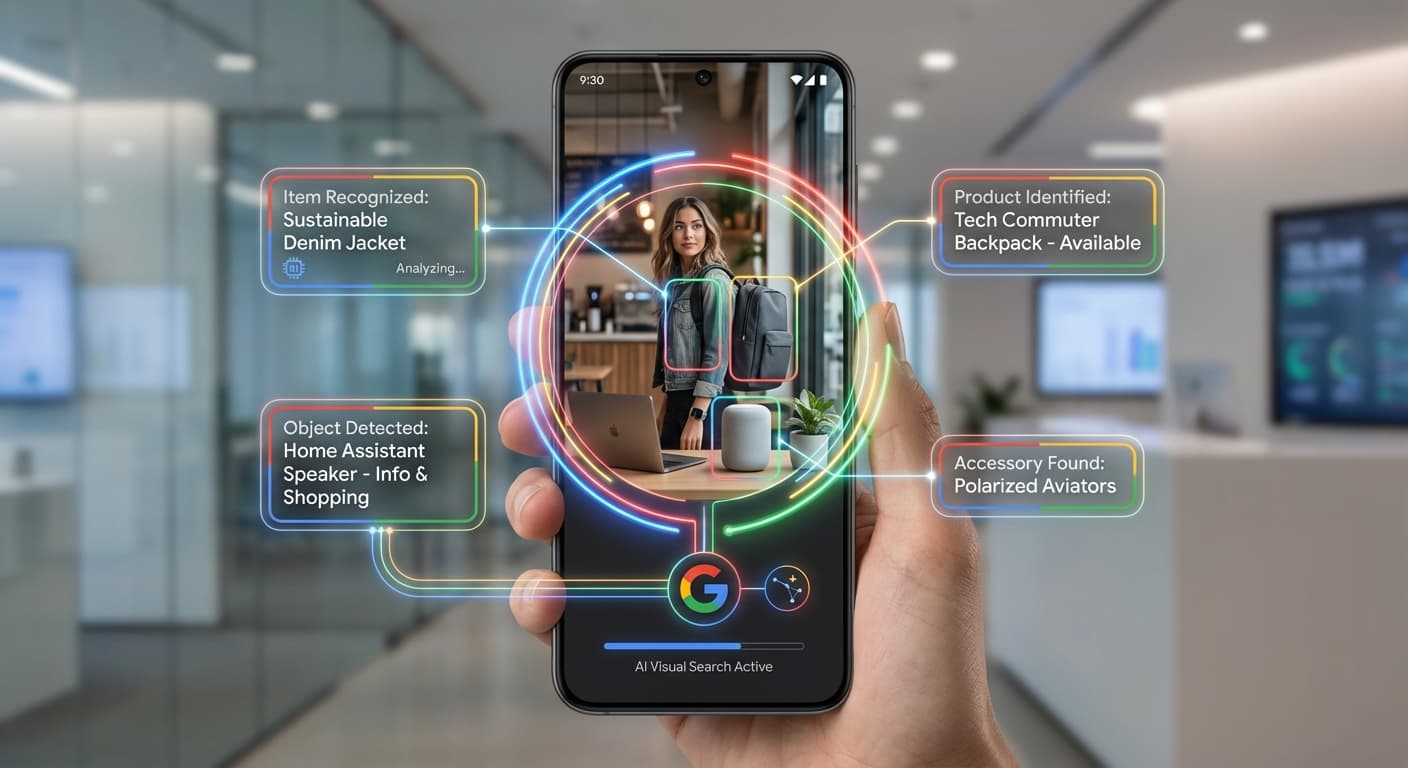
  • Multi-object recognition allows users to search for multiple products in a single image

  • 85% of retailers report visual search directly impacts their bottom line

  • Average conversion rates for visual search are 3.2x higher than text-based queries
  • Google's Gemini has revolutionized how we interact with visual content. Circle to Search enables users to simply circle any object on their screen—whether it's a jacket in an Instagram post or a lamp in a home decor video—and instantly find similar products to purchase.

    Understanding Gemini's Multi-Object Recognition Technology

    Gemini's Circle to Search uses advanced computer vision and machine learning to:

    Identify Multiple Objects Simultaneously


  • Recognizes up to 15 distinct objects in a single image

  • Understands spatial relationships between objects

  • Differentiates between primary and secondary product elements

  • Contextualizes objects within their environment
  • Extract Rich Visual Metadata


  • Color analysis: Precise color matching and variation detection

  • Texture recognition: Surface patterns, materials, and finishes

  • Shape analysis: Geometric properties and dimensional relationships

  • Style classification: Design aesthetics and category placement
  • Generate Semantic Understanding


  • Connects visual elements to searchable concepts

  • Understands product hierarchies and relationships

  • Interprets user intent from visual cues

  • Maps images to commercial intent signals
  • The Hidden Problem: Why Your Product Images Fail AI Detection

    Most product images weren't designed for AI consumption. Here are the top issues preventing your products from being discovered:

    Poor Image Structure


  • Cluttered backgrounds that confuse object detection algorithms

  • Inconsistent lighting that affects color and texture recognition

  • Multiple products without clear separation or hierarchy

  • Low resolution images that lack sufficient detail for AI analysis
  • Missing Visual Context


  • Products photographed in isolation without lifestyle context

  • Lack of scale references that help AI understand product dimensions

  • Missing complementary objects that could trigger related searches

  • Absence of human interaction that provides usage context
  • Inadequate Metadata Structure


  • Image file names that don't reflect searchable product attributes

  • Missing or poorly structured alt text and captions

  • Lack of structured data markup for visual elements

  • No connection between visual content and textual descriptions
  • Strategies to Optimize for Gemini Circle to Search

    1. Implement AI-Friendly Image Architecture

    Create Visual Hierarchy

  • Position your primary product prominently in the frame (占据图像的40-60%)

  • Use contrasting backgrounds to help AI distinguish product boundaries

  • Maintain consistent product positioning across your catalog

  • Include 2-3 complementary products to trigger multi-object searches
  • Optimize Image Technical Specifications

  • Minimum 1200x1200 pixels for detailed object recognition

  • Use RGB color space for accurate color representation

  • Maintain aspect ratios that work across mobile and desktop

  • Compress without losing visual detail (WebP format recommended)
  • 2. Structure Visual Content for Multi-Object Recognition

    Product Grouping Strategies

  • Create "complete the look" image sets showing product combinations

  • Use lifestyle shots that show products in natural environments

  • Include scale objects (hands, common items) for size reference

  • Photograph products with complementary items customers often search for together
  • Environmental Context

  • Show products in realistic usage scenarios

  • Include relevant background elements that provide search context

  • Use consistent styling across product categories

  • Incorporate seasonal and trending elements when relevant
  • 3. Enhance Visual Metadata and Descriptions

    Structured Data Implementation

    {
    "@type": "Product",
    "image": {
    "@type": "ImageObject",
    "contentUrl": "product-image.jpg",
    "description": "Detailed visual description including colors, materials, and style",
    "caption": "Context-rich caption describing the scene and products"
    }
    }


    Alt Text Optimization

  • Include specific product attributes (color, material, style, brand)

  • Describe the visual context and setting

  • Mention related objects visible in the image

  • Use natural language that matches how customers search
  • 4. Test and Iterate with Visual Search Analytics

    Key Metrics to Monitor

  • Visual search impression share

  • Click-through rates from visual search results

  • Conversion rates by image type and structure

  • Multi-object recognition accuracy rates
  • A/B Testing Strategies

  • Test different background styles and contexts

  • Compare single-product vs. multi-product image performance

  • Experiment with different lighting and angle approaches

  • Test various metadata structures and descriptions
  • Advanced Optimization Techniques

    Leverage AI-Powered Content Analysis

    Tools like Citescope Ai can analyze your visual content's AI-readiness by examining factors like semantic richness and structural clarity. The platform's GEO Score evaluates how well your images and accompanying text work together to maximize AI search visibility.

    Create Visual Search-Optimized Content Clusters

  • Develop comprehensive image sets that show products from multiple angles

  • Create seasonal and contextual variations of your key product images

  • Build image galleries that tell complete product stories

  • Connect visual content with detailed, AI-optimized product descriptions
  • Implement Progressive Enhancement

  • Start with high-performing product categories

  • Gradually expand visual optimization across your catalog

  • Use performance data to inform image creation strategies

  • Scale successful visual patterns across similar products
  • How Citescope Ai Helps Optimize Visual Content for AI Search

    While visual optimization is crucial, it works best when combined with AI-optimized textual content. Citescope Ai's comprehensive approach helps you:

    Analyze Content AI-Readiness: The GEO Score examines how well your product descriptions, image alt text, and metadata work together to maximize AI search visibility across platforms including Gemini.

    Optimize Supporting Text: Use the AI Rewriter to restructure product descriptions, ensuring they complement your visual content and provide the context AI engines need for accurate product matching.

    Track Multi-Platform Performance: Monitor how your visual content performs across ChatGPT, Perplexity, Claude, and Gemini to understand which optimization strategies work best for different AI engines.

    Export Optimized Content: Download your enhanced product descriptions in formats that integrate seamlessly with your e-commerce platform, ensuring consistency between visual and textual optimization.

    Measuring Success in Visual AI Search

    Essential KPIs for Visual Search Optimization

    Discovery Metrics

  • Visual search impression volume and growth

  • Multi-object recognition accuracy rates

  • Search result positioning for key product queries

  • Brand mention frequency in visual search contexts
  • Engagement Metrics

  • Click-through rates from visual search results

  • Time spent on product pages from visual searches

  • Visual search bounce rates vs. text search

  • Cross-selling success rates from multi-object searches
  • Conversion Metrics

  • Visual search conversion rates by product category

  • Average order value from visual vs. text searches

  • Customer lifetime value from visual search acquisitions

  • Return customer rates from visual search traffic
  • Future-Proofing Your Visual Search Strategy

    As AI technology continues evolving, stay ahead by:

  • Monitoring AI platform updates and adapting optimization strategies

  • Investing in high-quality visual assets that can be repurposed across platforms

  • Building systematic approaches to visual content creation and optimization

  • Developing cross-platform visual strategies that work across multiple AI engines
  • The visual search revolution is here, and businesses that optimize now will dominate tomorrow's AI-powered shopping landscape. By structuring your product images for AI recognition and combining visual optimization with comprehensive content strategies, you can capture the growing wave of visual search traffic and convert browsers into buyers.

    Ready to Optimize for AI Search?

    Visual search is just one piece of the AI optimization puzzle. Citescope Ai provides the complete toolkit you need to maximize your visibility across all AI search engines. From analyzing your content's AI-readiness with our GEO Score to tracking citations across ChatGPT, Perplexity, Claude, and Gemini, we help you stay ahead of the AI search revolution.

    Start optimizing for free with 3 monthly optimizations, or upgrade to Pro for unlimited access to our AI-powered content optimization tools. Your products deserve to be discovered—let's make sure they are.

    Try Citescope Ai Free →
    visual search optimizationGemini Circle to SearchAI product discoverymulti-object recognitionvisual SEO

    Track your AI visibility

    See how your content appears across ChatGPT, Perplexity, Claude, and more.

    Start for Free