How to Optimize for Google AI Mode's Agentic Features: Preparing for the End-to-End Discovery Revolution
How to Optimize for Google AI Mode's Agentic Features: Preparing for the End-to-End Discovery Revolution
By early 2026, Google's AI Mode has fundamentally changed how users discover and interact with brands. With over 40% of purchase decisions now happening through AI-powered conversations that bypass traditional websites entirely, the old playbook of driving traffic to landing pages is becoming obsolete.
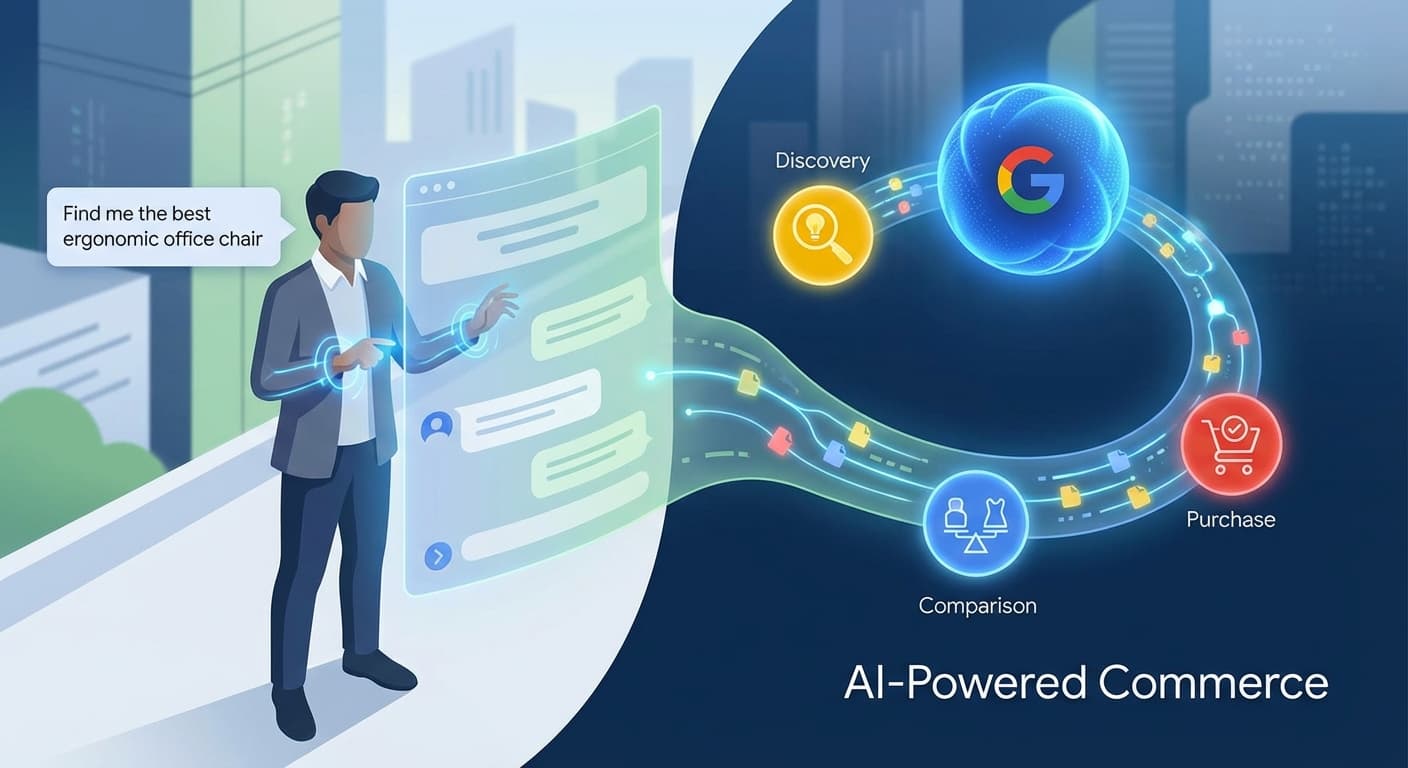
Google's agentic AI features can now guide users through complete discovery-to-purchase flows without ever visiting your website. This shift represents the most significant change in search behavior since the introduction of mobile-first indexing—and most businesses aren't prepared.
The New Reality: AI-First Commerce
Google's AI Mode doesn't just answer questions anymore—it acts as a personal shopping assistant, research analyst, and decision-making partner. When someone asks "Find me the best project management tool for a 15-person marketing team with a $500 monthly budget," the AI doesn't just provide a list of options. It evaluates features, compares pricing, reads reviews, and can even facilitate trial sign-ups or purchases directly within the conversation.
Recent data from 2025 shows that:
Understanding Google's Agentic Architecture
To optimize for this new landscape, you need to understand how Google's AI Mode operates as an agent on behalf of users:
Multi-Step Reasoning
The AI breaks down complex queries into logical steps, gathering information from multiple sources to build comprehensive recommendations. It doesn't just match keywords—it understands intent, context, and user preferences.
Real-Time Integration
Google's AI can access live pricing data, inventory levels, customer reviews, and even initiate actions like booking appointments or starting free trials.
Contextual Memory
The AI remembers previous interactions within a session, allowing for nuanced follow-up questions and refined recommendations.
Key Optimization Strategies for Agentic AI
1. Structure Your Content for Multi-Step Queries
Traditional SEO focused on single-keyword optimization. Agentic AI requires content that supports complex, multi-faceted decision-making processes.
Create comprehensive comparison frameworks:
Example: Instead of a simple "Best CRM Software" article, create content that addresses:
2. Optimize for Conversational Context
AI conversations flow naturally, with follow-up questions and clarifications. Your content needs to anticipate these conversational patterns.
Build content that answers progressive queries:
3. Implement Rich Structured Data
Google's AI Mode relies heavily on structured data to understand and present information accurately. Standard schema markup isn't enough—you need comprehensive data structures.
Essential structured data elements:
4. Create Authority Through Depth and Expertise
Agentic AI prioritizes authoritative sources that demonstrate deep expertise. Surface-level content gets filtered out quickly.
Build authoritative content through:
Optimizing for Purchase-Intent Conversations
When AI Mode guides users through purchase decisions, it evaluates multiple factors simultaneously. Your optimization strategy must address each component:
Value Proposition Clarity
The AI needs to quickly understand and communicate your unique value. Bury your value proposition, and you'll be filtered out before users even know you exist.
Key elements to emphasize:
Social Proof Integration
AI Mode weighs customer satisfaction heavily in recommendations. Traditional testimonials aren't enough—you need diverse, specific social proof.
Effective social proof for AI:
Accessibility and Transparency
The AI evaluates how easily users can access information, try your product, and get support. Complex or unclear processes hurt your chances of being recommended.
Technical Implementation for AI Visibility
Optimizing for agentic AI requires technical precision. Your content architecture must support AI interpretation and action.
API and Integration Documentation
If your product integrates with other tools, make this information easily accessible and up-to-date. AI Mode often evaluates solutions based on ecosystem compatibility.
Real-Time Data Feeds
Implement systems that provide current pricing, availability, and feature information. Outdated data leads to poor user experiences and reduced AI recommendations.
Conversation-Ready Content Format
Structure your content so AI can extract and present information conversationally:
How Citescope Ai Helps Navigate This Transition
The shift to agentic AI search requires a fundamental rethinking of content strategy. Citescope Ai's GEO Score analyzes your content across five critical dimensions that directly impact AI visibility: AI Interpretability, Semantic Richness, Conversational Relevance, Structure, and Authority.
The platform's AI Rewriter doesn't just optimize for keywords—it restructures your content to support the complex, multi-step reasoning that agentic AI systems use. When Google's AI Mode evaluates your content for recommendations, it needs to quickly understand your value proposition, compare you to alternatives, and present relevant information conversationally.
Measuring Success in an AI-First World
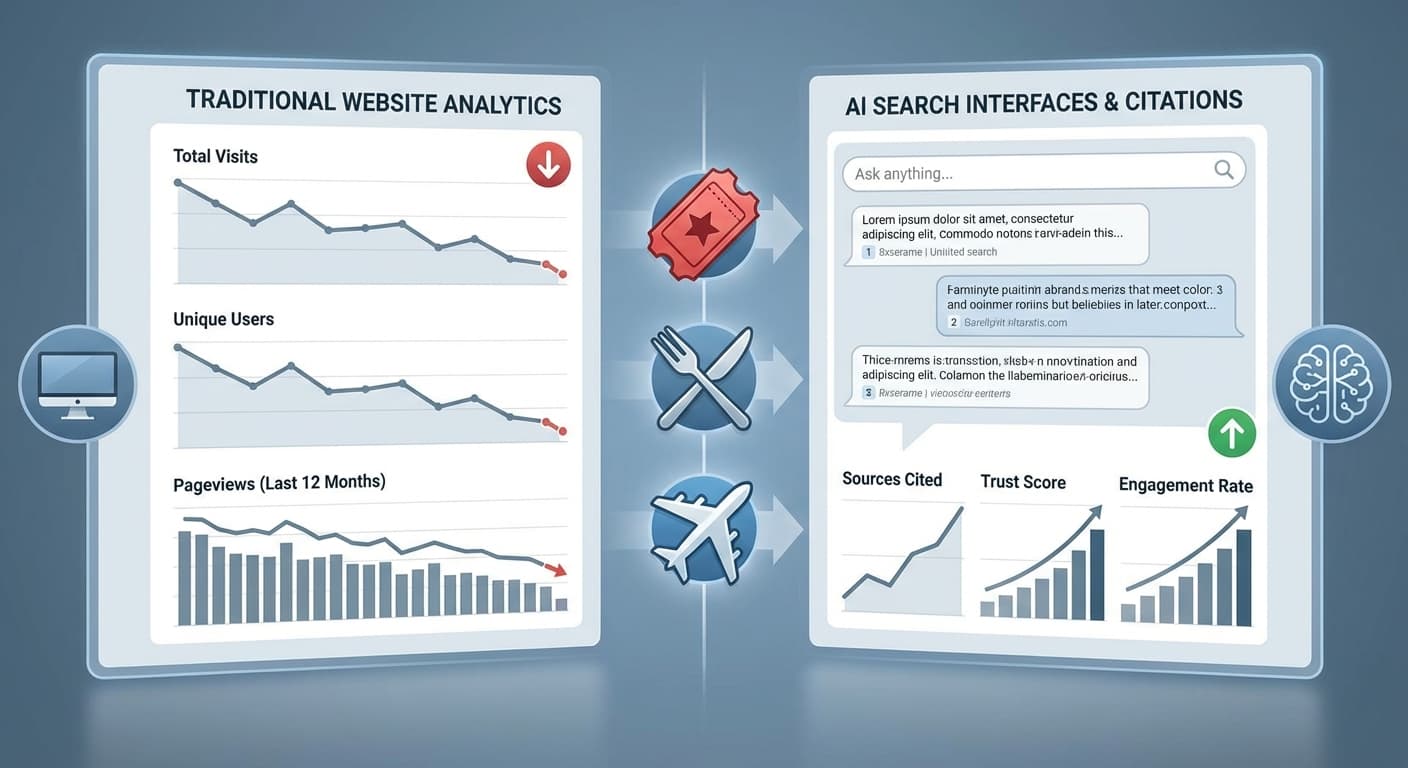
Traditional metrics like click-through rates become less relevant when users don't visit your website. New success indicators include:
The Competitive Advantage
Business that optimize for agentic AI now gain a significant first-mover advantage. While competitors focus on traditional SEO, you can capture the growing segment of users who rely on AI for decision-making.
The key is understanding that optimization for agentic AI isn't about gaming the system—it's about making your value proposition clear, accessible, and actionable for both AI systems and the users they serve.
Ready to Optimize for AI Search?
The shift to agentic AI search is happening now, and businesses that adapt quickly will dominate their markets. Citescope Ai provides the tools and insights you need to optimize your content for AI visibility and track your success across all major AI search engines.
Start with our free tier to analyze your current content and see how it performs against AI search criteria. Get your GEO Score today and discover how to make your content more discoverable in the age of agentic AI.