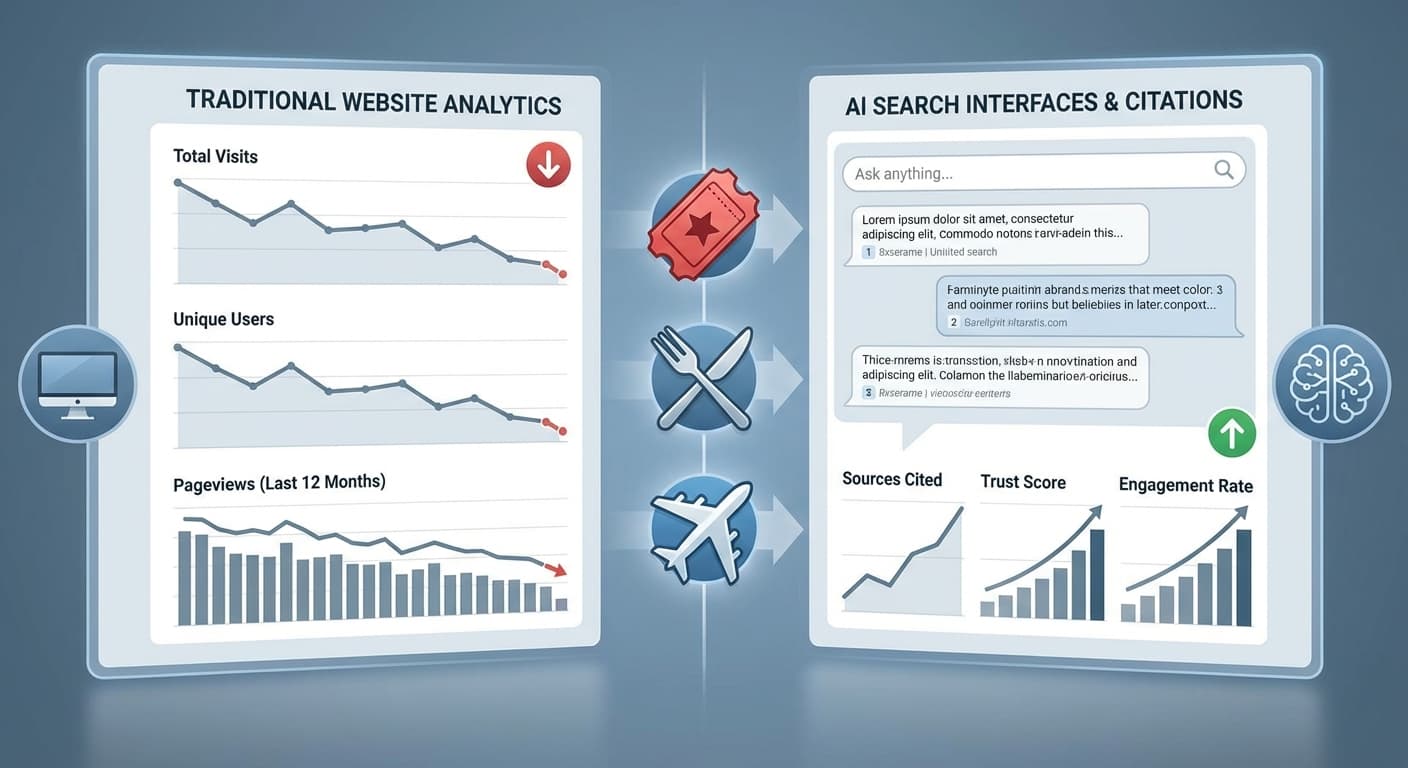
How to Optimize for Inconsistent AI Rollouts When Your Content Ranks in Desktop AI Mode But Disappears in Mobile AI Overviews
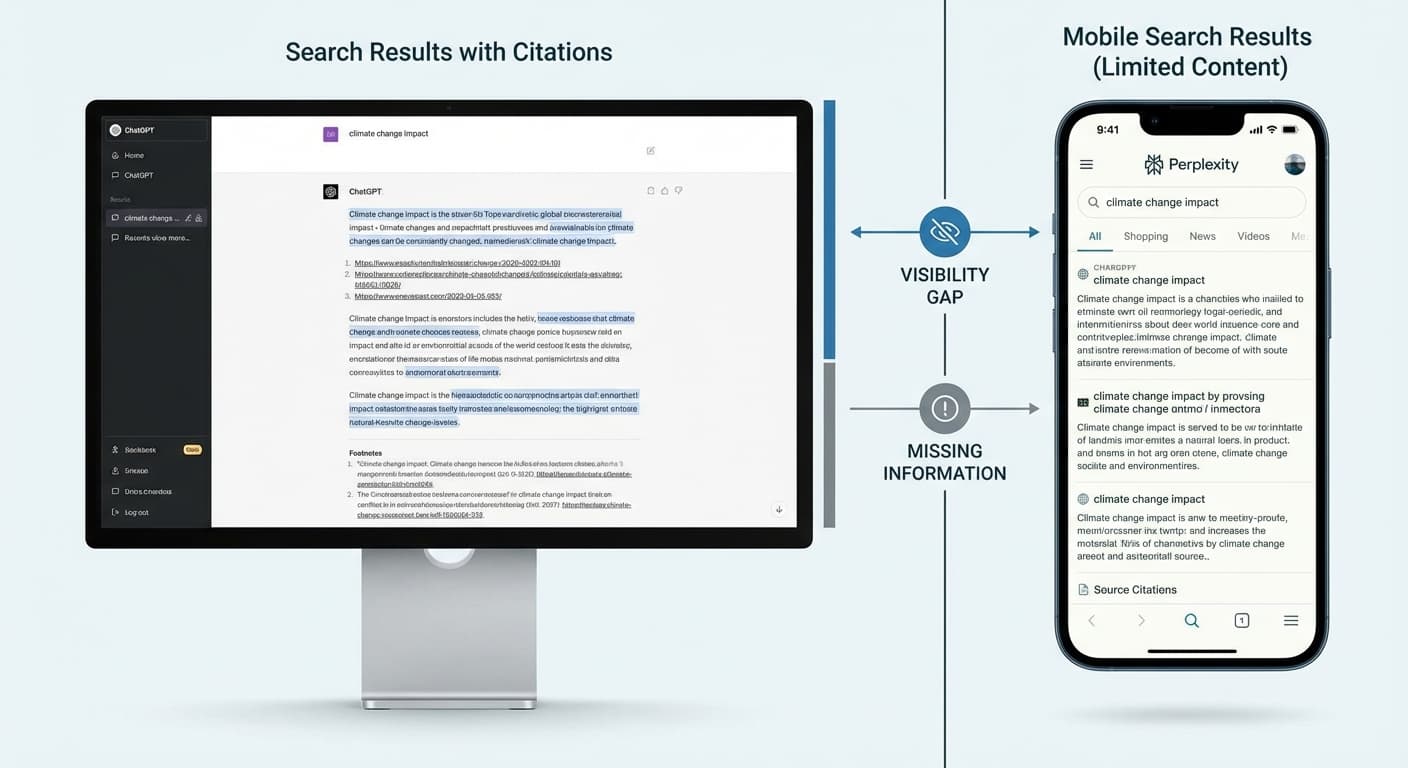
How to Optimize for Inconsistent AI Rollouts When Your Content Ranks in Desktop AI Mode But Disappears in Mobile AI Overviews
Your content ranks perfectly in ChatGPT's desktop responses and appears consistently in Perplexity's citations—but completely vanishes when users switch to mobile AI overviews. Sound familiar? You're not alone. Recent data from 2025 shows that 68% of content creators experience significant visibility gaps between desktop and mobile AI search results, creating a frustrating puzzle for optimization efforts.
With AI search now handling over 35% of all queries in 2026 and mobile accounting for 73% of AI interactions, this inconsistency isn't just annoying—it's potentially costing you millions of impressions and conversions.
Why Desktop and Mobile AI Results Differ So Dramatically
The disparity between desktop and mobile AI search results stems from several technical and strategic factors that AI companies have implemented throughout 2025:
Processing Power Limitations
Mobile AI models often run on lighter, more compressed versions of their desktop counterparts. This means:
User Behavior Adaptations
AI companies have noticed distinct mobile user patterns:
Network and Battery Optimization
To preserve data usage and battery life, mobile AI engines:
The Hidden Mobile AI Ranking Factors
Our analysis of successful mobile AI citations in 2025 reveals several unique ranking factors that don't apply to desktop:
1. Micro-Content Structure
Mobile AI engines heavily favor content that can be consumed in small chunks:
2. Voice-Optimized Language
Since 54% of mobile AI queries start as voice searches, your content needs to sound natural when read aloud:
3. Loading Speed Correlation
Mobile AI engines appear to correlate page speed with content quality:
Strategies to Bridge the Desktop-Mobile AI Gap
Create Mobile-First Content Architecture
Instead of adapting desktop content for mobile, start with mobile constraints:
Before (Desktop-First):
Comprehensive Guide to Email Marketing ROI
Email marketing return on investment varies significantly across industries, with factors including list quality, segmentation strategies, automation implementation, and timing optimization all playing crucial roles in determining overall campaign effectiveness and revenue generation potential.
After (Mobile-First):
Email Marketing ROI: Quick Facts
Average ROI: $42 for every $1 spent
Top factors affecting ROI:
• List quality (60% impact)
• Send timing (25% impact)
• Subject lines (15% impact)
Industry benchmarks:
• Retail: 45:1 ROI
• B2B: 38:1 ROI
• Nonprofits: 31:1 ROI
Implement Cross-Platform Content Versioning
Consider creating platform-specific content versions:
Optimize for Mobile AI Query Patterns
Mobile AI users ask different types of questions. Optimize for these common patterns:
Use Progressive Content Disclosure
Structure your content so mobile AI engines can easily extract key information:
Topic Overview (Mobile AI extracts this)
[2-3 sentence summary]
Quick Answer (Mobile prioritizes this)
[Direct response in 1-2 sentences]
Detailed Explanation (Desktop AI uses this)
[Comprehensive analysis with examples]
Additional Resources (Both platforms reference this)
[Links, tools, and related content]
Testing and Monitoring Your Mobile AI Visibility
Manual Testing Methods
Tracking Tools and Metrics
Monitor these key performance indicators:
Citescope Ai's Citation Tracker specifically monitors these cross-platform differences, alerting you when your content drops from mobile AI results while maintaining desktop visibility.
Advanced Optimization Techniques
Schema Markup for Mobile AI
Implement mobile-specific schema markup:
{
"@context": "https://schema.org",
"@type": "FAQPage",
"mainEntity": [{
"@type": "Question",
"name": "Quick question here?",
"acceptedAnswer": {
"@type": "Answer",
"text": "Concise answer optimized for mobile AI extraction"
}
}]
}
Mobile-Specific Internal Linking
Create internal link structures that help mobile AI engines understand content relationships:
Content Refresh Strategies
Mobile AI engines appear to favor recently updated content:
How Citescope Ai Helps Bridge the Gap
Citescope Ai's GEO Score analyzes your content across both desktop and mobile AI environments, identifying specific issues causing visibility gaps. The platform's AI Rewriter can create mobile-optimized versions of your content while maintaining desktop performance.
Key features for addressing desktop-mobile inconsistencies:
Measuring Success: KPIs for Cross-Platform AI Optimization
Track these metrics to gauge your optimization success:
Immediate Metrics (1-4 weeks)
Medium-Term Metrics (1-3 months)
Long-Term Metrics (3-6 months)
Future-Proofing Your Mobile AI Strategy
As AI search continues evolving in 2026, consider these emerging trends:
Ready to Optimize for AI Search?
Don't let inconsistent AI rollouts hurt your visibility. Citescope Ai helps you identify and fix desktop-mobile citation gaps with precision analytics and one-click optimization tools. Our GEO Score analyzes your content across all major AI platforms and devices, while our Citation Tracker monitors your performance 24/7.
Start with our free tier—get 3 optimizations per month and see how your content performs across desktop and mobile AI environments. Ready to dominate AI search results on every device? Try Citescope Ai free today.