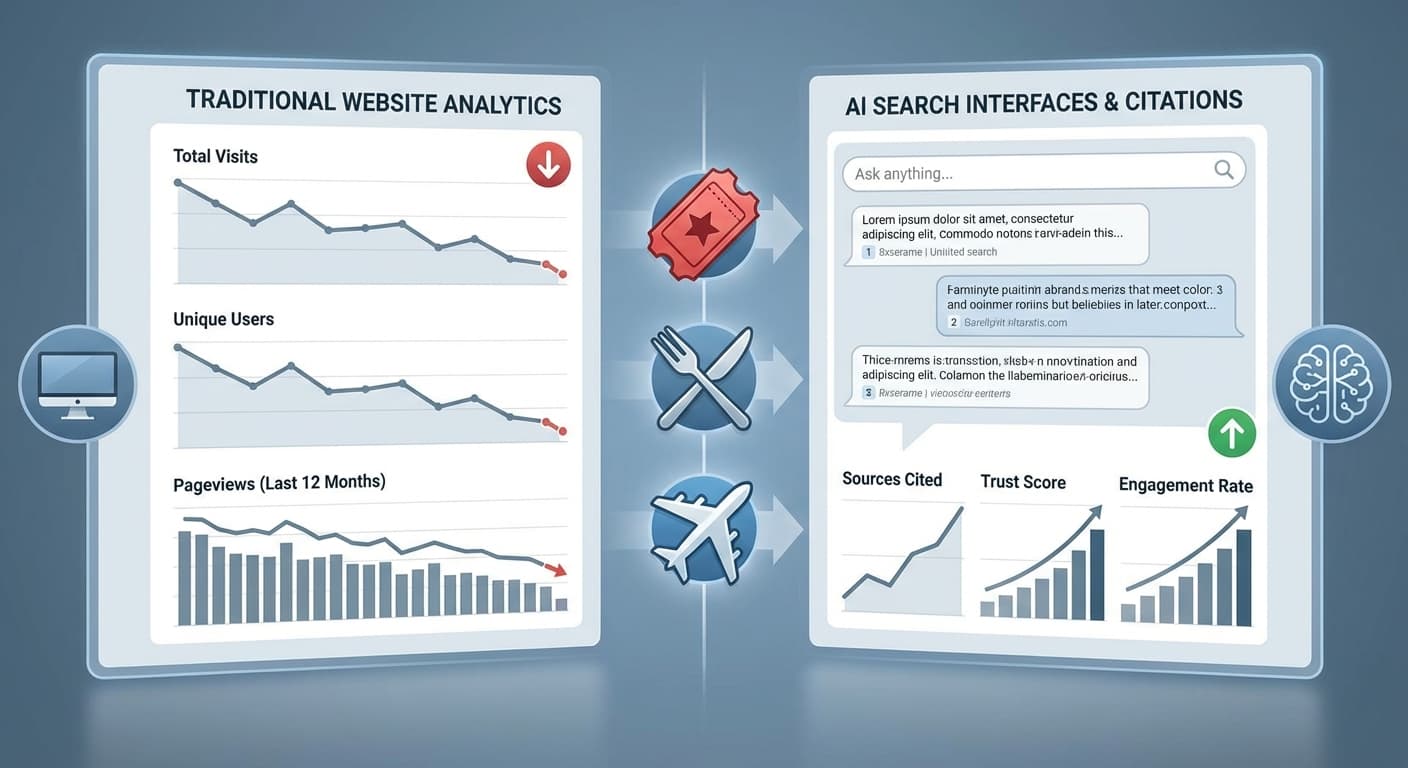
How to Optimize for Voice Query Length Inflation: Why AI Searches Average 21 Words vs 3-Word Google Queries
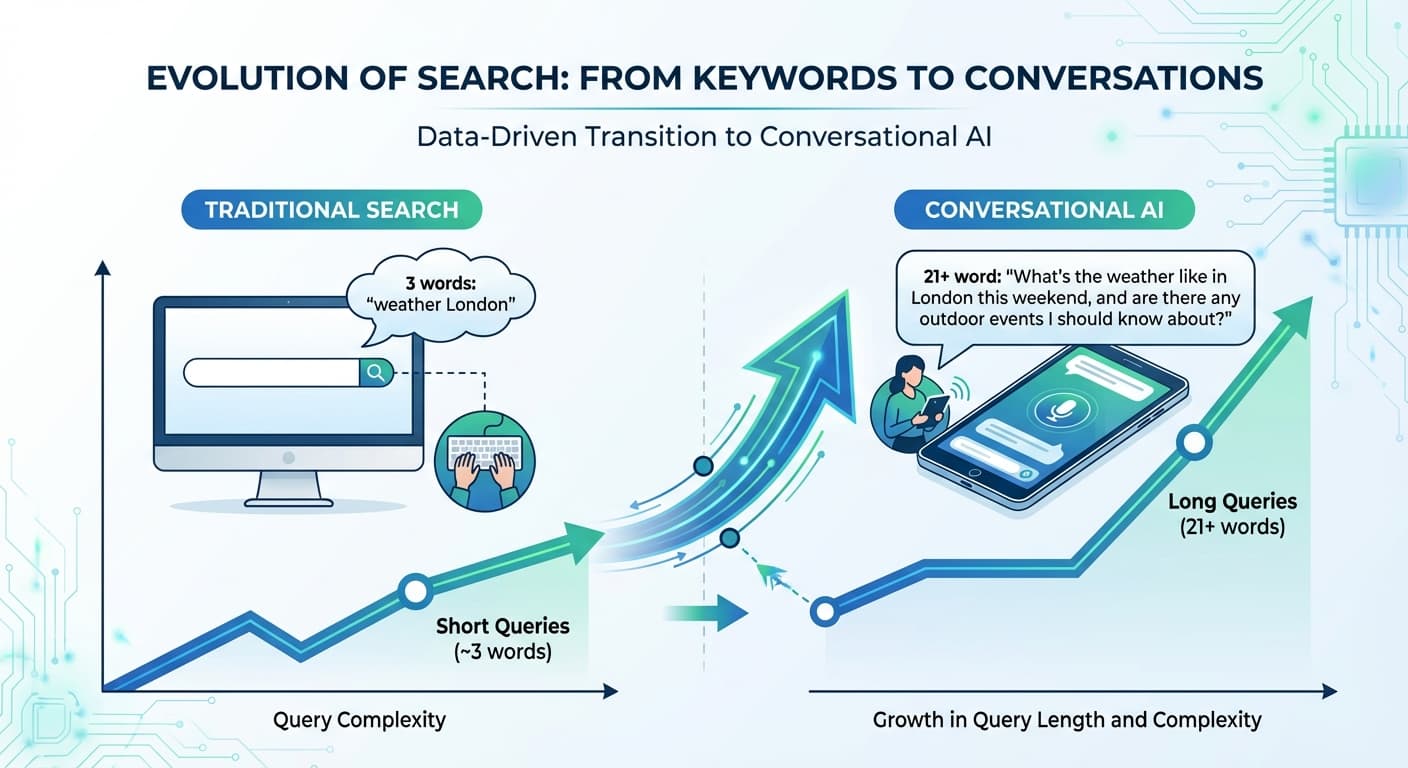
How to Optimize for Voice Query Length Inflation: Why AI Searches Average 21 Words vs 3-Word Google Queries
Here's a startling reality check: While traditional Google searches average just 3 words, conversational AI searches now average 21 words. If your content strategy is still built around short-tail keywords like "best pizza" or "digital marketing," you're optimizing for yesterday's search behavior while missing today's AI-driven opportunities.
With AI search now accounting for over 35% of all queries in 2025 and platforms like ChatGPT serving 600 million weekly users, this query length inflation isn't just a trend—it's a fundamental shift in how people find information.
The Voice Query Revolution: Why Length Matters Now
The explosion in query length stems from how naturally people interact with AI. Instead of typing "best CRM software," users now ask ChatGPT or Perplexity: "What's the best CRM software for a 50-person marketing agency that needs lead scoring, email automation, and integrates with Slack and HubSpot?"
This shift has created what experts call "query length inflation"—a phenomenon where:
The implications are massive. Content optimized for "project management tools" might rank well on Google but completely miss AI search traffic for "project management tools that work well for remote teams with tight deadlines and budget constraints under $50 per user."
Why Traditional Keyword Strategies Fail in AI Search
Most content creators are stuck in the old paradigm, targeting keywords like:
But AI users aren't searching for these broad terms. They're asking specific, context-rich questions:
The Context Problem
AI searches include crucial context that short-tail keywords miss:
How to Adapt Your Content for Long-Form AI Queries
1. Map Your Topics to Natural Language Patterns
Instead of starting with keywords, start with questions your audience actually asks. Use these frameworks:
The Problem-Solution-Context Framework:
Example Transformation:
2. Create Comprehensive Topic Clusters
Build content clusters that address the full spectrum of related long-form queries:
Core Topic: Project Management
Long-form Query Cluster:
Tools like Citescope Ai's GEO Score can help you identify which content pieces best address these comprehensive, context-rich queries across all five dimensions that matter for AI search visibility.
3. Structure Content for Conversational Queries
AI engines favor content that directly answers specific questions. Use these structural elements:
Question-Based Headers:
Contextual Subheadings:
4. Include Scenario-Based Examples
AI searches often include specific scenarios. Address these directly:
Scenario: "I'm a marketing director at a B2B SaaS company with a team of 12. We need to manage product launches, content calendars, and campaign execution. What's the best approach?"
Answer: [Provide specific, actionable advice for this exact scenario]
5. Optimize for Follow-Up Questions
AI conversations include follow-up queries. Anticipate these by including:
Advanced Strategies for AI Query Optimization
Semantic Richness Over Keyword Density
Focus on semantic relationships rather than keyword repetition:
Conversational Tone Optimization
Write as if answering a colleague's question:
Instead of: "Project management software provides efficiency benefits."
Write: "When you're juggling multiple client projects, the right project management software can save you 2-3 hours per day by automating status updates and keeping everyone on the same page."
Multi-Format Content Strategy
Create content that serves different query types:
Measuring Success in the Long-Form Query Era
New Metrics That Matter
Tools for Tracking Long-Form Performance
Monitor these key indicators:
Common Mistakes to Avoid
1. Keyword Stuffing Long-Form Phrases
Don't artificially repeat 20-word phrases. Instead, naturally address the concepts and context behind these queries.
2. Ignoring Short-Form Opportunities
While focusing on long-form queries, don't abandon short-tail keywords entirely. Use a balanced approach.
3. Over-Optimizing for One AI Platform
Different AI engines have different query patterns. Optimize for broad conversational search rather than one specific platform.
4. Neglecting Mobile Voice Users
Many long-form AI queries come from mobile users. Ensure your content is mobile-optimized and loads quickly.
How Citescope Ai Helps Navigate Query Length Inflation
Adapting to longer, more conversational queries requires sophisticated analysis and optimization. Citescope Ai's platform addresses this challenge through:
GEO Score Analysis: Evaluates your content across five critical dimensions—AI Interpretability, Semantic Richness, Conversational Relevance, Structure, and Authority—giving you a clear 0-100 score that shows how well your content serves long-form, conversational queries.
AI Rewriter Optimization: One-click restructuring that transforms traditional SEO content into AI-friendly formats that better match natural language query patterns and conversational search behavior.
Multi-Platform Citation Tracking: Monitor when your optimized content gets cited across ChatGPT, Perplexity, Claude, and Gemini, helping you understand which long-form queries your content successfully captures.
The platform's multi-format export feature lets you download optimized content as Markdown, HTML, or WordPress blocks, making it easy to implement across different publishing platforms while maintaining optimization for longer, more conversational queries.
The Future of Search is Conversational
As AI search continues growing—with over 70% of Gen Z now using AI for research and information gathering—the shift toward longer, more conversational queries will only accelerate. Content creators who adapt now will capture this growing traffic, while those who stick to outdated short-tail strategies will miss increasingly significant opportunities.
The key is thinking beyond keywords to conversations. Instead of asking "What keywords should I target?" ask "What conversations should my content join?" This mindset shift is fundamental to succeeding in the AI search era.
Ready to Optimize for AI Search?
Query length inflation is reshaping how people find information, and traditional SEO strategies aren't keeping up. Citescope Ai helps content creators optimize for longer, conversational queries while tracking citations across all major AI search engines. Start with our free tier (3 optimizations per month) to see how your content performs against AI search criteria, or upgrade to Pro ($39/month) for unlimited optimizations and advanced citation tracking. Transform your content strategy for the AI search era—try Citescope Ai today.