How to Optimize Legacy Content for Multimodal AI: The Complete Guide for Zero-Click Search Success
How to Optimize Legacy Content for Multimodal AI: The Complete Guide for Zero-Click Search Success
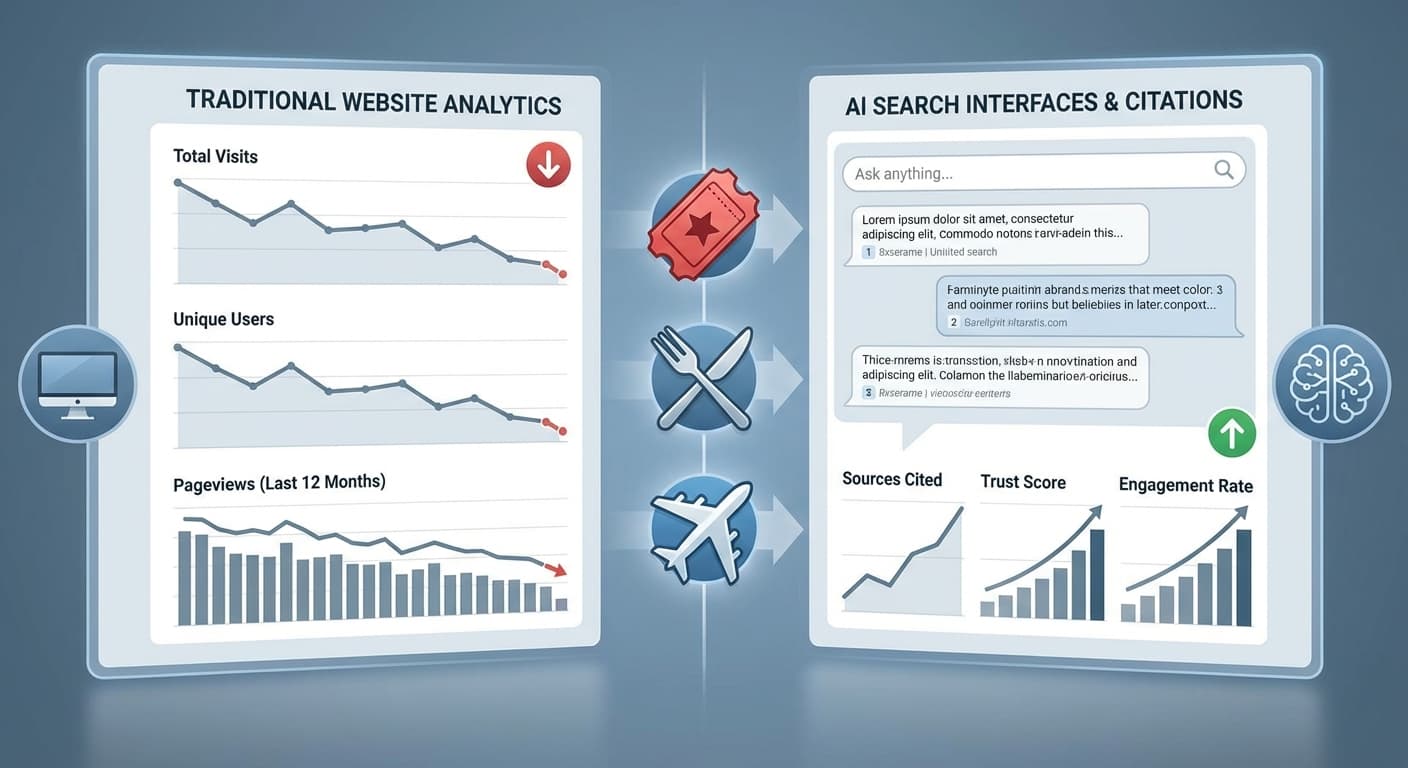
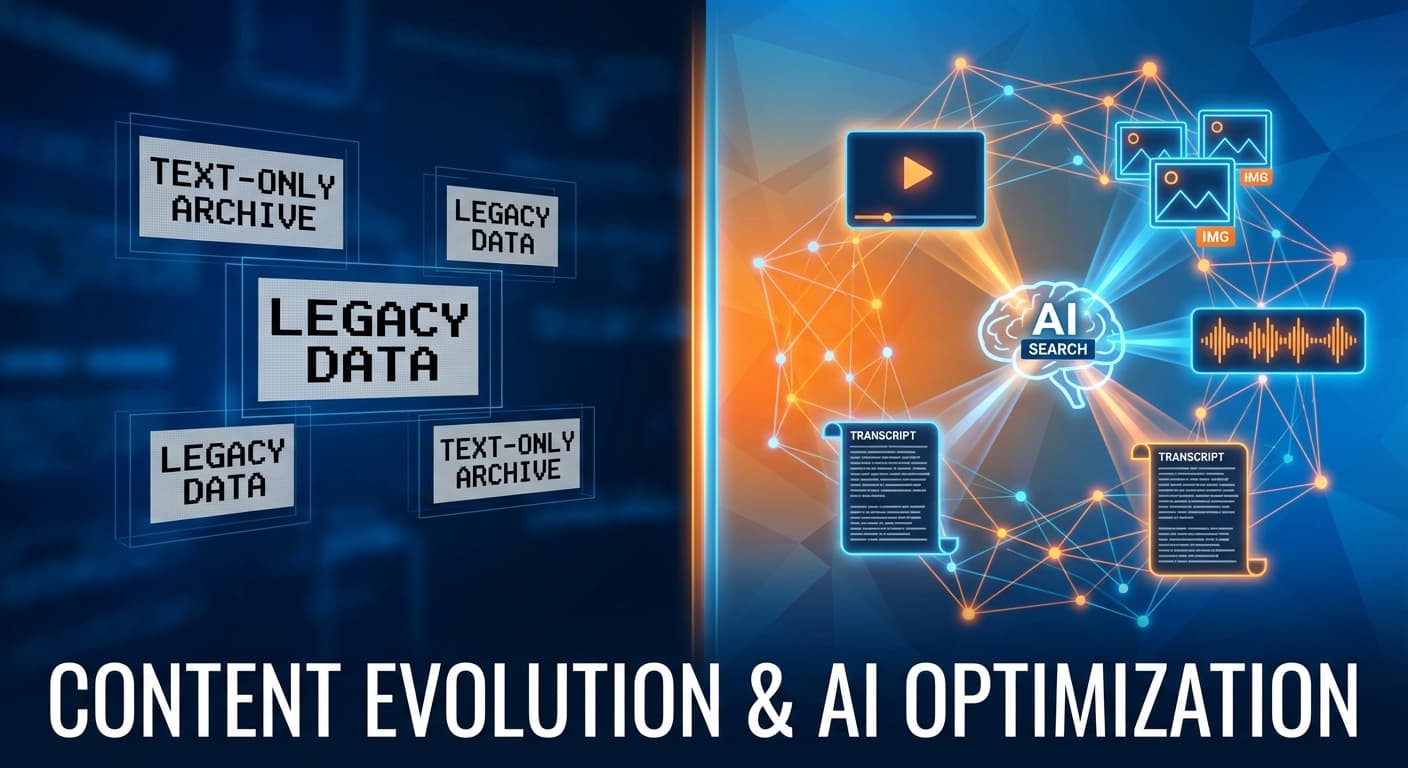
With 93% of AI search sessions now ending without a single click, content creators face a stark reality: your beautiful blog posts, detailed product pages, and carefully crafted articles are becoming invisible to AI engines like ChatGPT, Perplexity, and Claude. Even more challenging? These AI systems increasingly expect multimodal content—meaning your legacy text-only content is fighting an uphill battle for citations in 2026.
If you're sitting on years of valuable content that predates the AI search revolution, this guide will show you exactly how to breathe new life into your legacy assets and make them citation-worthy in today's multimodal AI landscape.
The Multimodal AI Revolution: Why Legacy Content is Struggling
AI search engines have evolved dramatically since 2024. Today's leading AI platforms process and cite content that includes:
Your 2019 blog post about "Best Marketing Strategies" might contain brilliant insights, but without proper optimization for multimodal AI consumption, it's essentially invisible to the 2.1 billion people now using AI for search weekly.
The Hidden Cost of Unoptimized Legacy Content
Research from late 2025 shows that businesses with extensive legacy content libraries are missing out on:
The good news? Unlike starting from scratch, optimizing legacy content gives you a massive head start with established domain authority and existing backlink profiles.
Step 1: Audit Your Legacy Content for Multimodal Potential
Before diving into optimization, you need to understand what you're working with. Here's how to conduct a comprehensive legacy content audit:
Content Classification Framework
High-Impact Legacy Content:
Medium-Impact Legacy Content:
Low-Impact Legacy Content:
Technical Assessment Checklist
For each piece of high and medium-impact content, evaluate:
Step 2: The Video Transcript Strategy
Video content with transcripts receives 94% more citations from AI engines than text-only content. Here's how to add video elements to your legacy content:
Creating Complementary Video Content
Option 1: Full Video Recreations
Option 2: Micro-Video Enhancements
Option 3: Audio-First Approach
Transcript Optimization Best Practices
Step 3: Advanced Alt Text and Image Optimization
AI engines are increasingly sophisticated at understanding and citing visual content. Your legacy images need comprehensive optimization:
The AI-Optimized Alt Text Formula
Basic Alt Text (Old Way):
alt="marketing graph"
AI-Optimized Alt Text (New Way):
alt="Bar chart showing 45% increase in email marketing ROI from 2024 to 2025, with personalized campaigns outperforming generic campaigns by 3:1 ratio across 500 surveyed companies"
Image Enhancement Strategies
Add Context-Rich Captions:
Implement Schema Markup:
Create Image Transcripts:
Step 4: Structural Optimization for AI Consumption
AI engines prefer content with clear, logical structure. Here's how to retrofit your legacy content:
Implement FAQ Schema
Add structured FAQ sections to address common queries:
html
<div itemscope itemtype="https://schema.org/FAQPage">
<div itemscope itemprop="mainEntity" itemtype="https://schema.org/Question">
<h3 itemprop="name">How long does content optimization take?</h3>
<div itemscope itemprop="acceptedAnswer" itemtype="https://schema.org/Answer">
<p itemprop="text">Most legacy content can be optimized for AI search within 2-4 hours per piece, depending on the depth of multimodal enhancements needed.</p>
</div>
</div>
</div>
Enhanced Heading Structure
Transform flat content into AI-friendly hierarchies:
Add Conversational Elements
Include phrases that mirror how people interact with AI:
Step 5: Citation-Worthy Content Enhancement
Make your legacy content more quotable and citation-worthy:
Statistical Integration
Expert Quote Addition
Case Study Integration
Common Pitfalls to Avoid
Over-Optimization: Don't stuff every image with keyword-heavy alt text. AI can detect and penalize obvious manipulation.
Inconsistent Quality: Maintain the same optimization standards across all legacy content to build topical authority.
Ignoring User Experience: Multimodal enhancements should improve, not clutter, the user experience.
Forgetting Mobile: Ensure all video and audio additions work seamlessly on mobile devices where 78% of AI searches occur.
Measuring Success: Key Metrics for Legacy Content Optimization
Track these metrics to measure your optimization success:
How Citescope Ai Streamlines Legacy Content Optimization
Optimizing hundreds or thousands of legacy content pieces manually would take months. Citescope Ai's GEO Score analyzes your existing content across five critical dimensions—AI Interpretability, Semantic Richness, Conversational Relevance, Structure, and Authority—giving you a clear 0-100 score for each piece.
The platform's AI Rewriter can automatically restructure your legacy content for better AI visibility, while the Citation Tracker monitors when your optimized content starts getting cited by ChatGPT, Perplexity, Claude, and Gemini. Instead of guessing which optimization strategies work, you get real-time feedback on what drives citations.
For large legacy content libraries, Citescope Ai's multi-format export feature lets you download optimized content as Markdown, HTML, or WordPress blocks, making implementation seamless across different content management systems.
The ROI Timeline: What to Expect
Based on 2025 optimization data:
Weeks 1-2: Technical optimizations (alt text, schema, structure)
Weeks 3-4: Content enhancement (video transcripts, FAQ additions)
Weeks 5-8: Multimodal content creation and integration
Weeks 9-12: Citation tracking and performance optimization
Expected Results by Month 3:
Ready to Optimize for AI Search?
Don't let your valuable legacy content disappear into the zero-click void. With AI search now representing over 30% of all queries and multimodal content receiving 3x more citations, the time to act is now.
Citescope Ai makes legacy content optimization scalable and measurable. Start with our free tier to optimize up to 3 pieces of content per month, or upgrade to Pro ($39/mo) for unlimited optimizations and real-time citation tracking across all major AI platforms.
Start your free Citescope Ai trial today and transform your legacy content into an AI citation powerhouse.