How to Optimize Tourism and Hospitality Websites for AI Search When Travel Discovery Shifts from Google Maps to ChatGPT and Perplexity in 2026
How to Optimize Tourism and Hospitality Websites for AI Search When Travel Discovery Shifts from Google Maps to ChatGPT and Perplexity in 2026
A staggering 68% of travelers now begin their trip planning with AI search engines rather than traditional travel booking sites, according to 2025 industry data. While Google Maps dominated travel discovery for over a decade, ChatGPT, Perplexity, and Claude are rapidly becoming the go-to resources for personalized travel recommendations, itinerary planning, and local insights.
This seismic shift means tourism and hospitality businesses can no longer rely on location-based SEO alone. The future belongs to those who understand how AI engines discover, interpret, and recommend travel experiences.
The New Travel Discovery Landscape
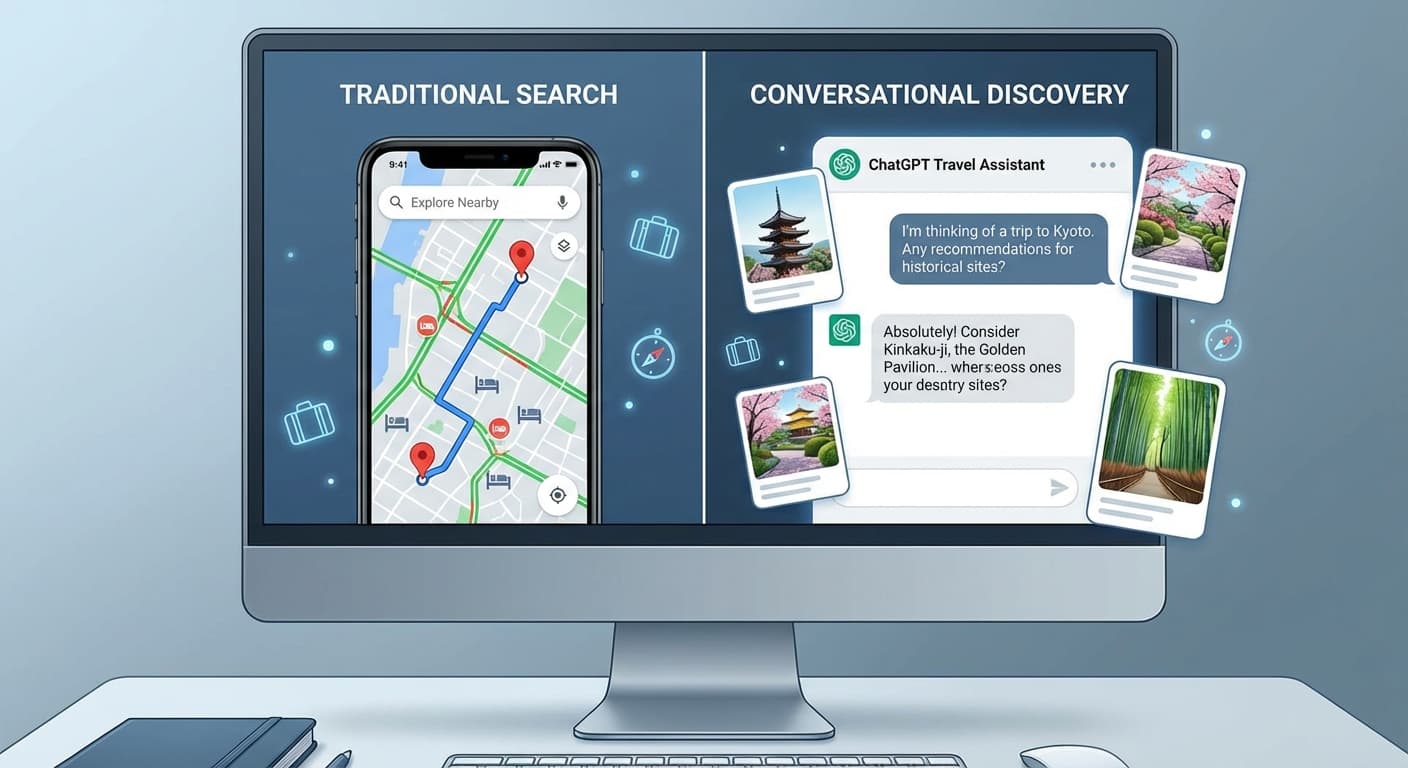
The way people discover destinations, hotels, and experiences has fundamentally changed. Instead of searching "best restaurants in Barcelona" on Google, travelers are now asking ChatGPT: "Plan a 3-day foodie itinerary in Barcelona for someone who loves authentic tapas but has dietary restrictions." This conversational approach to travel planning has created both challenges and massive opportunities for hospitality businesses.
Why AI Search Dominates Travel Planning
With over 500 million weekly ChatGPT users and Perplexity handling 3 billion queries monthly, the tourism industry must adapt or risk becoming invisible to the next generation of travelers.
Understanding How AI Engines Choose Travel Recommendations
AI search engines don't just crawl websites—they understand context, sentiment, and authority. When a user asks for hotel recommendations in Tokyo, these engines analyze multiple factors to determine which properties to suggest.
Key Ranking Factors for Tourism Content
Essential AI Optimization Strategies for Tourism Websites
Create Experience-Focused Content
Traditional hotel websites focus on features: "Our hotel has a pool, spa, and restaurant." AI-optimized content focuses on experiences: "Unwind after exploring Kyoto's temples in our rooftop onsen with panoramic city views, then savor kaiseki cuisine prepared by our Michelin-trained chef."
Action Items:
Optimize for Conversational Queries
AI users don't search—they converse. They ask questions like:
Implementation Strategy:
Leverage Local Expertise and Insider Knowledge
AI engines prioritize content that demonstrates deep local knowledge. Generic descriptions won't cut it in 2026.
Best Practices:
Structure Data for AI Comprehension
While AI is sophisticated, clear structure still matters. Organize information in a way that's both human and AI-friendly.
Structural Elements to Include:
Content Formats That AI Engines Love
Comprehensive Destination Guides
Create in-depth guides that position your business within the broader travel context. A boutique hotel in Prague should have content about the city's art scene, local markets, and seasonal events—not just room descriptions.
Problem-Solution Content
Address common travel challenges:
Seasonal and Event-Based Content
AI engines understand temporal relevance. Create content around:
User-Generated Content Integration
AI engines value authentic perspectives. Incorporate:
Technical Considerations for AI Visibility
Schema Markup for Tourism
Implement structured data that helps AI engines understand your content:
Page Speed and Mobile Optimization
While AI engines focus on content quality, user experience signals still matter. Ensure:
Internal Linking Strategy
Create content clusters that demonstrate expertise:
Measuring Success in AI Search
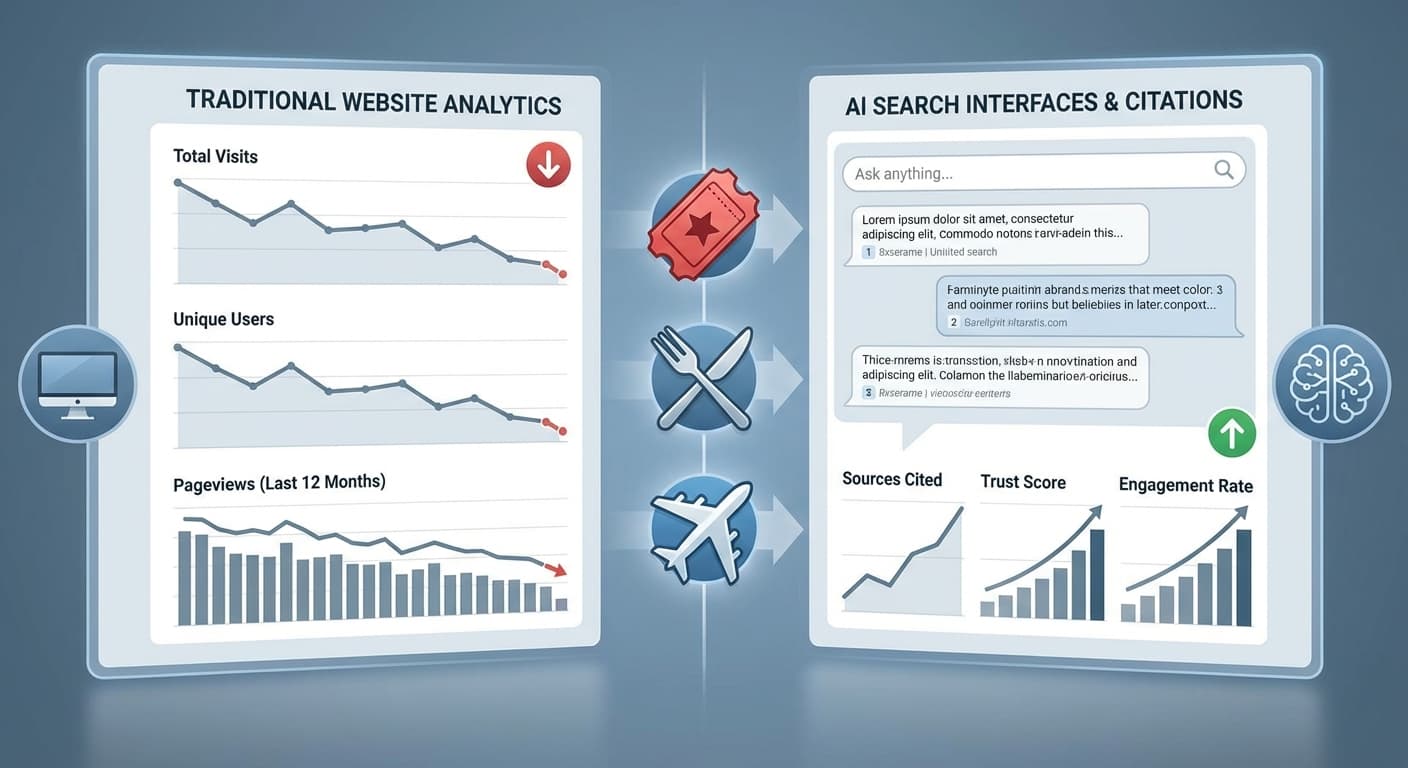
Traditional metrics like page views and bounce rate don't tell the whole story anymore. Focus on:
Common Mistakes to Avoid
Over-Optimization
Don't stuff content with keywords or create artificial-sounding copy. AI engines are sophisticated enough to detect and penalize manipulative content.
Ignoring Local Context
Generic travel content performs poorly in AI search. Every piece of content should reflect deep local knowledge and authentic insights.
Neglecting Mobile Experience
With 78% of AI searches happening on mobile devices, your content must be mobile-first.
Focusing Only on Direct Bookings
AI search is about discovery and inspiration, not just conversions. Create content that helps travelers throughout their journey.
How Citescope Ai Helps Tourism Businesses Dominate AI Search
Navigating AI optimization can be complex, especially for tourism businesses managing multiple properties or destinations. Citescope Ai's GEO Score analyzes your content across five critical dimensions—AI Interpretability, Semantic Richness, Conversational Relevance, Structure, and Authority—providing a clear 0-100 score for optimization potential.
The platform's AI Rewriter can transform traditional hotel descriptions into experience-focused content that AI engines love, while the Citation Tracker monitors when ChatGPT, Perplexity, and Claude reference your properties. For tourism businesses managing extensive content, this visibility into AI performance is invaluable.
The Future of Travel Discovery
As AI search continues to evolve, tourism businesses that adapt now will have a significant competitive advantage. The shift from location-based to conversation-based discovery represents the biggest change in travel marketing since the internet began.
The businesses thriving in 2026 are those that understand travelers don't just want information—they want inspiration, insights, and authentic experiences. By optimizing for AI search, you're not just improving visibility; you're positioning your business as a trusted advisor in travelers' most important decisions.
Ready to Optimize for AI Search?
Don't let your tourism business get lost in the AI revolution. Citescope Ai helps hotels, restaurants, and attractions optimize their content for maximum visibility in ChatGPT, Perplexity, Claude, and Gemini. Start with three free optimizations and see how AI-focused content can transform your travel marketing. Try Citescope Ai today and turn AI search into your biggest booking channel.