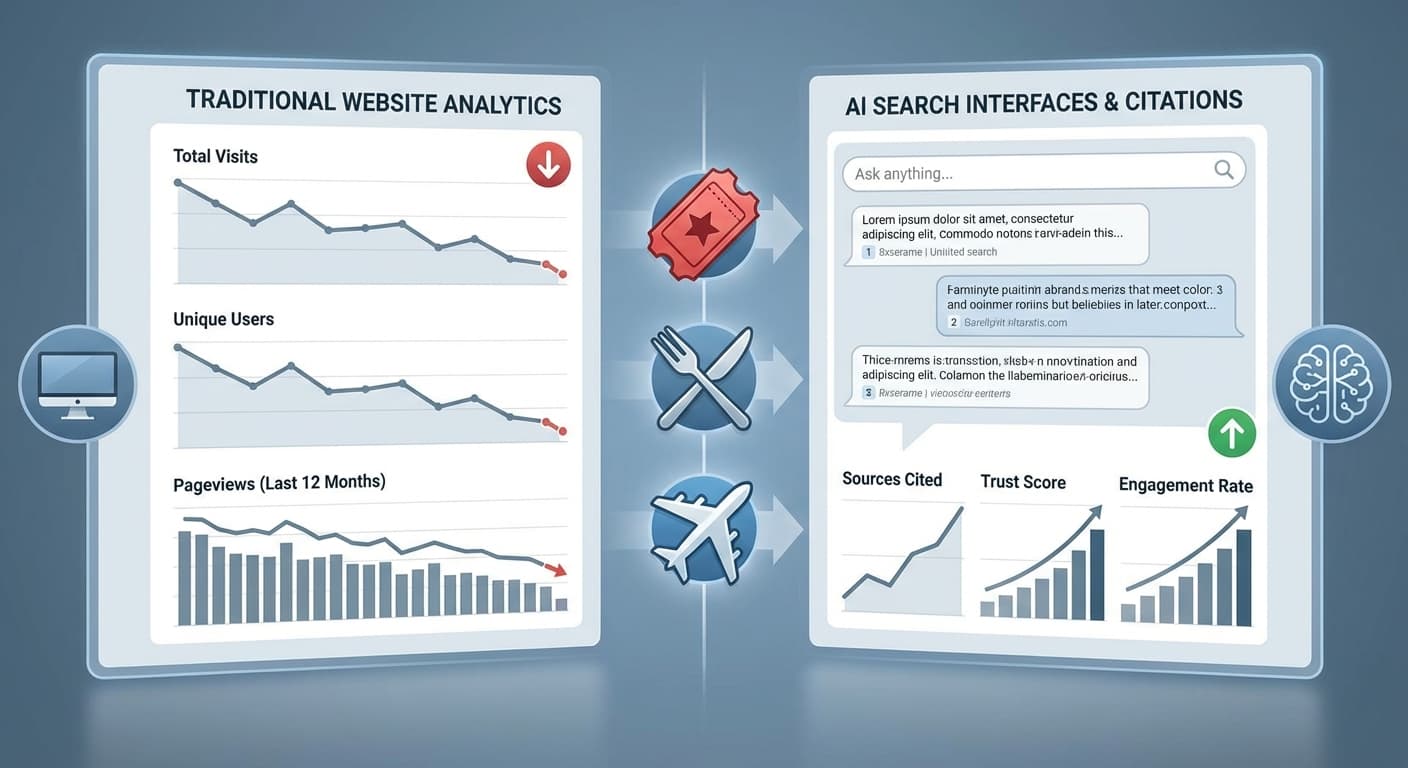
How to Optimize Your Business for AI Recommendation Systems When Search Engines Now Select Providers Instead of Presenting Options
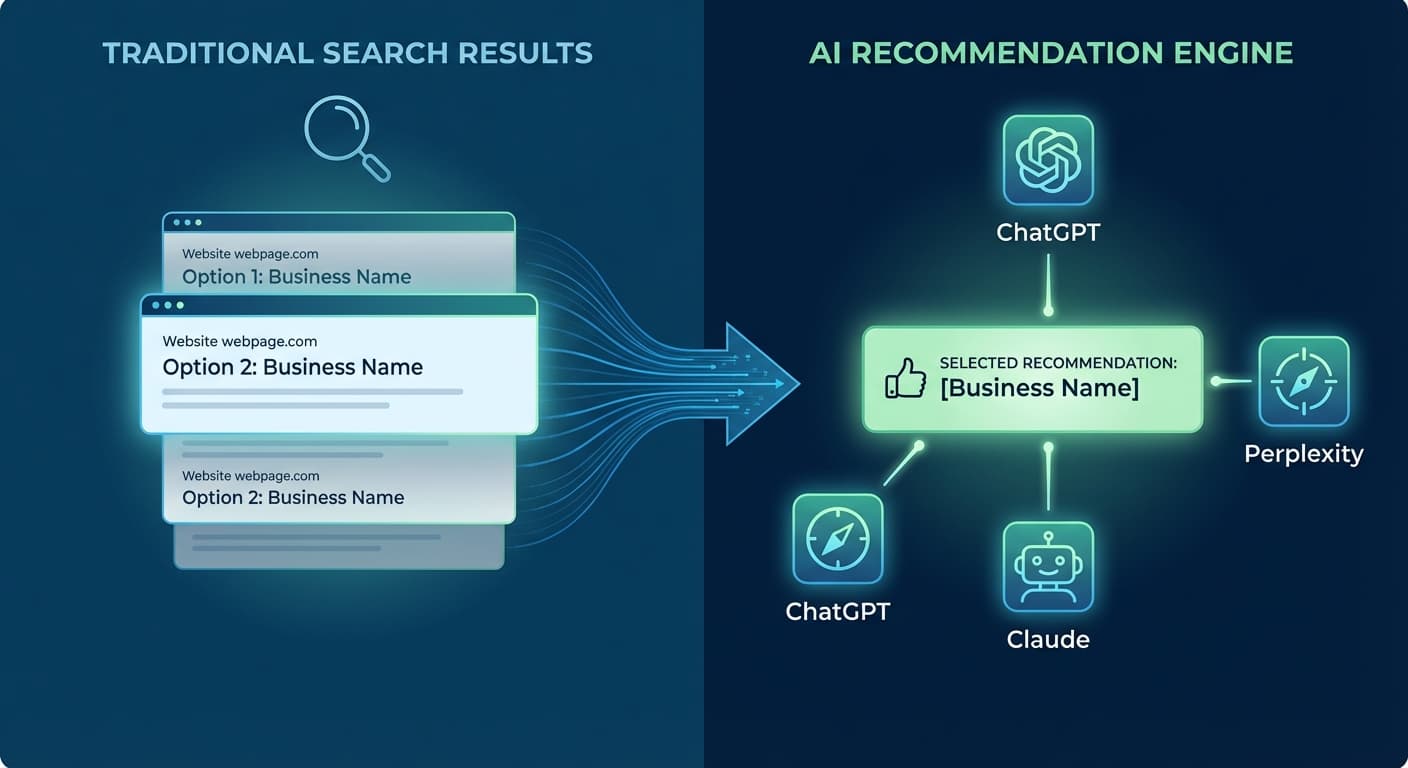
How to Optimize Your Business for AI Recommendation Systems When Search Engines Now Select Providers Instead of Presenting Options
In 2026, searching for "best project management software" no longer returns 10 blue links. Instead, ChatGPT directly recommends Asana, Perplexity suggests Monday.com, and Claude champions Notion. This fundamental shift represents the biggest change in search behavior since Google's inception – AI systems aren't just organizing information anymore, they're making decisions for users.
With over 500 million weekly ChatGPT users and AI search now accounting for 35% of all queries, businesses face a stark reality: being visible isn't enough. You need to be selected.
The New Reality: From Search Results to AI Recommendations
The traditional search paradigm of "here are your options" has evolved into "here's what I recommend." This shift fundamentally changes how businesses need to approach digital visibility.
Why AI Systems Make Single Recommendations
Unlike traditional search engines that profit from clicks and ad revenue, AI systems optimize for user satisfaction and conversation flow. When someone asks "What's the best accounting software for freelancers?", providing a single, well-reasoned recommendation creates a better user experience than overwhelming them with options.
This behavior mirrors how humans naturally give advice – we don't list every possible option; we recommend what we believe is best based on the context we understand.
The Citation Economy
In this new landscape, getting cited by AI systems becomes more valuable than traditional SEO rankings. A single mention in ChatGPT's response can drive more qualified traffic than appearing in position #3 on Google's first page.
Research from 2025 shows that businesses cited by AI systems see:
Understanding How AI Systems Choose What to Recommend
To optimize for AI recommendations, you need to understand the selection criteria these systems use:
1. Authority and Credibility Signals
AI systems heavily weight authoritative sources. They look for:
2. Context Matching
AI excels at understanding nuanced context. When someone asks for "project management software for a remote team of 5," the AI considers:
Your content needs to address these contextual nuances explicitly.
3. Structured Information Architecture
AI systems prefer content that's easy to parse and understand:
Strategic Optimization for AI Recommendation Systems
Create Context-Rich Content
Develop content that addresses specific scenarios and use cases:
Instead of: "Our CRM software has great features"
Write: "For B2B SaaS companies with 10-50 employees, our CRM reduces sales cycle length by 23% through automated lead scoring and integrated email sequences"
This approach helps AI systems understand exactly when and why to recommend your solution.
Optimize for Conversational Queries
AI interactions are conversational, so optimize for how people actually speak:
Build Comprehensive Solution Profiles
Create detailed pages that serve as complete references for your business:
Develop Industry-Specific Content
AI systems often recommend based on industry context. Create targeted content for different sectors:
While developing this content strategy, tools like Citescope Ai can help ensure your content meets the structural and semantic requirements that AI systems prioritize when making recommendations.
Technical Optimization Strategies
Schema Markup and Structured Data
Implement comprehensive structured data to help AI systems understand your business:
{
"@type": "SoftwareApplication",
"name": "Your Product Name",
"applicationCategory": "BusinessApplication",
"operatingSystem": "Web, iOS, Android",
"offers": {
"@type": "Offer",
"price": "39.00",
"priceCurrency": "USD"
},
"aggregateRating": {
"@type": "AggregateRating",
"ratingValue": "4.5",
"ratingCount": "1250"
}
}
API and Data Accessibility
Make your business information easily accessible:
Content Freshness and Maintenance
AI systems favor current, well-maintained information:
Measuring Success in AI Recommendation Systems
Traditional metrics like organic search rankings become less relevant. Focus on:
Citation Tracking
Monitor when and how AI systems mention your business:
Quality of AI-Driven Traffic
AI-referred visitors typically show different behavior patterns:
Engagement Metrics
Track how AI-referred visitors interact with your content:
Building Long-Term AI Visibility
Thought Leadership Content
Establish expertise through comprehensive, authoritative content:
Community Engagement
Build authority through community participation:
Continuous Optimization
AI recommendation algorithms evolve constantly. Maintain visibility through:
How Citescope Ai Helps
Optimizing for AI recommendation systems requires understanding how these systems interpret and evaluate content. Citescope Ai provides essential tools for this new landscape:
GEO Score Analysis: Our proprietary scoring system evaluates your content across five critical dimensions that AI systems prioritize: AI Interpretability, Semantic Richness, Conversational Relevance, Structure, and Authority. This helps you understand exactly how AI-friendly your content is.
AI-Optimized Rewriting: Transform existing content with our one-click optimization feature that restructures your messaging for better AI visibility while maintaining your brand voice.
Citation Monitoring: Track when ChatGPT, Perplexity, Claude, and Gemini cite your business, giving you real-time insights into your AI recommendation performance.
Multi-format Export: Export optimized content as Markdown, HTML, or WordPress blocks for seamless implementation across your digital properties.
Ready to Optimize for AI Search?
The shift from search results to AI recommendations isn't coming – it's already here. Businesses that adapt their content strategy for AI systems now will dominate their markets in 2026 and beyond.
Citescope Ai makes this transition straightforward with tools specifically designed for the AI search era. Our platform helps you create content that AI systems want to recommend, track your citation performance, and continuously optimize your AI visibility.
Start your free trial today and get 3 content optimizations to see how AI-friendly your current content really is. Join the hundreds of businesses already winning in the age of AI recommendations.