How to Optimize Your Content for Agentic Commerce Transaction Metadata When AI Shopping Agents Require Real-Time Machine-Readable Product Data to Include Your Brand in Purchase Recommendations

How to Optimize Your Content for Agentic Commerce Transaction Metadata When AI Shopping Agents Require Real-Time Machine-Readable Product Data to Include Your Brand in Purchase Recommendations
By 2026, AI shopping agents have fundamentally transformed how consumers discover and purchase products. With over 400 million people now using AI assistants like ChatGPT Shopping, Claude Commerce, and Perplexity Shop for product research and purchasing decisions, the landscape of e-commerce visibility has shifted dramatically. These AI agents don't just crawl your product pages—they analyze complex transaction metadata to determine which brands deserve inclusion in their purchase recommendations.
The stakes couldn't be higher: brands that fail to optimize for agentic commerce risk becoming invisible to the 65% of consumers who now rely on AI for shopping decisions.
The New Reality of AI-Powered Shopping
AI shopping agents have evolved far beyond simple product searches. In 2026, these sophisticated systems analyze transaction metadata in real-time to assess:
When a user asks "Find me the best wireless headphones under $200 with good battery life," AI agents don't just match keywords. They evaluate dozens of metadata signals to curate a personalized list of recommendations that balance quality, availability, price, and user preferences.
Understanding Transaction Metadata Requirements
Transaction metadata encompasses the structured data that AI shopping agents need to evaluate your products comprehensively. This goes far beyond basic product information to include real-time operational data that affects purchase decisions.
Core Metadata Components
Inventory and Availability Data
Pricing and Promotional Information
Customer Experience Metrics
Product Specifications and Features
Implementing Machine-Readable Product Data
To capture the attention of AI shopping agents, your product data must be structured in formats that algorithms can easily parse and analyze. This requires a strategic approach to data organization and presentation.
Schema.org Implementation
Start with comprehensive Schema.org markup for your product pages. In 2026, AI agents prioritize sites with rich structured data that includes:
JSON-LD for Dynamic Data
Implement JSON-LD scripts that update dynamically with your inventory management system. This allows AI agents to access current information without needing to crawl your entire site repeatedly.
{
"@context": "https://schema.org/",
"@type": "Product",
"name": "UltraSound Pro Headphones",
"offers": {
"@type": "Offer",
"availability": "https://schema.org/InStock",
"price": "189.99",
"validThrough": "2026-02-15",
"inventoryLevel": "47"
}
}
API Endpoints for Real-Time Updates
Consider creating dedicated API endpoints that AI shopping agents can query for the most current product information. While not all agents will use these directly, providing easily accessible data feeds can improve your visibility in AI-powered search results.
Optimizing Content for AI Agent Discovery
Beyond technical implementation, your content strategy must align with how AI agents evaluate and present product information to users.
Conversational Product Descriptions
AI agents often reformulate product information when making recommendations. Write product descriptions that sound natural when read aloud or summarized by an AI assistant:
Instead of: "Advanced noise-cancellation technology utilizing proprietary algorithms"
Write: "These headphones use smart technology to block out background noise, so you can focus on your music even in noisy environments"
Question-Driven Content Structure
Organize your product information around common questions that consumers ask AI agents:
Comparison-Ready Features
AI agents frequently generate comparison tables and feature matrices. Structure your content to facilitate these comparisons:
Building Trust Signals for AI Recommendations
AI shopping agents heavily weight trust signals when deciding which brands to recommend. These algorithms assess credibility through multiple data points that extend beyond your immediate product pages.
Review and Rating Optimization
Maintain active review management across all platforms where your products appear:
Authority and Expertise Indicators
Establish your brand's authority through:
Transparency in Business Practices
AI agents favor brands that demonstrate transparency:
Monitoring AI Agent Performance
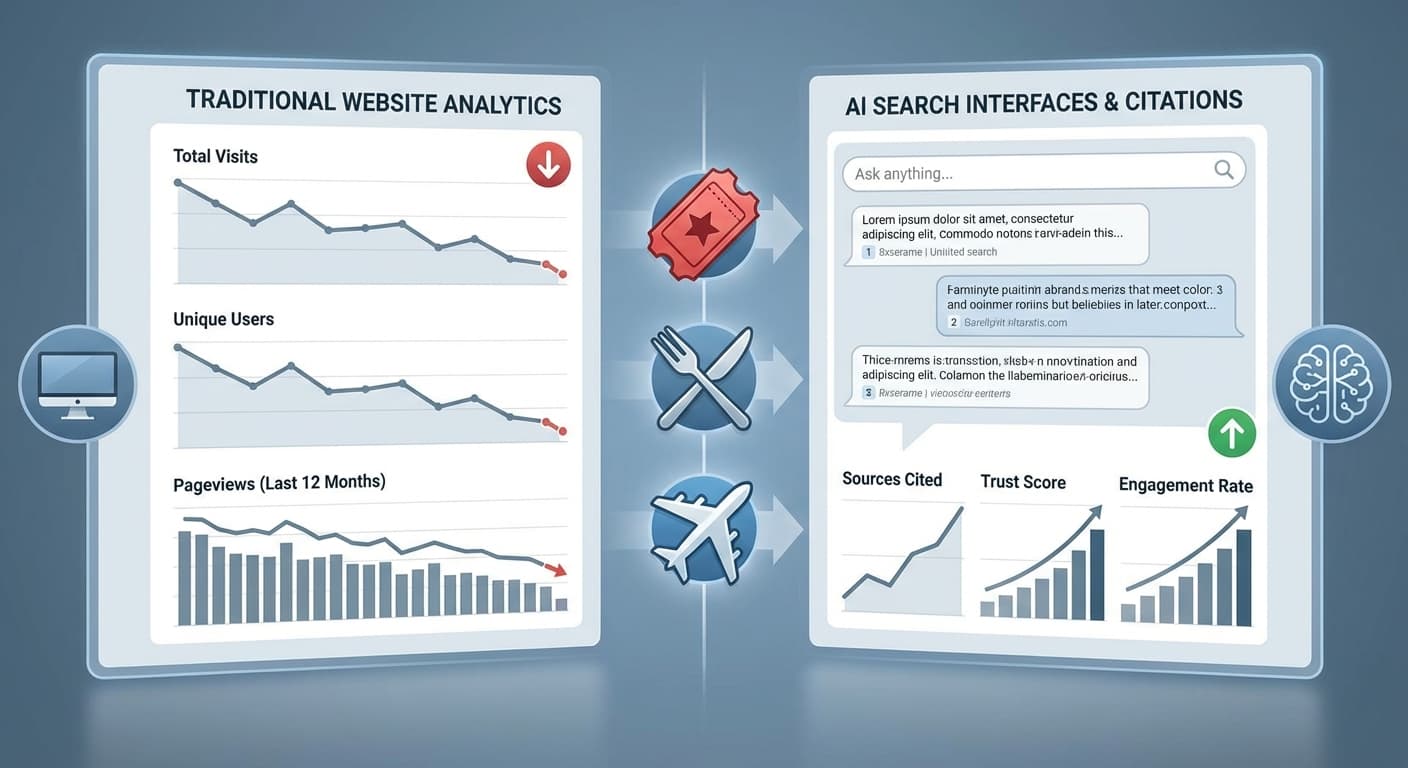
Tracking your success in agentic commerce requires new metrics and monitoring approaches. Traditional web analytics don't capture AI agent interactions effectively.
Key Performance Indicators
AI Mention Frequency
Conversion Attribution
Competitive Positioning
How Citescope Ai Helps
Optimizing for agentic commerce requires sophisticated analysis of how AI systems interpret and utilize your content. Citescope Ai's GEO Score evaluates your product pages across five critical dimensions that directly impact AI shopping agent visibility:
The Citation Tracker monitors when ChatGPT, Perplexity, Claude, and other AI systems reference your products in shopping recommendations, giving you real-time insights into your agentic commerce performance.
Advanced Strategies for 2026 and Beyond
As AI shopping agents become more sophisticated, staying ahead requires anticipating future developments and preparing your content accordingly.
Predictive Inventory Signals
Implement systems that can communicate projected inventory levels and restock schedules to AI agents. This helps maintain visibility even when items are temporarily out of stock.
Dynamic Pricing Communication
Develop processes for communicating pricing changes and promotional offers to AI systems in real-time, ensuring your products remain competitive in AI-generated recommendations.
Multi-Channel Consistency
Ensure that product information remains consistent across all channels where AI agents might encounter your brand, from your website to third-party marketplaces to social media platforms.
Voice Commerce Optimization
Prepare for the growing trend of voice-based shopping by optimizing product names and descriptions for spoken queries and audio presentation.
Ready to Optimize for AI Search?
Agentic commerce represents the future of online shopping, but success requires more than just good products—it demands strategic optimization for AI visibility. Citescope Ai provides the tools and insights you need to ensure your brand appears in AI shopping recommendations when it matters most.
Start with our free tier to analyze your current AI optimization level, then leverage our AI Rewriter to transform your product content for maximum agentic commerce visibility. With Citation Tracker, you'll know exactly when and how AI agents are recommending your products to potential customers.
Try Citescope Ai free today and join the brands that are winning in the age of AI-powered shopping.