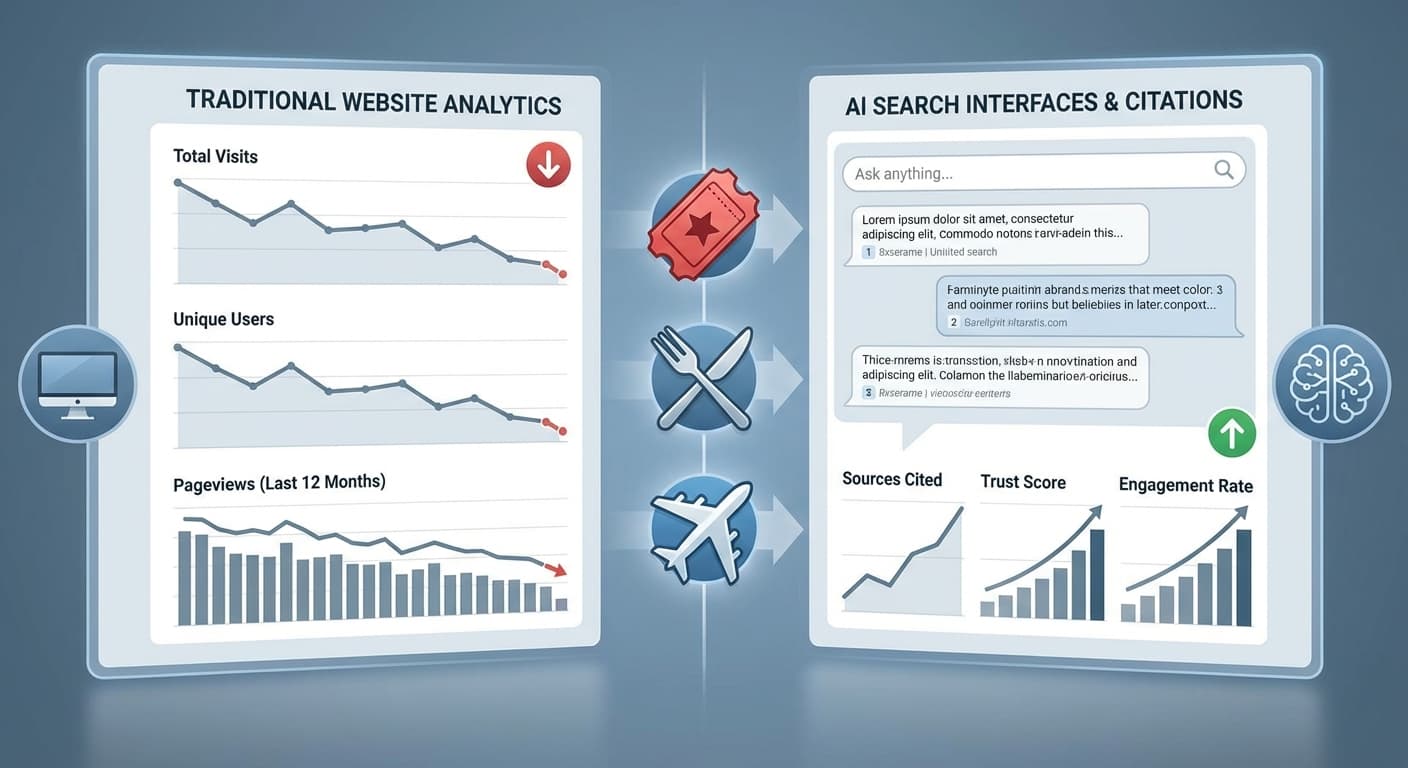
How to Optimize Your Content for Multimodal AI Search: Beyond Keywords in the Era of Visual and Voice Queries

How to Optimize Your Content for Multimodal AI Search: Beyond Keywords in the Era of Visual and Voice Queries
When Google Lens processes over 12 billion visual queries monthly in 2026, and ChatGPT users increasingly combine text, images, and voice in their searches, one thing becomes crystal clear: the age of keyword-only optimization is over. Today's AI search engines don't just read your content—they see, hear, and understand it in ways that would have seemed impossible just a few years ago.
The shift is staggering. Recent data shows that 65% of Gen Z now uses multimodal queries when searching for information, combining screenshots, voice notes, and follow-up text to get precisely what they need. Meanwhile, Perplexity's latest features allow users to upload images and ask complex questions about them, while Claude can analyze documents, charts, and visual content simultaneously.
If your content strategy is still stuck in the text-only era, you're missing out on a massive opportunity to capture this new wave of search behavior.
The Multimodal Revolution: Why Traditional SEO Isn't Enough
Multimodal AI search represents a fundamental shift in how people interact with information. Instead of typing "best Italian restaurants Chicago," users now:
This evolution means AI engines like ChatGPT, Perplexity, and Claude are processing content across multiple dimensions simultaneously. They're not just parsing your text for keywords—they're understanding context, visual elements, semantic relationships, and user intent in ways that demand a completely new optimization approach.
The Numbers Don't Lie
Current multimodal search statistics paint a clear picture:
Core Strategies for Multimodal AI Optimization
1. Create Context-Rich Visual Content
AI engines excel at understanding images when they're properly contextualized. This means:
Image Optimization Beyond Alt Text:
Example: Instead of alt text like "graph showing sales data," use "Monthly revenue growth chart showing 35% increase from January to March 2026, highlighting strongest performance in software subscriptions category."
2. Structure Content for Conversational Queries
Multimodal searches tend to be more conversational and complex. Users might ask, "I'm looking at this product page [uploads screenshot], can you explain the differences between these pricing tiers and which would work best for a team of 15 people?"
Optimization strategies:
3. Implement Semantic Richness
AI engines understand concepts, not just keywords. Your content needs to demonstrate deep topical authority through semantic richness:
4. Optimize for Cross-Modal Understanding
Your content should work seamlessly whether users encounter it through text, voice, or visual search:
For Voice Queries:
For Visual Discovery:
Advanced Multimodal Optimization Techniques
Schema Markup for Mixed Media
Implement structured data that helps AI understand the relationship between your text, images, and other media:
html
<script type="application/ld+json">
{
"@context": "https://schema.org",
"@type": "Article",
"headline": "Your Article Title",
"image": "URL-to-featured-image",
"video": "URL-to-embedded-video",
"associatedMedia": {
"@type": "ImageObject",
"contentUrl": "image-url",
"description": "Detailed image description"
}
}
</script>
Content Clustering for Topic Authority
Create interconnected content clusters that demonstrate comprehensive expertise:
Real-Time Optimization Based on AI Feedback
Monitor how AI engines cite and reference your content to identify optimization opportunities. Tools like Citescope Ai's Citation Tracker can show you exactly when and how your content appears in AI responses, giving you insights into:
Common Multimodal Optimization Mistakes to Avoid
1. Treating Visuals as Afterthoughts
Many content creators still add images as decoration rather than integral parts of their content strategy. AI engines can tell the difference.
2. Ignoring Voice Search Patterns
Voice queries are typically longer and more conversational than text searches. Your content should address these natural language patterns.
3. Failing to Connect Different Media Types
Your text, images, and other media should work together to tell a cohesive story, not exist as separate elements.
4. Overlooking Technical Performance
Multimodal content is often heavier than text-only content. Poor loading times can hurt your optimization efforts.
Measuring Multimodal Search Success
Track these key metrics to gauge your optimization effectiveness:
How Citescope Ai Helps with Multimodal Optimization
Optimizing for multimodal AI search requires understanding how AI engines interpret and cite your content across different formats. Citescope Ai's GEO Score analyzes your content across five critical dimensions that matter for multimodal search:
The platform's AI Rewriter doesn't just optimize for keywords—it restructures your content to excel in multimodal search scenarios. Meanwhile, the Citation Tracker shows you exactly when ChatGPT, Perplexity, Claude, and Gemini reference your content, giving you unprecedented insights into your multimodal performance.
The Future of Multimodal Search Optimization
As we move deeper into 2026, multimodal AI search will only become more sophisticated. We're already seeing:
The content creators and businesses that succeed will be those who embrace this complexity and optimize accordingly.
Ready to Optimize for AI Search?
Multimodal AI search isn't coming—it's here. With billions of visual queries processed monthly and users increasingly combining text, voice, and images in their searches, traditional keyword optimization alone won't cut it.
Citescope Ai helps you stay ahead of this shift by analyzing how AI engines understand your content across all dimensions that matter for multimodal search. Our GEO Score gives you actionable insights, while our Citation Tracker shows you exactly how your optimization efforts are paying off.
Start your free trial today and see how your content performs in the new era of AI search. With 3 free optimizations per month, you can begin transforming your content strategy without any commitment. Ready to get found in the age of multimodal AI? Try Citescope Ai free today.