How to Optimize Your Content Strategy When AI Agentic Buyers Complete Task Automation Without Visiting Your Website: Winning the Query Fan-Out Economy

How to Optimize Your Content Strategy When AI Agentic Buyers Complete Task Automation Without Visiting Your Website: Winning the Query Fan-Out Economy
By 2026, over 65% of B2B buyers complete their entire research journey without ever visiting a vendor's website. Instead, they're relying on AI agents like ChatGPT, Claude, and Perplexity to research solutions, compare options, and even make purchase recommendations. Welcome to the query fan-out economy, where a single buyer question triggers dozens of AI searches across multiple platforms—and your content needs to be ready for all of them.
This shift represents the most significant change in buyer behavior since the advent of search engines. Traditional content strategies built around driving website traffic are becoming obsolete as AI agentic buyers use intelligent assistants to automate their entire decision-making process.
Understanding the Query Fan-Out Economy
The query fan-out economy describes how modern buyers use AI to simultaneously query multiple information sources with a single question. When a procurement manager asks "What's the best project management software for remote teams?", that query doesn't just hit one search engine—it fans out across ChatGPT, Perplexity, Claude, Gemini, and specialized AI tools.
The New Buyer Journey Reality
In 2026, the typical B2B buyer journey looks dramatically different:
This means your content must perform in AI-mediated environments, not just on your website.
Why Traditional Content Strategies Are Failing
Most content strategies still optimize for 2020s buyer behavior: attract visitors to your website, nurture them through a funnel, and convert them into leads. But when AI agents handle the entire research process, this approach breaks down.
The Three Fatal Flaws
1. Website-Centric Thinking
Your beautifully designed landing pages are invisible to AI agents conducting research on behalf of buyers. They're consuming your content through APIs, citations, and semantic understanding—not visual interfaces.
2. Keywords Over Context
Traditional SEO focuses on keyword density and backlinks. AI search prioritizes semantic relevance, factual accuracy, and conversational utility. Your content needs to answer questions naturally, not stuff keywords.
3. Gatekeeper Mentality
Keeping valuable insights behind lead forms ensures AI agents—and their human users—never access your best content. In the query fan-out economy, accessibility equals visibility.
The Five Pillars of AI-First Content Strategy
1. Create Citeable, Authoritative Content
AI engines prioritize content they can confidently cite. This means:
For example, instead of saying "Many companies struggle with project management," write "According to PMI's 2025 Pulse Survey, 47% of organizations report project failures due to inadequate communication tools."
2. Optimize for Conversational Queries
AI buyers ask questions like they're talking to a knowledgeable colleague:
Your content should directly answer these conversational questions with comprehensive, nuanced responses.
3. Build Semantic Content Clusters
Instead of targeting individual keywords, create content clusters around buyer intent:
Evaluation Cluster:
Problem-Solution Cluster:
This approach helps AI engines understand your expertise across entire topic areas, not just individual keywords.
4. Structure for AI Consumption
AI agents parse content differently than humans. Optimize your structure:
5. Distribute Across AI-Accessible Channels
Publish your optimized content where AI agents can find it:
The goal is ubiquitous presence across the query fan-out ecosystem.
Advanced Strategies for AI-Agentic Buyers
Create AI-Optimized Buyer Guides
Develop comprehensive guides that AI agents can easily reference:
These resources become go-to citations for AI agents helping buyers navigate complex decisions.
Implement Semantic SEO
Move beyond traditional keyword optimization to semantic relevance:
Leverage Social Proof at Scale
AI agents heavily weight social proof when making recommendations:
Measuring Success in the Query Fan-Out Economy
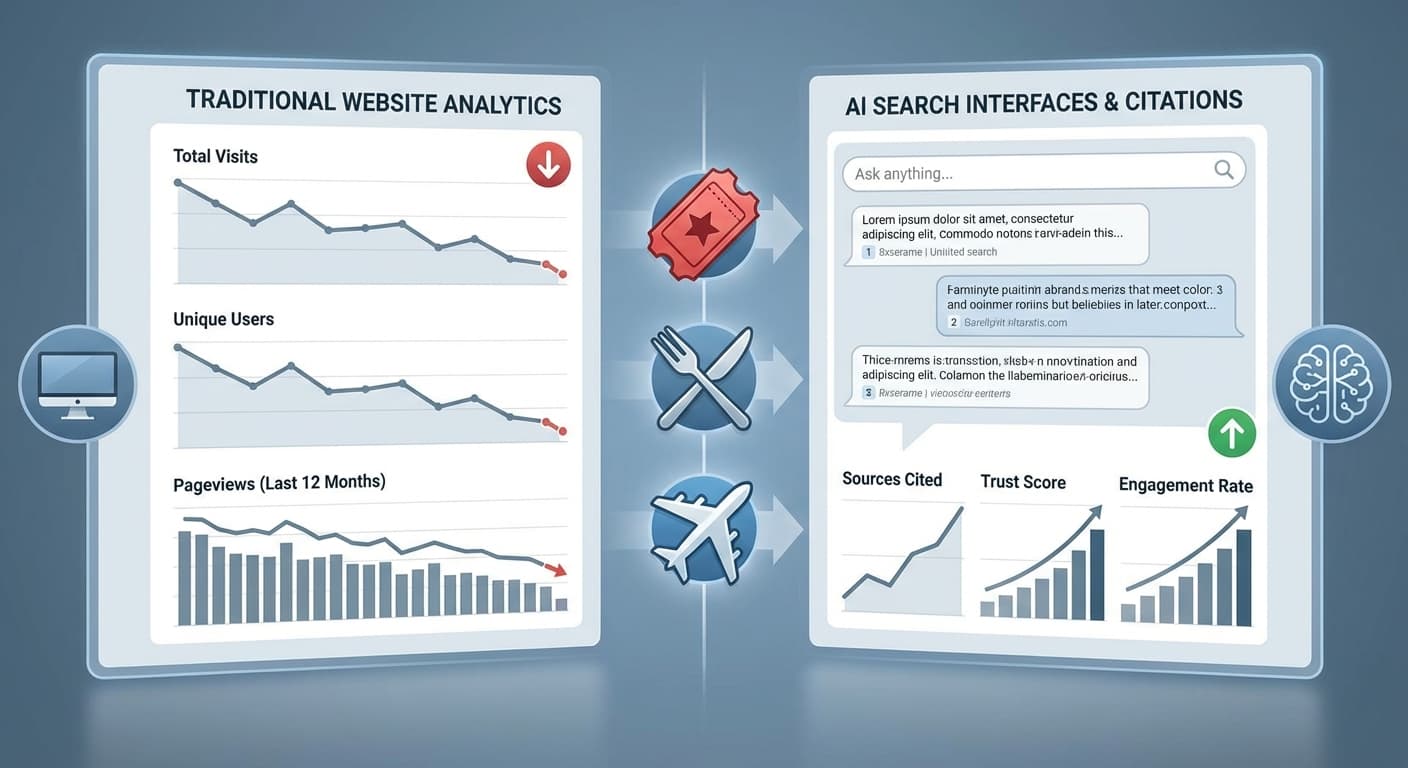
Traditional metrics like website traffic and conversion rates don't capture AI-mediated buyer behavior. Focus on:
How Citescope Ai Helps Navigate the Query Fan-Out Economy
Succeeding in the query fan-out economy requires sophisticated optimization and tracking capabilities. Citescope Ai provides the tools content strategists need:
With AI search now representing over 35% of all B2B research queries, having visibility into your AI performance isn't optional—it's essential for staying competitive.
The Future of AI-Agentic Buyer Behavior
As AI agents become more sophisticated, expect even more dramatic shifts:
Content strategies that adapt now will have a massive competitive advantage as these trends accelerate.
Ready to Optimize for AI Search?
The query fan-out economy isn't coming—it's here. B2B buyers are already completing their entire journey through AI-mediated research, and traditional content strategies are losing relevance daily. Don't let your competitors dominate AI recommendations while your content remains invisible to the agents shaping buyer decisions.
Citescope Ai gives you the visibility and optimization tools you need to succeed in this new reality. Start with our free tier and optimize 3 pieces of content this month to see how AI-first optimization can transform your content performance. Try Citescope Ai free today and ensure your content strategy is ready for the future of B2B buying.