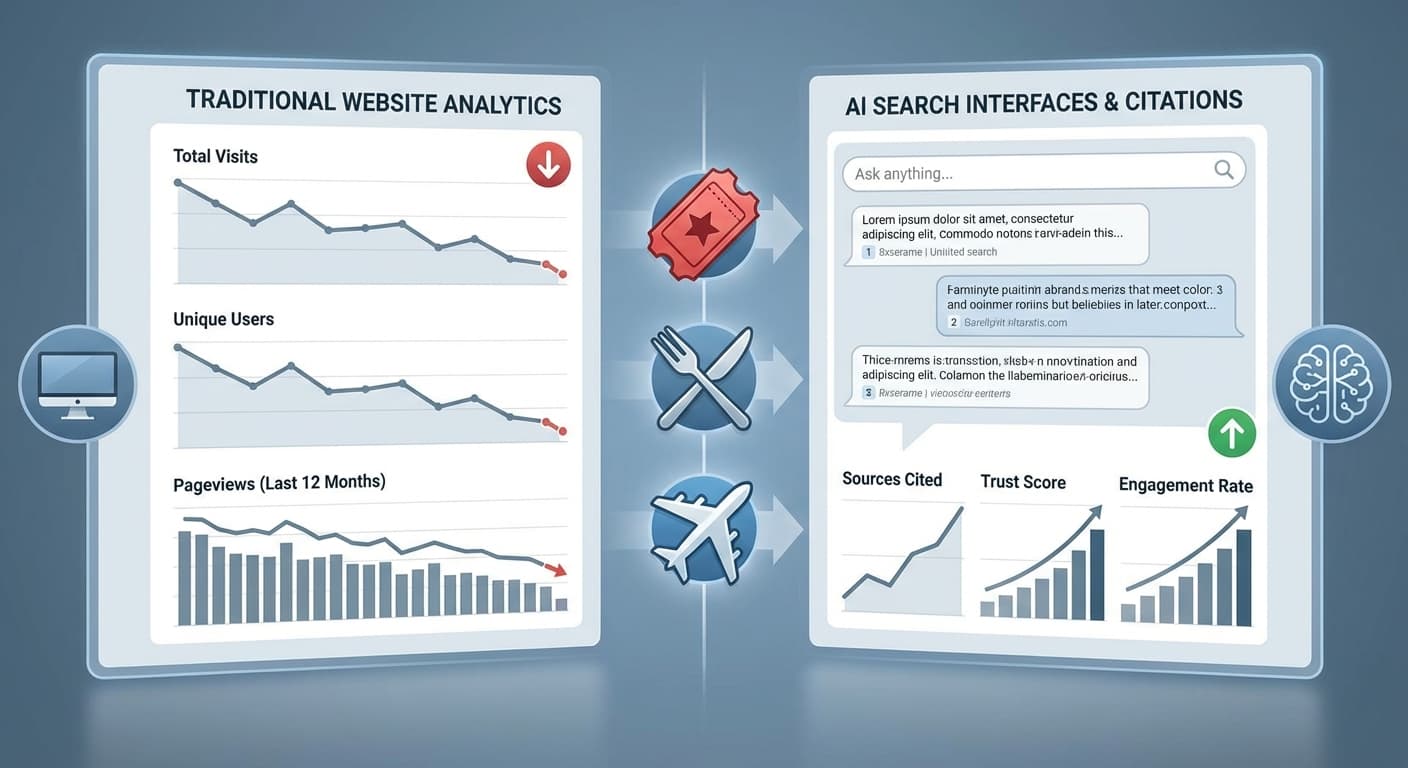
How to Optimize Your Website Data for Real-Time Agentic AI Compliance When Non-Readable Product Information Causes AI Shopping Assistants to Skip Your Brand Entirely
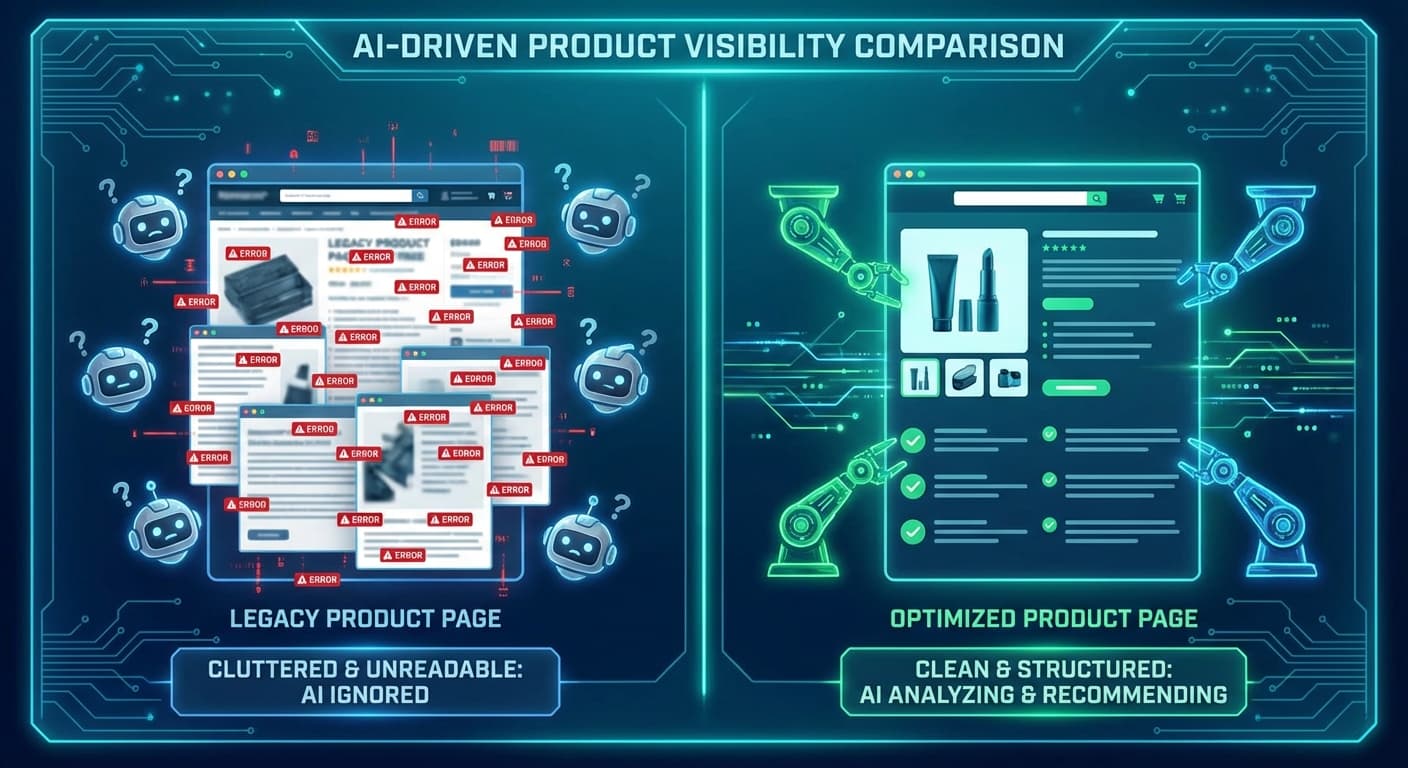
How to Optimize Your Website Data for Real-Time Agentic AI Compliance When Non-Readable Product Information Causes AI Shopping Assistants to Skip Your Brand Entirely
Imagine this: A potential customer asks ChatGPT to "find me the best noise-canceling headphones under $300," and despite having a superior product in that exact price range, your brand doesn't even get mentioned. This isn't a hypothetical scenario—it's happening to thousands of e-commerce brands right now as AI shopping assistants process over 2.4 billion product queries monthly in 2026.
The culprit? Your product data isn't optimized for agentic AI consumption, causing sophisticated AI shopping assistants to literally skip over your offerings when making recommendations to users.
The Hidden Crisis: When AI Can't Read Your Products
By 2026, AI-powered shopping assistants have fundamentally changed how consumers discover and purchase products. Unlike traditional search engines that rely on keyword matching, these agentic AI systems need to understand your products at a semantic level to include them in recommendations.
Here's the problem: Most e-commerce websites still structure their product data for human readers, not AI agents. When an AI shopping assistant encounters:
The AI simply moves on to competitors who have made their product information AI-readable.
What Makes Product Data "AI-Readable"?
Agentic AI systems evaluate product information across several key dimensions before deciding whether to include your products in recommendations:
1. Semantic Clarity
Your product information needs to clearly communicate what the product is, what problems it solves, and how it compares to alternatives. AI systems excel at understanding context, but they need the right signals.
Instead of: "Revolutionary audio solution for the modern lifestyle"
Use: "Bluetooth 5.3 noise-canceling over-ear headphones with 30-hour battery life and active noise reduction up to 35dB"
2. Structured Technical Specifications
AI shopping assistants rely heavily on technical specifications to make accurate comparisons and recommendations. These specs need to be:
3. Contextual Relevance
Your product data should anticipate the types of questions AI assistants will encounter. This means including information about:
The Real-Time Compliance Challenge
Agentic AI systems don't just crawl your website once and store the information—they're constantly evaluating and re-evaluating product data in real-time. This creates a new challenge: maintaining AI compliance across dynamic product catalogs.
Consider these scenarios:
Actionable Strategies for AI-Optimized Product Data
1. Implement Comprehensive Schema Markup
Structured data markup is your direct line of communication with AI systems. Focus on:
2. Create AI-Friendly Product Titles
Your product titles should be descriptive enough for AI systems to understand exactly what you're selling:
Formula: [Brand] [Product Type] [Key Features] [Model/Size]
Example: "Sony WH-1000XM5 Wireless Noise Canceling Over-Ear Headphones with 30-Hour Battery Life - Black"
3. Optimize Product Descriptions for Semantic Understanding
Write product descriptions that answer the questions AI assistants are likely to encounter:
4. Standardize Your Data Architecture
Consistency is crucial for AI comprehension. Develop standards for:
5. Monitor AI Assistant Mentions
Regularly test how AI shopping assistants respond to queries related to your product categories. Tools like Citescope Ai can help you track when and how your products are being cited by different AI systems, giving you insights into what's working and what needs improvement.
Common Pitfalls That Kill AI Visibility
The Image-Text Problem
Many brands embed crucial product information in images, making it invisible to AI systems. Always include text versions of specifications, features, and benefits.
Inconsistent Categorization
Using different category names or hierarchies across your product line confuses AI systems. Maintain consistent taxonomies.
Vague Value Propositions
Generic marketing language doesn't help AI systems understand why someone should choose your product over alternatives.
Missing Context
Failing to explain how your product fits into broader use cases or customer needs.
Building an AI-First Product Data Strategy
Phase 1: Audit Your Current Data
Phase 2: Standardize and Structure
Phase 3: Monitor and Optimize
How Citescope Ai Helps
Optimizing product data for AI shopping assistants requires understanding how these systems interpret and evaluate your content. Citescope Ai's GEO Score analyzes your product pages across five critical dimensions that directly impact AI visibility: AI Interpretability, Semantic Richness, Conversational Relevance, Structure, and Authority.
The platform's AI Rewriter can automatically optimize your product descriptions and specifications for better AI comprehension, while the Citation Tracker monitors when your products are mentioned by ChatGPT, Perplexity, Claude, and Gemini—giving you real-time feedback on your optimization efforts.
The Future of AI-Optimized E-commerce
As agentic AI systems become more sophisticated, the gap between AI-optimized and traditional product data will only widen. Brands that invest in AI-readable product information now will have a significant competitive advantage as AI shopping assistants handle an increasingly larger share of product discovery and purchase decisions.
The key is to think beyond traditional SEO and start optimizing for AI comprehension. This means creating product data that's not just keyword-rich, but semantically rich, contextually relevant, and structurally sound.
Ready to Optimize for AI Search?
Don't let poor product data structure cause AI shopping assistants to skip your brand entirely. Citescope Ai helps you optimize your product information for maximum AI visibility with our GEO Score analysis and one-click AI Rewriter. Start with our free tier and see how AI-optimized content can transform your product discovery rates. Try Citescope Ai today and ensure your products get the AI visibility they deserve.