How to Optimize Your Website for Google AI Mode's Query Fan-Out Feature
How to Optimize Your Website for Google AI Mode's Query Fan-Out Feature
Did you know that Google's AI mode now generates an average of 15-20 sub-queries for every single user question? This explosive "query fan-out" behavior means one simple search like "best marketing strategies" triggers dozens of related searches your content architecture probably wasn't designed to handle.
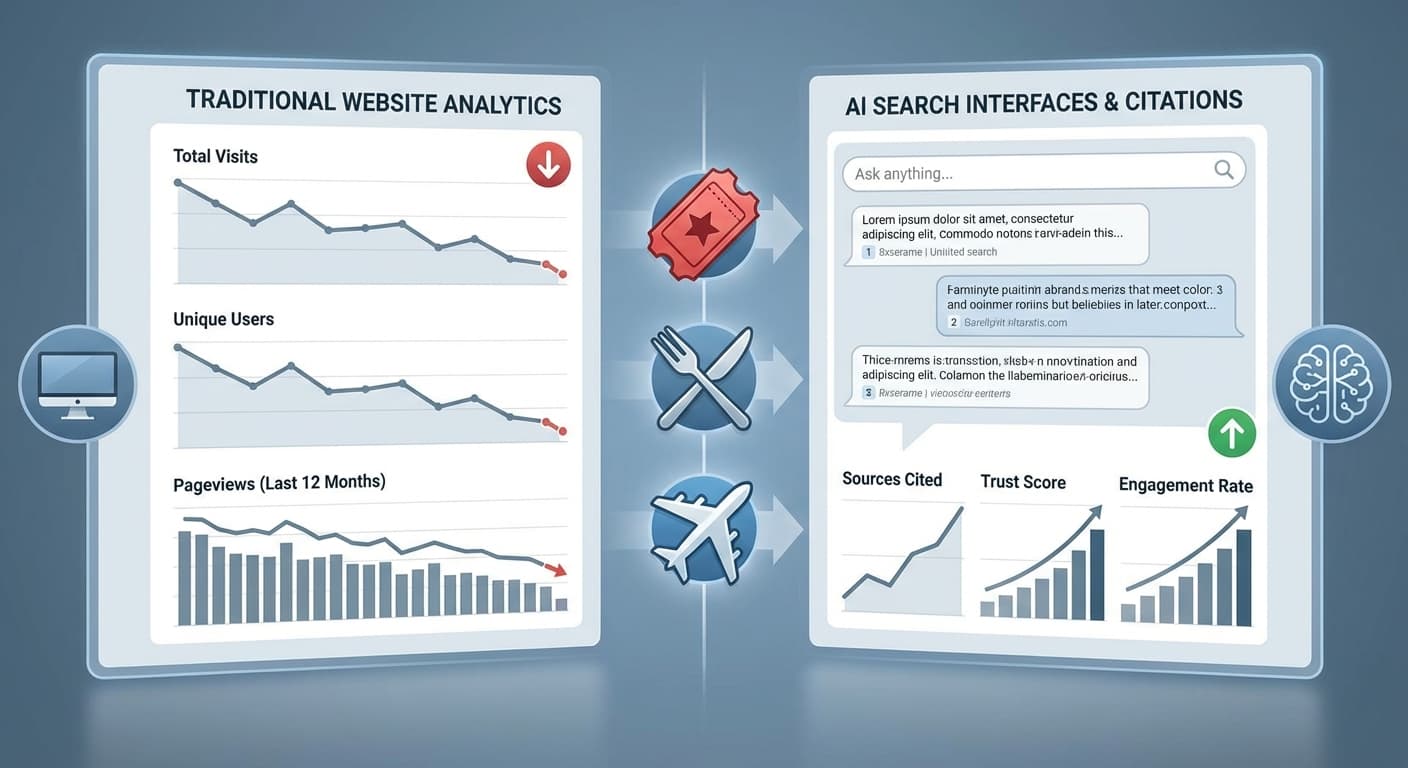
Welcome to 2026, where AI search has fundamentally changed how information gets discovered and consumed. With over 500 million weekly ChatGPT users and Google's AI mode processing 40% of all complex queries, understanding query fan-out isn't just an advantage—it's essential for digital survival.
What is Google AI Mode's Query Fan-Out Feature?
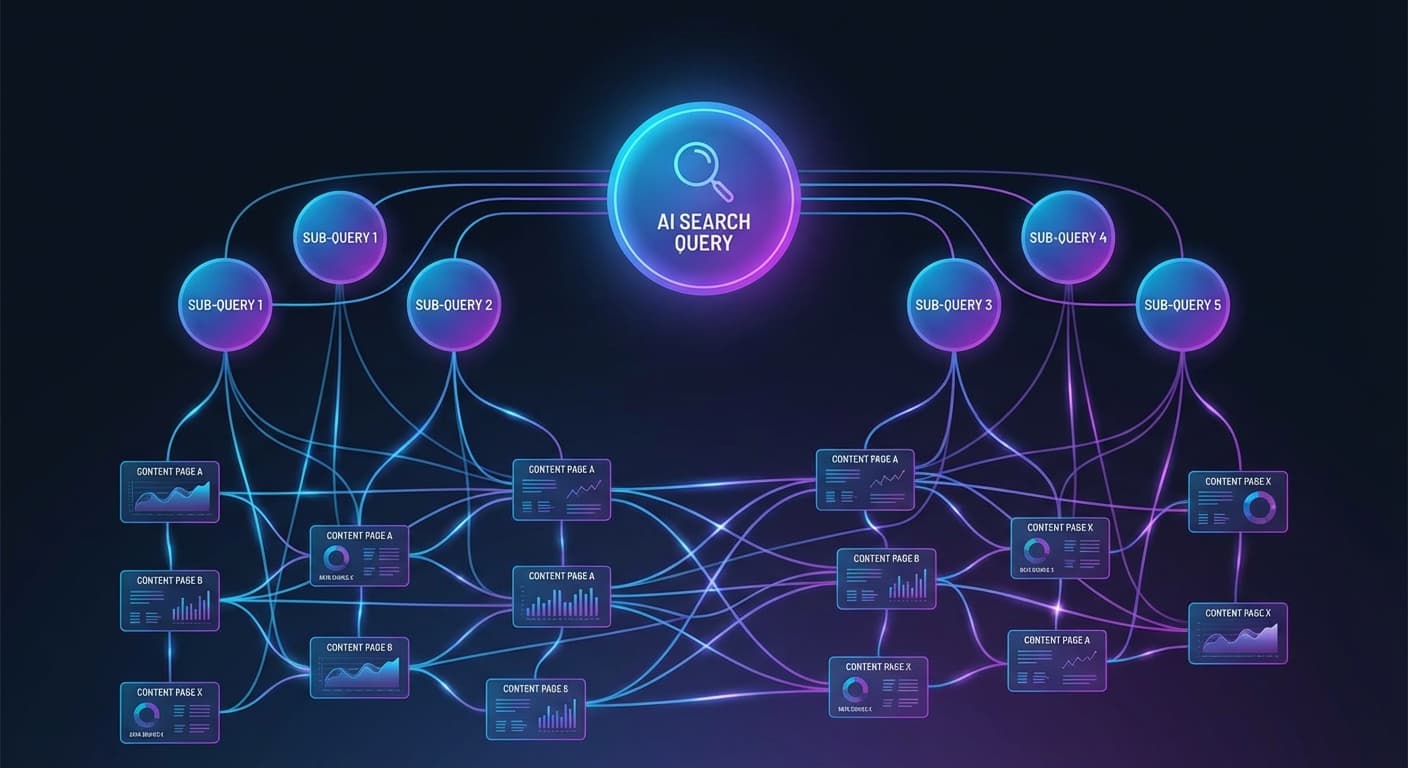
Query fan-out is Google AI's ability to break down a single user question into multiple related sub-queries, then synthesize information from various sources to provide a comprehensive answer. When someone asks "How do I start a podcast?", Google's AI doesn't just look for that exact phrase. Instead, it fans out into dozens of related searches:
This creates both an enormous opportunity and a significant challenge for content creators.
Why Traditional Content Architecture Fails Query Fan-Out
Most websites were built for the old search paradigm: one page, one primary keyword, one user intent. But query fan-out demands content that can satisfy multiple related intents simultaneously.
The Single-Page Problem
Traditional SEO wisdom suggested creating focused pages targeting specific keywords. A typical site might have:
While this worked for traditional search, AI engines now expect interconnected content that flows naturally between related topics.
The Silo Effect
Many websites organize content in rigid silos—blog posts separate from product pages, FAQs isolated from main content, and no clear semantic relationships between related topics. This structure makes it nearly impossible for AI to understand the full scope of your expertise.
The New Rules of AI-Optimized Content Architecture
1. Build Content Clusters, Not Isolated Pages
Instead of standalone pages, create comprehensive content clusters that address entire topic ecosystems. For the podcast example:
Core Hub Page: "Complete Guide to Starting a Podcast"
Supporting Cluster Pages:
Each cluster page should link semantically to others, creating a web of related information that AI can easily traverse.
2. Implement Semantic Interlinking
AI engines love content that explicitly shows relationships between concepts. Use contextual internal linking that goes beyond basic keyword matching:
3. Create Multi-Intent Landing Pages
Design pages that can satisfy multiple user intents simultaneously. A well-optimized podcast guide might address:
Practical Optimization Strategies for Query Fan-Out
Use Hierarchical Heading Structure
Organize your content with clear H2 and H3 headings that mirror how AI breaks down queries:
markdown
Getting Started with Podcasting
Choosing Your Podcast Topic
Understanding Your Target Audience
Planning Your Content Calendar
Essential Podcasting Equipment
Microphone Selection Guide
Recording Software Options
Editing Tools and Techniques
This structure helps AI understand the relationship between different aspects of your topic.
Implement FAQ Schemas
AI engines frequently pull from FAQ sections to answer sub-queries. Include comprehensive FAQ sections that address the fan-out questions your main topic generates:
Optimize for Conversational Queries
AI engines process natural language queries. Optimize your content for how people actually ask questions:
Create Content Hubs with Multiple Entry Points
Design your content architecture so AI can enter at any point and find relevant information:
Measuring Query Fan-Out Success
Tracking your optimization efforts requires new metrics beyond traditional SEO:
Monitor AI Citation Frequency
Track how often AI engines cite your content across different sub-topics. Tools that monitor AI search citations can show whether your content architecture successfully captures query fan-out traffic.
Analyze Query Diversity
Look at the variety of search queries bringing traffic to each page. Successful fan-out optimization should result in pages ranking for dozens of related long-tail queries.
Track Cross-Page Engagement
Measure how users move between related pages in your content clusters. High cross-page engagement indicates your architecture supports AI's expectation of interconnected information.
Content Formats That Excel at Query Fan-Out
Comprehensive Guides with Modular Sections
Create long-form content that can be consumed in pieces. Each section should be substantial enough to answer specific sub-queries while contributing to the overall topic.
Interactive Content Maps
Develop visual content maps that show relationships between topics. These help both users and AI understand your content ecosystem.
Layered FAQ Systems
Build FAQ sections with multiple levels:
How Citescope AI Helps Optimize for Query Fan-Out
Optimizing for query fan-out requires understanding how AI engines interpret and connect your content. Citescope AI's GEO Score analyzes your content across five critical dimensions that directly impact fan-out performance:
The Citation Tracker feature helps you monitor whether your fan-out optimization is working by showing when AI engines cite different parts of your content ecosystem for related queries.
Advanced Techniques for Enterprise Sites
Implement Topic Modeling
Use topic modeling to identify natural content clusters and ensure your architecture aligns with how AI engines understand topic relationships.
Create Dynamic Content Recommendations
Implement systems that automatically suggest related content based on semantic similarity, not just keyword matching.
Build API-Accessible Content
Structure your content so AI engines can easily access and cross-reference different sections through clean APIs or structured data markup.
Common Mistakes to Avoid
Don't Create Shallow Content Clusters
Each piece in your content cluster should provide substantial value independently. Thin content designed only to capture keywords won't satisfy AI engines' quality standards.
Avoid Keyword Stuffing in Transitions
When linking between cluster content, focus on natural, helpful connections rather than forcing keyword-heavy anchor text.
Don't Neglect Technical Structure
All the great content in the world won't help if your technical SEO is broken. Ensure fast loading times, clean URL structures, and proper schema markup.
The Future of Query Fan-Out Optimization
As AI search continues evolving, expect query fan-out to become even more sophisticated. Google's AI is already experimenting with:
Staying ahead means building flexible content architectures that can adapt to these emerging capabilities.
Ready to Optimize for AI Search?
Query fan-out represents the future of search—where single questions unlock entire knowledge ecosystems. The winners will be those who understand this shift and architect their content accordingly.
Citescope AI helps you navigate this complex landscape with tools designed specifically for AI search optimization. Our GEO Score provides actionable insights into how well your content supports query fan-out, while our AI Rewriter can restructure existing content to better capture these expanded search opportunities.
Start with our free tier and analyze three pieces of content per month, or upgrade to Pro for unlimited optimizations and comprehensive citation tracking across ChatGPT, Perplexity, Claude, and Gemini. Ready to future-proof your content strategy? Try Citescope AI today.