How to Pivot Your Content Strategy After Google's February 2026 Discover Core Update Penalizes Clickbait
How to Pivot Your Content Strategy After Google's February 2026 Discover Core Update Penalizes Clickbait
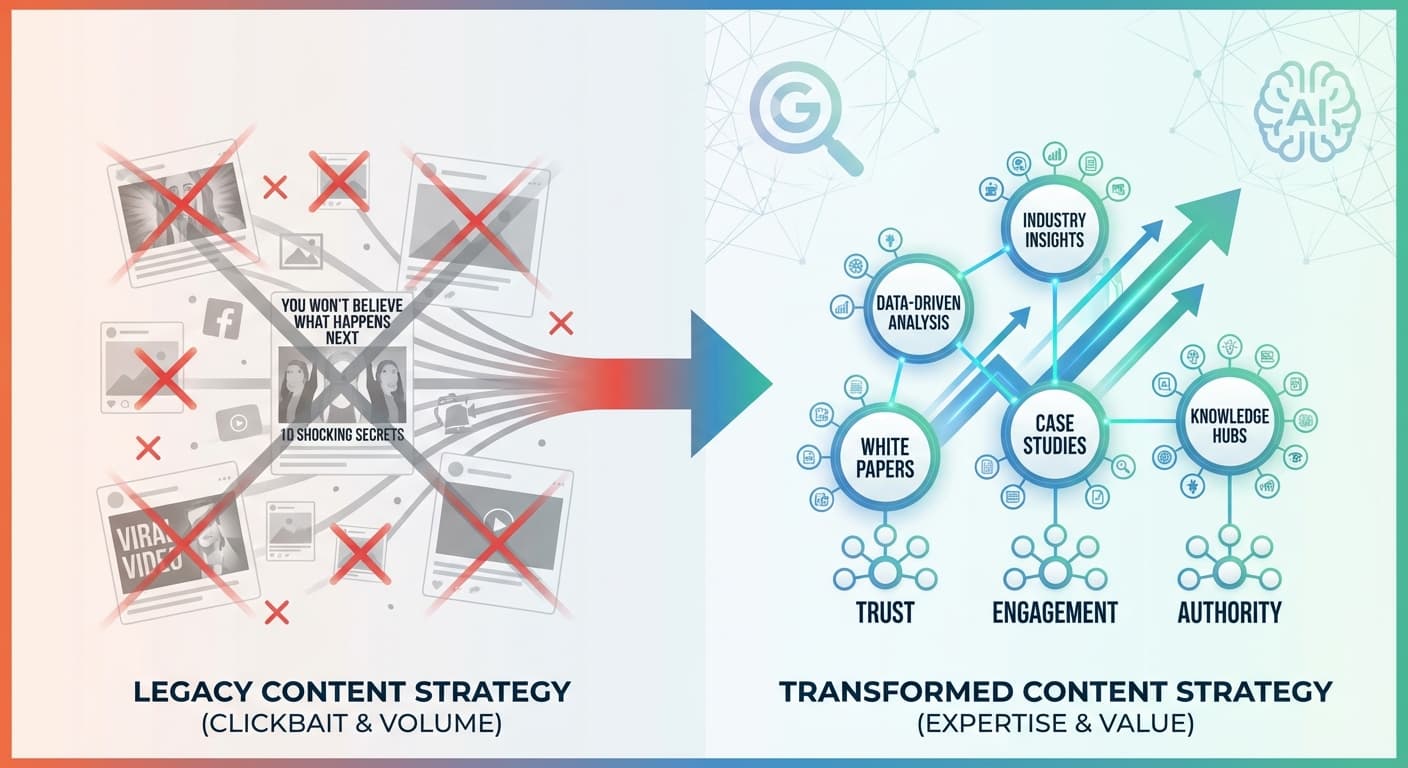
Google's February 2026 Discover Core Update sent shockwaves through the content marketing world, with many publishers seeing their traffic plummet overnight. The update, which specifically targets clickbait content and rewards topic-by-topic expertise, represents the most significant shift in Google's content evaluation criteria since the helpful content updates of 2023.
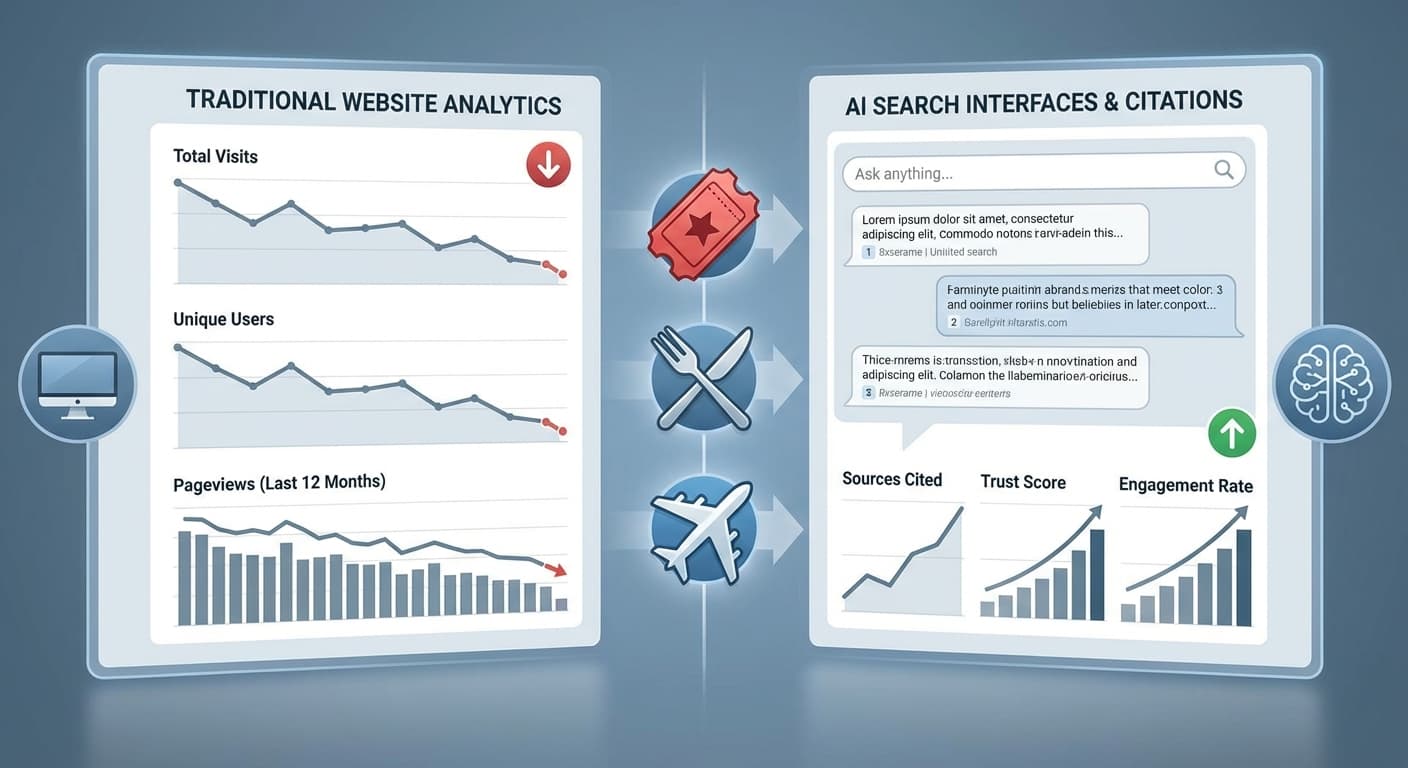
But here's the silver lining: while traditional SEO traffic may be declining for some, AI search engines like ChatGPT, Perplexity, and Claude are becoming the primary discovery mechanism for 35% of internet users in 2026. This shift creates new opportunities for content creators who understand how to optimize for both Google's new standards and AI search visibility.
Understanding the February 2026 Update
Google's latest Discover update fundamentally changed how the algorithm evaluates content quality and expertise. The key changes include:
What Got Penalized
What Gets Rewarded
The update particularly impacts publishers who relied on high-volume, low-depth content strategies. Sites that covered everything from "Best Pizza in NYC" to "Cryptocurrency Trading Tips" without clear expertise markers saw traffic drops of 40-60%.
The Rise of Topical Authority in 2026
Topical authority has become the cornerstone of successful content strategy in 2026. Unlike domain authority, which measures overall site credibility, topical authority focuses on expertise within specific subject areas.
How Google Measures Topical Authority
Content Consistency: Publishing regularly within your expertise areas demonstrates ongoing commitment and knowledge development.
Semantic Coverage: Comprehensive coverage of subtopics, related concepts, and industry terminology within your niche.
Expert Signals: Author credentials, citations from authoritative sources, and recognition within your industry.
User Behavior: Time on page, return visits, and social sharing patterns that indicate genuine value.
Building Topic Clusters That Work
Successful content strategies now revolve around topic clusters rather than individual keyword targets:
Pivoting Your Content Strategy: A Step-by-Step Guide
Step 1: Audit Your Current Content
Start by analyzing your existing content portfolio:
Step 2: Consolidate and Prune
The days of publishing everything are over. Focus means:
Step 3: Develop Expertise-First Content
Your new content should demonstrate clear expertise:
Research Beyond Surface Level: Use primary sources, industry reports, and expert interviews
Show Your Work: Include data sources, methodology explanations, and reasoning behind recommendations
Address Nuanced Questions: Go beyond basic how-to content to tackle complex scenarios
Update Regularly: Keep content current with industry developments
Step 4: Optimize for AI Search Visibility
While focusing on Google's new requirements, don't ignore the 35% of users now primarily using AI search engines. AI models favor content that:
Citescope Ai's GEO Score can help you evaluate how well your content performs across these dimensions, analyzing factors like AI interpretability and semantic richness that directly impact AI search visibility.
Real-World Success Stories
Case Study: TechStart Weekly
This technology publication saw a 70% traffic drop initially but recovered within 8 weeks by:
Result: 120% traffic increase compared to pre-update levels, plus 300% increase in AI search citations.
Case Study: HomeChef Pro
A food blog that pivoted from covering "everything food" to specializing in advanced cooking techniques:
Result: 85% of original traffic recovered within 12 weeks, with significantly higher engagement rates.
Content Formats That Thrive Post-Update
In-Depth Guides and Tutorials
Expert Analysis and Opinion
Interview-Based Content
Measuring Success in the New Landscape
Traditional metrics need updating for the post-February 2026 world:
Traffic Quality Over Quantity
Authority Signals
Content Performance
How Citescope Ai Helps Navigate the New Landscape
Optimizing content for both Google's expertise requirements and AI search visibility requires sophisticated analysis. Citescope Ai's platform addresses this challenge through:
GEO Score Analysis: Our proprietary scoring system evaluates your content across five critical dimensions that matter in 2026: AI interpretability, semantic richness, conversational relevance, structure, and authority signals.
AI-Powered Optimization: The AI Rewriter tool restructures your existing content to meet both Google's expertise standards and AI search requirements, ensuring you don't have to choose between traditional SEO and AI visibility.
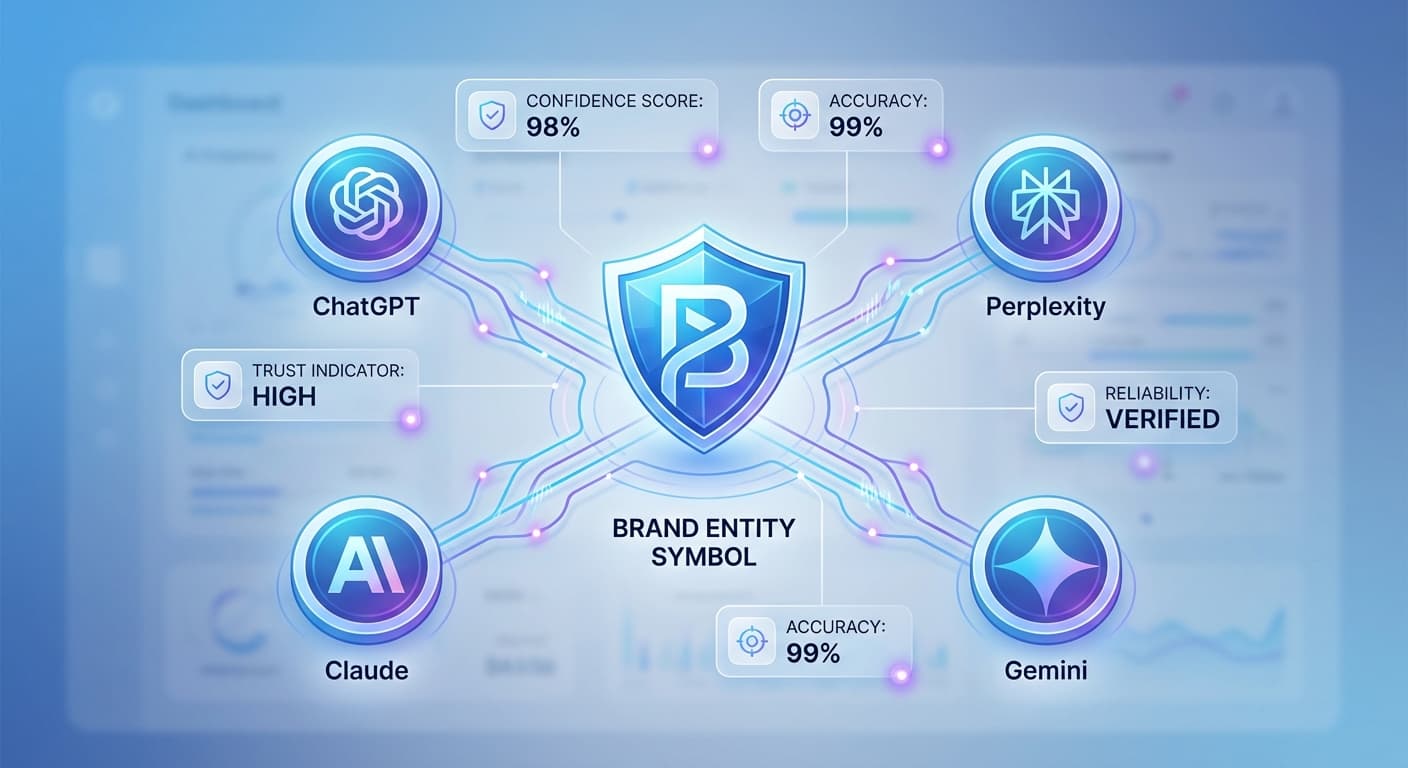
Citation Tracking: Monitor when your content gets referenced by ChatGPT, Perplexity, Claude, and Gemini – a crucial metric for understanding your true reach in the AI-first world.
Multi-Platform Export: Download optimized content in formats ready for WordPress, HTML, or Markdown, streamlining your publication workflow.
Preparing for Future Algorithm Changes
The February 2026 update won't be the last. Building a sustainable content strategy means:
Focus on Fundamentals
Stay Platform-Diverse
Continuous Learning and Adaptation
Ready to Optimize for AI Search?
Google's February 2026 update may have disrupted traditional content strategies, but it also created opportunities for creators who understand the new landscape. By focusing on genuine expertise, optimizing for AI search visibility, and using tools like Citescope Ai to measure and improve your content performance, you can build a sustainable, future-proof content strategy.
Start your free trial with Citescope Ai today and discover how your content performs across all major AI search engines. Get your first three optimizations free and see how the GEO Score can guide your pivot toward expertise-first content that succeeds in both traditional search and AI discovery.