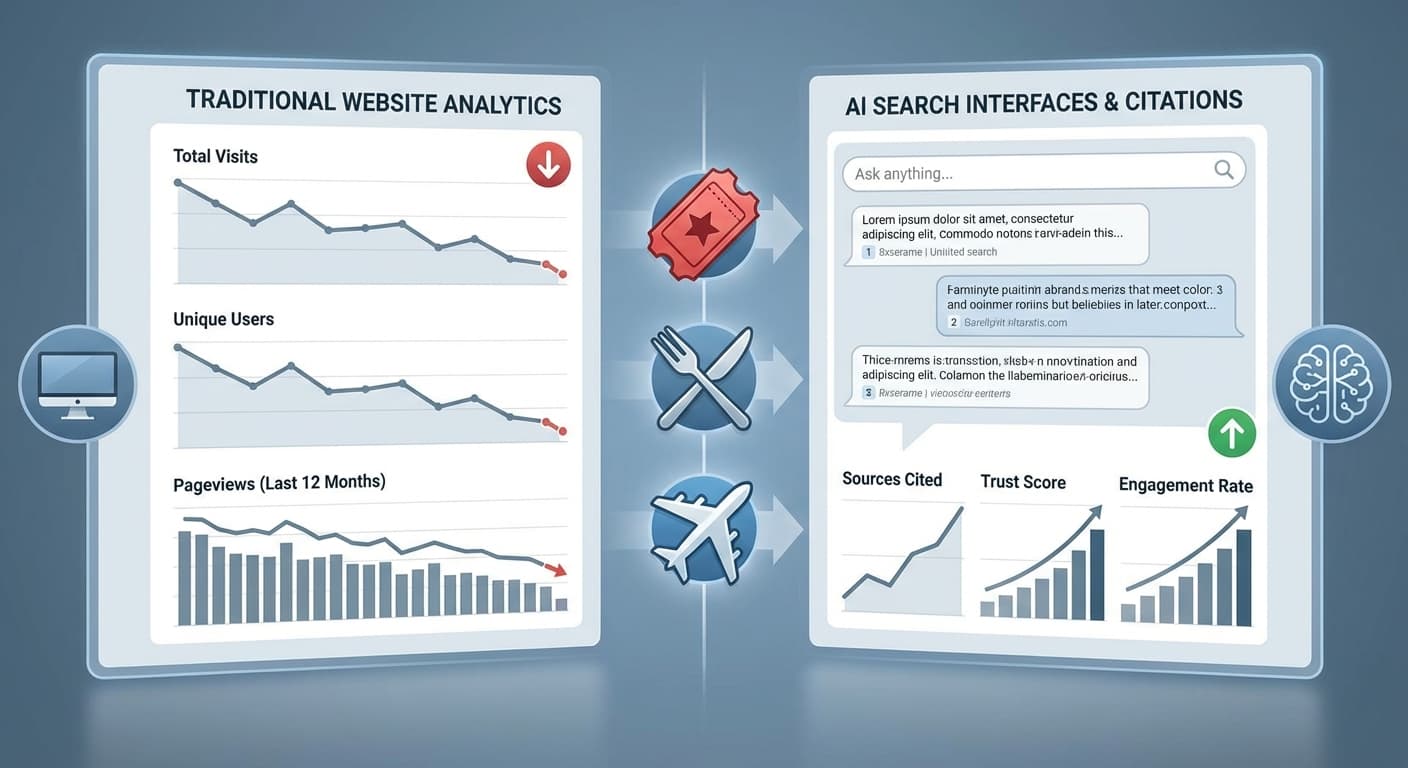
How to Prevent 22% E-Commerce Traffic Loss From AI Agent Shopping Behavior When Agentic Search Completes Purchases Without Sending Users to Your Product Pages
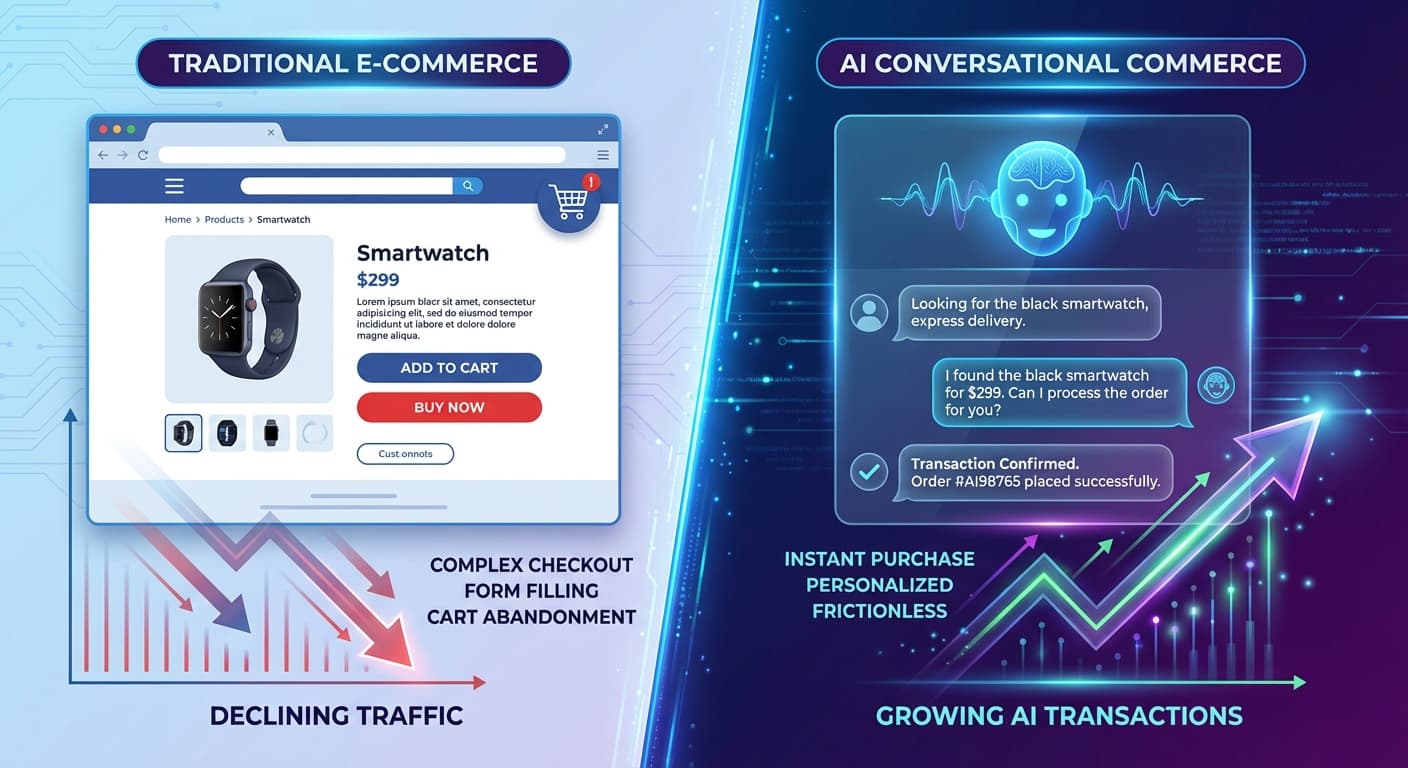
How to Prevent 22% E-Commerce Traffic Loss From AI Agent Shopping Behavior When Agentic Search Completes Purchases Without Sending Users to Your Product Pages
By 2026, AI agents are fundamentally reshaping e-commerce, and the numbers are staggering. Recent industry research reveals that 22% of e-commerce traffic is now being lost to agentic search behaviors, where AI assistants complete purchases directly without ever directing users to product pages. With AI shopping agents processing over $180 billion in transactions this year alone, traditional e-commerce strategies are facing an existential challenge.
For online retailers who've spent years optimizing conversion funnels and perfecting product pages, this shift represents both a massive threat and an unprecedented opportunity. The question isn't whether AI agents will continue to influence shopping behavior—it's how quickly you can adapt your strategy to capture this rapidly growing segment.
Understanding the AI Agent Shopping Revolution
AI shopping agents like OpenAI's GPT-4 Commerce, Google's Bard Shopping, and emerging platforms like Perplexity Pro are no longer just answering questions—they're making purchase decisions. These sophisticated systems can:
The result? Consumers are increasingly bypassing traditional e-commerce touchpoints entirely. Instead of clicking through to your carefully crafted product pages, they're completing purchases through conversational interfaces that prioritize efficiency over brand engagement.
The 22% Traffic Loss Breakdown
Recent data from leading e-commerce analytics platforms shows this traffic loss isn't evenly distributed:
Categories with standardized specifications and clear comparison metrics are seeing the steepest declines, while products requiring more subjective evaluation maintain higher traditional traffic levels.
The Hidden Costs of Invisible Commerce
When AI agents complete purchases without sending users to your site, you lose more than just traffic metrics:
1. Customer Data Collection
Traditional e-commerce relies heavily on first-party data collection through website interactions. When purchases happen through AI intermediaries, you lose valuable insights into customer behavior, preferences, and journey patterns.
2. Brand Relationship Building
Product pages serve as brand storytelling platforms. Without these touchpoints, building emotional connections and brand loyalty becomes significantly more challenging.
3. Upselling and Cross-selling Opportunities
AI agents typically focus on fulfilling specific requests rather than exploring additional purchase opportunities, reducing average order values.
4. Email Capture and Retention Marketing
Missing the opportunity to capture email addresses and build remarketing lists limits long-term customer lifetime value.
Strategic Response: The Three-Pillar Approach
Successful e-commerce brands are adapting with a comprehensive strategy built on three core pillars:
Pillar 1: AI-First Product Information Architecture
Transform your product data structure to prioritize AI consumption over human browsing:
Structured Data Optimization
Conversational Content Creation
Real-time Inventory and Pricing APIs
Pillar 2: Direct AI Agent Integration
Rather than fighting AI intermediaries, integrate directly with them:
Platform-Specific Optimization
AI Shopping Agent Partnerships
Pillar 3: Value-Added Customer Experience
Differentiate your brand by providing value that AI agents cannot replicate:
Exclusive Human-Driven Services
Enhanced Post-Purchase Engagement
Implementation Tactics for Immediate Impact
Week 1-2: Audit and Assess
Week 3-4: Quick Wins
Month 2: Advanced Integration
Month 3+: Differentiation Strategy
How Citescope Ai Helps Navigate the AI Commerce Transition
While implementing these strategies, many e-commerce brands struggle to understand how their content performs in AI search environments. Citescope Ai's comprehensive platform addresses this challenge through several key features:
GEO Score Analysis helps evaluate how well your product content will perform when processed by AI agents, analyzing factors like semantic richness and conversational relevance that directly impact AI recommendation algorithms.
AI Rewriter functionality can transform traditional product descriptions into AI-optimized formats that maintain brand voice while improving discoverability through conversational search interfaces.
Citation Tracking monitors when your products and brand get mentioned by ChatGPT, Perplexity, Claude, and Gemini, providing valuable insights into AI agent shopping behavior patterns.
Measuring Success in the AI-First Era
Traditional e-commerce metrics need updating for the AI agent era. Focus on these evolved KPIs:
Traffic Quality Over Quantity
Brand Authority Metrics
Customer Lifetime Value Evolution
The Future of E-Commerce: Preparing for 2027 and Beyond
As we look toward 2027, several trends will further accelerate the AI agent shopping revolution:
E-commerce brands that begin adapting now will be positioned to thrive in this new landscape, while those that wait risk becoming invisible in an AI-mediated commerce world.
Ready to Optimize for AI Search?
The 22% traffic loss from AI agent shopping behavior is just the beginning. As conversational commerce continues to evolve, brands need sophisticated tools to understand and optimize for AI visibility. Citescope Ai provides the comprehensive platform you need to analyze, optimize, and track your content's performance across all major AI search engines. Start with our free tier today and see how your e-commerce content performs in the age of AI agents. Transform your product descriptions, track AI citations, and ensure your brand stays visible in the rapidly evolving world of AI-powered commerce.