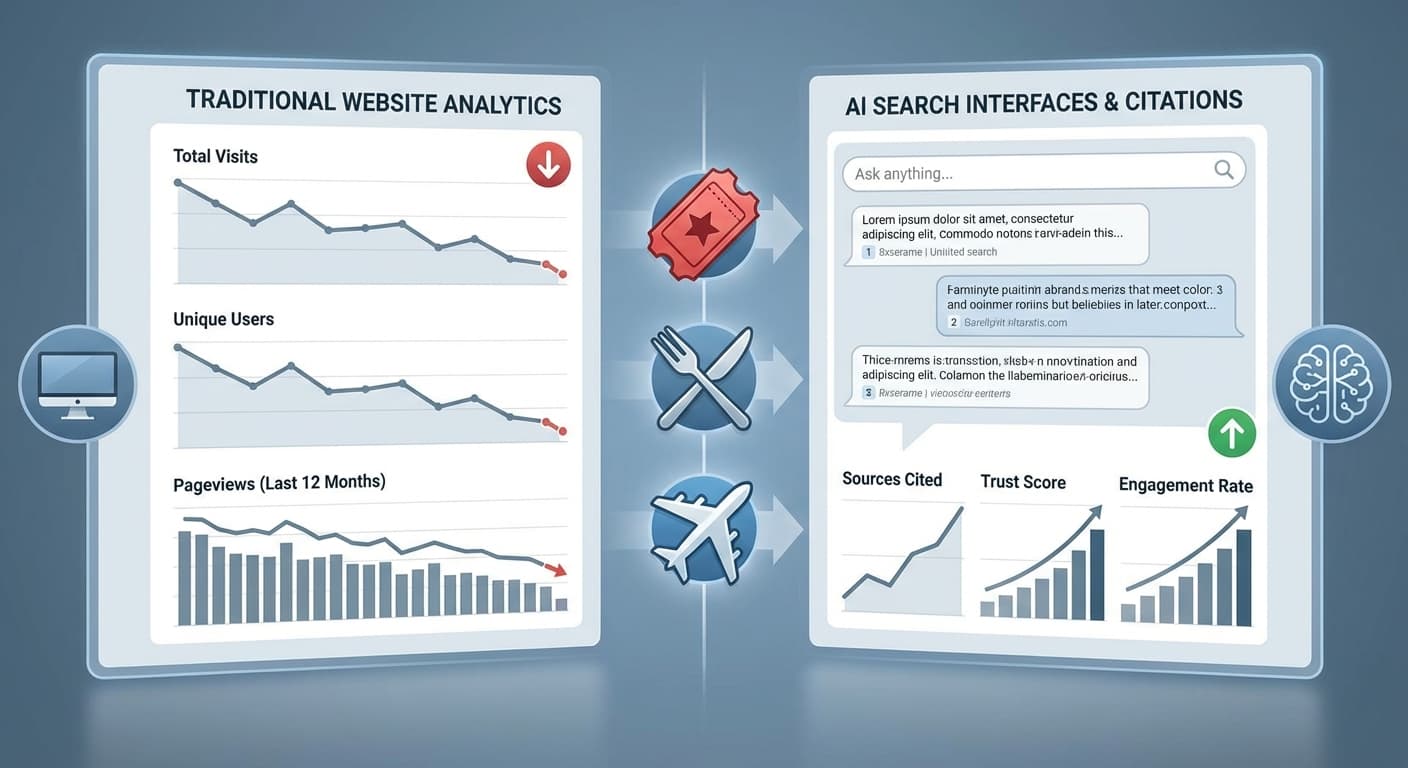
How to Recover from Google AI Overviews' 34.5% CTR Collapse When Your High-Ranking Content Still Loses Traffic to Zero-Click Answers in February 2026
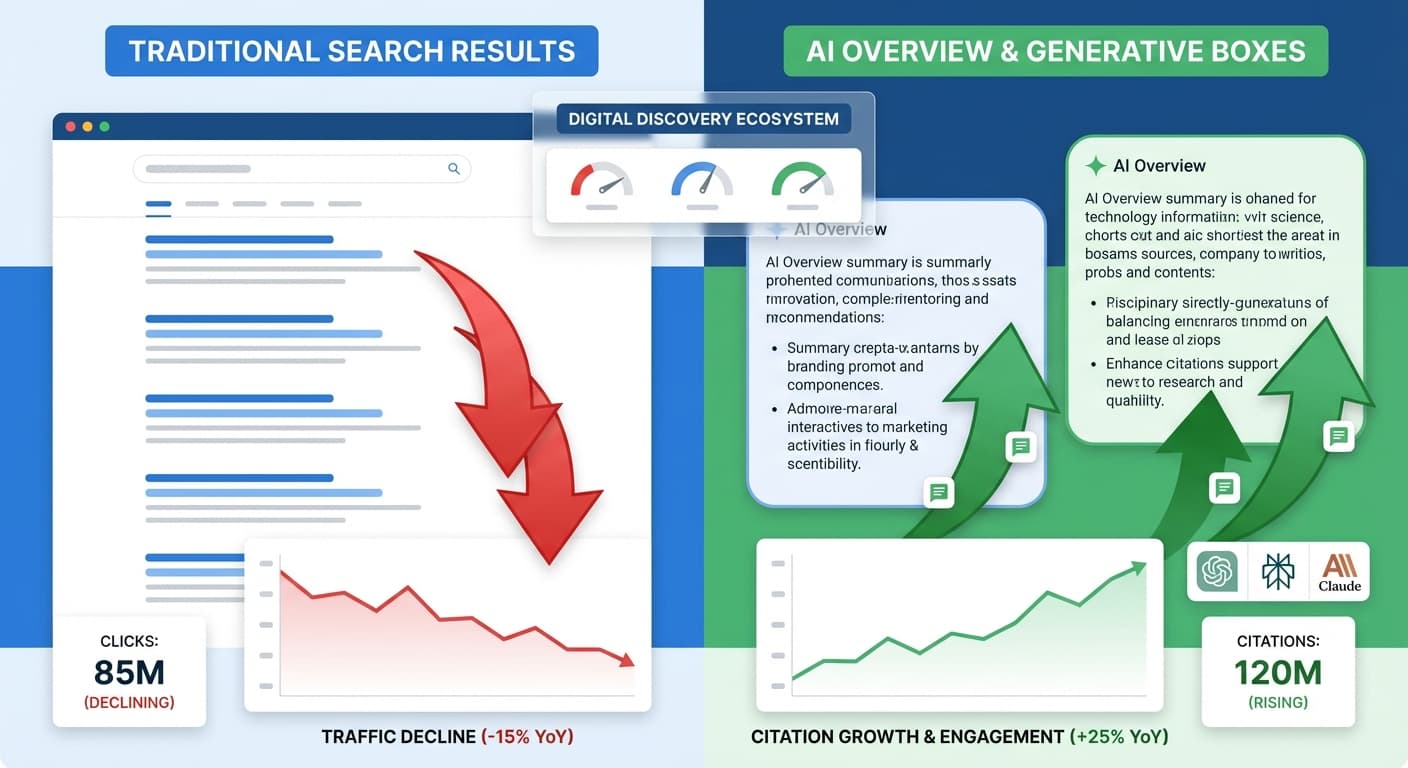
How to Recover from Google AI Overviews' 34.5% CTR Collapse When Your High-Ranking Content Still Loses Traffic to Zero-Click Answers in February 2026
By February 2026, Google AI Overviews have fundamentally reshaped how users interact with search results. Despite ranking in the top 3 positions, many content creators are witnessing a devastating 34.5% average click-through rate collapse as AI-generated answers satisfy user intent without requiring clicks. If your high-performing content is bleeding traffic to zero-click answers, you're not alone—and more importantly, there's a strategic path forward.
The Zero-Click Reality: Why Traditional SEO Isn't Enough Anymore
The numbers tell a stark story. In early 2026, over 65% of Google searches now trigger AI Overviews, with 47% of users never scrolling past the AI-generated answer. Even content that previously drove thousands of monthly visits is seeing dramatic traffic declines as Google's AI summarizes key points directly in the search results.
This shift represents the most significant change to search behavior since mobile-first indexing. Unlike traditional featured snippets that drove some traffic, AI Overviews provide comprehensive answers that eliminate the need for users to visit source websites.
The Three-Fold Problem
Understanding the New Search Landscape
To recover from this traffic collapse, you must first understand how AI search engines evaluate and present content. Unlike traditional Google crawlers that primarily focused on keywords and backlinks, AI systems analyze content through multiple sophisticated lenses.
What AI Search Engines Actually Want
Semantic Depth: AI engines prefer content that explores topics comprehensively, using varied terminology and covering related subtopics that users might naturally ask about.
Conversational Structure: Content formatted as natural dialogue or Q&A performs better because it mirrors how users interact with AI assistants.
Authority Signals: Beyond traditional backlinks, AI engines look for expertise indicators like detailed explanations, data citations, and comprehensive coverage of edge cases.
Multi-Modal Elements: Content that references or describes visual elements, infographics, or multimedia performs better even when the AI can't directly process those elements.
Strategic Recovery: The Four-Pillar Approach
Pillar 1: Optimize for AI Citation, Not Just Rankings
Instead of fighting for position one, focus on becoming the source that AI engines cite. This requires restructuring your content strategy entirely.
Create Citation-Worthy Content:
Example: Rather than writing "Email marketing is effective," write "Email marketing generates an average ROI of $42 for every $1 spent, according to 2025 DMA research, making it 4x more effective than social media advertising for B2B companies."
Pillar 2: Develop Content That Demands Deeper Engagement
Create content types that AI Overviews cannot fully satisfy, naturally driving users to click through for complete information.
Interactive Elements:
Depth-Driven Content:
Pillar 3: Master the Art of Conversational SEO
With over 70% of Gen Z users now preferring AI search over traditional Google, your content must speak their language—literally.
Conversational Optimization Techniques:
Citescope Ai's GEO Score specifically measures conversational relevance, helping identify content that resonates with AI search patterns while maintaining human readability.
Pillar 4: Build Multi-Touch Content Experiences
Since single-page visits are declining, create content ecosystems that encourage exploration across multiple pages.
Internal Content Webs:
Technical Recovery Strategies
Schema Markup for AI Understanding
Implement advanced schema markup that helps AI engines understand your content context:
Content Refresh Methodology
Regularly update existing content to maintain AI relevance:
Measuring Recovery Success
Traditional metrics like organic traffic and keyword rankings tell an incomplete story in the AI search era. Focus on these evolved metrics:
New Success Indicators
AI Citation Rate: How often your content appears as a source in AI-generated answers
Engagement Quality: Time on page and page depth for users who do click through
Brand Search Volume: Direct searches for your brand name or expertise area
Cross-Platform Mentions: Citations across ChatGPT, Perplexity, Claude, and Gemini
How Citescope Ai Helps Navigate This Transition
While the strategies above provide a roadmap, implementing them effectively requires understanding how your content currently performs in AI search engines. Citescope Ai's Citation Tracker monitors when your content gets referenced by major AI platforms, giving you direct insight into what's working.
The platform's AI Rewriter tool specifically optimizes content structure for better AI visibility, automatically restructuring your existing content to improve its chances of being cited rather than bypassed. With the GEO Score analyzing your content across five critical dimensions—AI Interpretability, Semantic Richness, Conversational Relevance, Structure, and Authority—you get a clear action plan for improvement.
For content creators managing multiple pieces, the multi-format export feature allows you to quickly implement optimizations across WordPress, HTML, or Markdown formats, streamlining the recovery process.
The February 2026 Opportunity
While the 34.5% CTR collapse feels devastating, it represents a massive opportunity for early adapters. Most content creators are still optimizing for 2023-era Google algorithms, leaving a significant gap for those who embrace AI-first content strategies.
By February 2026, the content creators who successfully pivot to AI-optimized strategies will capture disproportionate attention from the 500+ million weekly ChatGPT users and the growing Perplexity and Claude user bases. The key is acting now while the majority of your competitors are still playing catch-up.
Implementation Timeline
Week 1-2: Audit current content performance and identify biggest traffic losses
Week 3-4: Implement conversational restructuring on top-performing pages
Week 5-6: Develop new content types that encourage click-through
Week 7-8: Set up AI citation tracking and measurement systems
Month 2+: Iterate based on AI citation data and user engagement metrics
Ready to Optimize for AI Search?
The shift to AI-dominated search isn't slowing down—it's accelerating. While the 34.5% CTR collapse is challenging, content creators who adapt their strategies now will be positioned to capture the growing AI search market. Citescope Ai provides the tools and insights you need to make this transition successfully, from content optimization to citation tracking across all major AI platforms. Start your recovery strategy today with a free GEO Score analysis of your most important content.