How to Reverse Lost Traffic from Google's February 2026 Discover Core Update: Recover from Geographic Prioritization
How to Reverse Lost Traffic from Google's February 2026 Discover Core Update: Recover from Geographic Prioritization
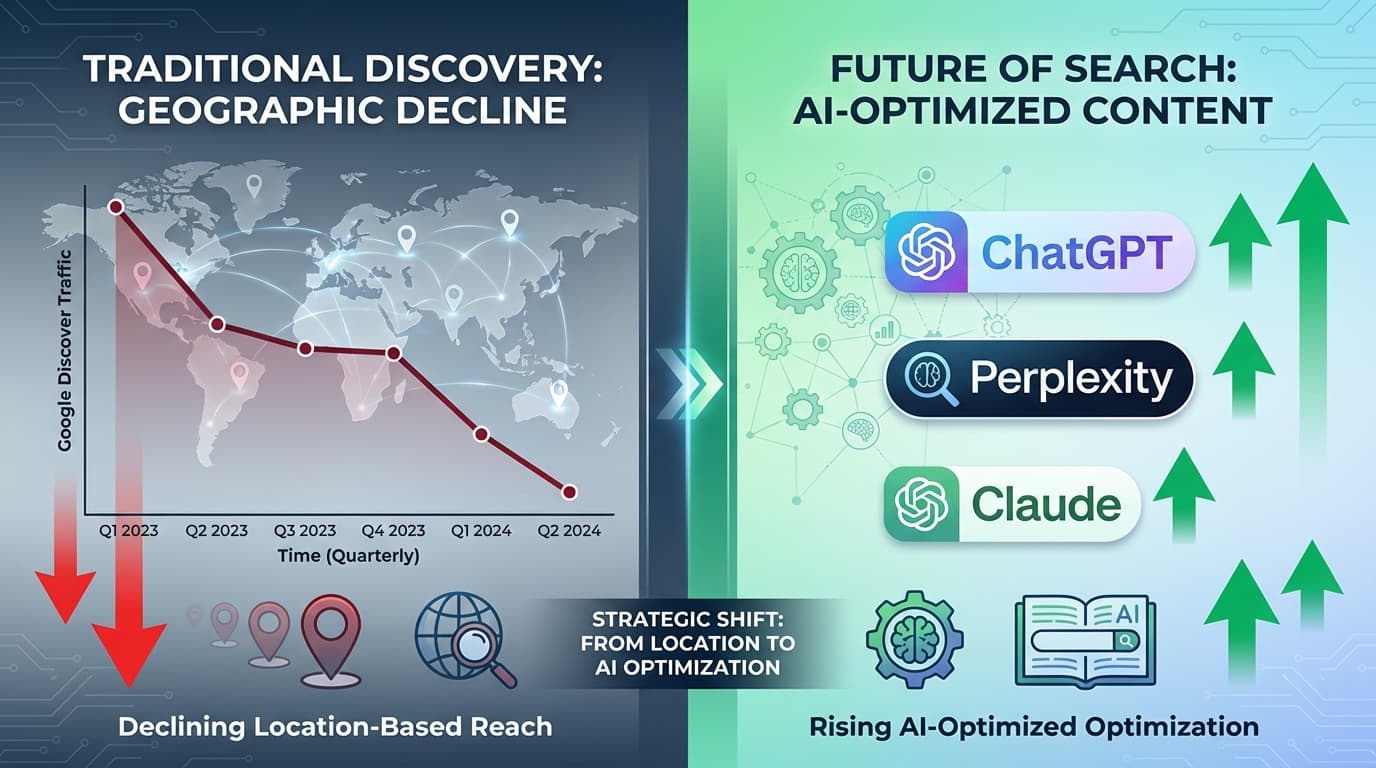
Google's February 2026 Discover Core Update sent shockwaves through the content marketing world. Sites that once enjoyed millions of Discover impressions watched their traffic plummet by 60-80% overnight as Google's new geographic prioritization algorithm began favoring hyper-local content over broader, national topics.
If your non-local content distribution strategy took a massive hit, you're not alone. According to recent industry data, over 40% of content publishers experienced significant Discover traffic losses, with lifestyle, entertainment, and general interest sites being hit hardest.
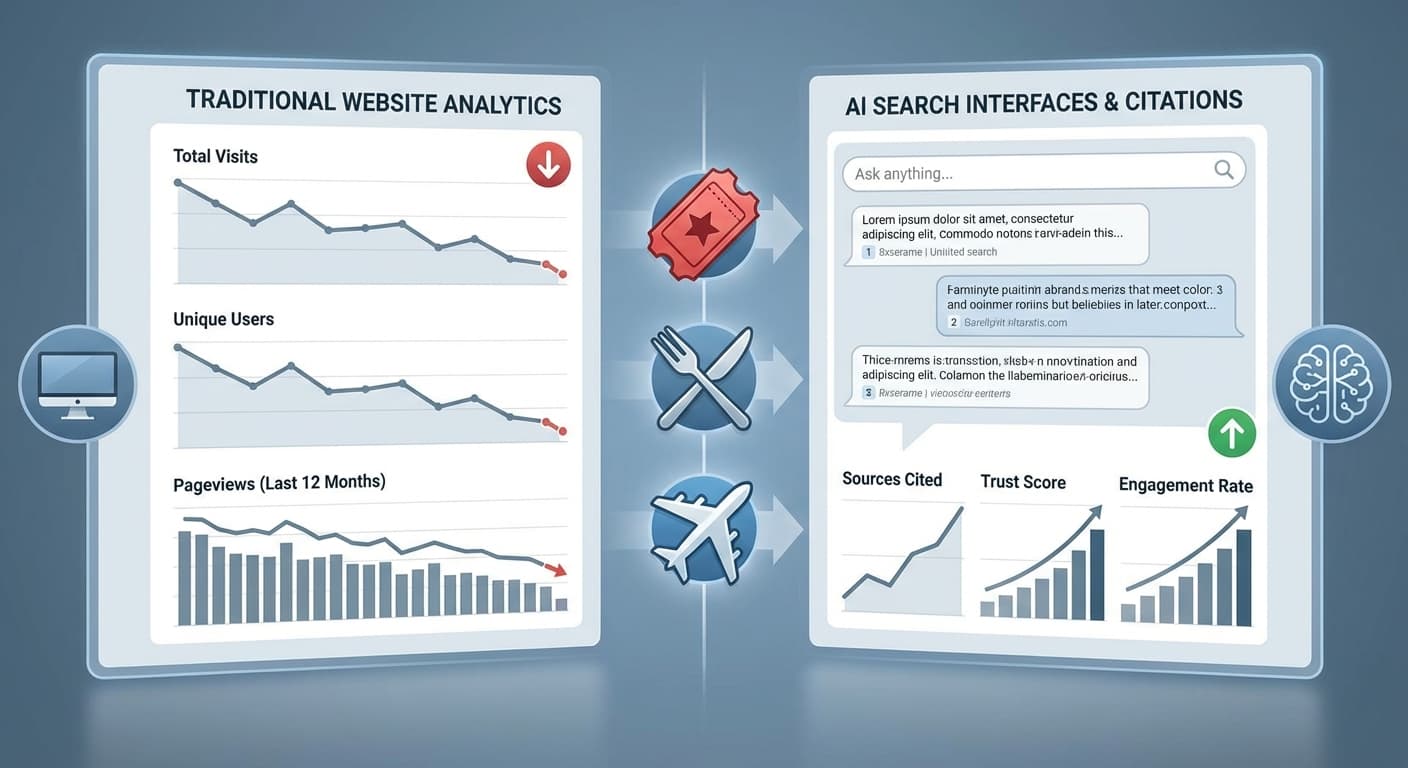
But here's the silver lining: while traditional Google Discover traffic may have dried up, AI search engines like ChatGPT, Perplexity, and Claude are now handling over 35% of all search queries in 2026 – and they don't prioritize content based on geographic proximity.
Understanding Google's February 2026 Geographic Prioritization
Google's latest Discover algorithm fundamentally changed how content gets distributed to users. The update introduced three key changes:
Location-First Content Ranking
Increased E-E-A-T Local Signals
Content Topic Geo-Relevance
The AI Search Opportunity: Your New Distribution Channel
While Google Discover may have become more restrictive, AI search engines present an unprecedented opportunity for content recovery and growth. Here's why AI search is your key to rebuilding lost traffic:
AI Search Engines Don't Discriminate by Location
Unlike Google's new geographic prioritization, AI search engines like ChatGPT and Perplexity focus on content quality, relevance, and authority rather than publisher location. A well-written article about productivity tips from a publisher in Kansas has the same chance of being cited as one from New York.
Growing User Base Seeking Content
With over 500 million weekly ChatGPT users and Perplexity processing 15 billion queries monthly in 2026, the audience for quality content in AI search is massive and growing. Gen Z and Millennial users increasingly turn to AI for research, recommendations, and information gathering.
Citation-Based Traffic is More Qualified
When AI engines cite your content, users arrive with specific intent and context. This typically results in higher engagement rates, longer session durations, and better conversion metrics compared to traditional Discover traffic.
Strategic Recovery: 5 Steps to Rebuild Your Content Distribution
1. Audit Your Current Content for AI Optimization
Start by analyzing which pieces of content were most affected by the Discover update. Look for:
Pro Tip: Use tools that can analyze your content's AI search potential. Citescope Ai's GEO Score evaluates content across five key dimensions that AI engines prioritize: interpretability, semantic richness, conversational relevance, structure, and authority.
2. Restructure Content for Conversational Queries
AI search engines excel at answering specific questions and providing contextual information. Transform your existing content by:
3. Optimize for Multi-Intent Search Behavior
Unlike traditional SEO, AI search optimization requires thinking about how users interact conversationally with AI. Focus on:
4. Build Topical Authority Across AI Platforms
Establish your brand as a go-to source for AI engines by:
5. Track and Measure AI Citations
Unlike traditional SEO metrics, success in AI search requires monitoring citations across multiple platforms:
Technical Optimization for AI Visibility
Content Structure That AI Engines Love
Clear Hierarchical Information
Rich Context and Definitions
Authority Signals
Content Formats That Perform Well
Measuring Recovery Success
Key Metrics to Track
AI Citation Metrics
Engagement Quality
Content Performance
How Citescope Ai Helps
Recovering from Google's February 2026 update requires a systematic approach to AI search optimization. Citescope Ai provides the tools content creators need to rebuild their distribution strategy:
GEO Score Analysis: Get detailed insights into how well your content performs across the five key dimensions AI engines prioritize. Identify specific areas for improvement with actionable recommendations.
One-Click AI Optimization: Transform your existing content with our AI Rewriter tool, which restructures articles for better AI visibility while maintaining your original voice and expertise.
Real-Time Citation Tracking: Monitor when ChatGPT, Perplexity, Claude, and Gemini cite your content, allowing you to understand which topics and formats perform best across different AI platforms.
Multi-Format Export: Download optimized content in various formats (Markdown, HTML, WordPress blocks) for seamless integration into your existing publishing workflow.
Long-Term Strategy: Building AI-First Content Operations
Content Planning for AI Search
Team Training and Processes
Technology Integration
Conclusion: The Future is AI-First
Google's February 2026 Discover update may have disrupted traditional content distribution, but it also accelerated the shift toward AI-first content strategies. Publishers who adapt quickly to optimize for AI search engines won't just recover their lost traffic – they'll build more sustainable, diversified content distribution that doesn't rely on a single platform's algorithm changes.
The key is to start now. Every day you wait is another day your competitors are building authority in AI search while your content remains invisible to the 35% of users who now rely on AI engines for information discovery.
Ready to Optimize for AI Search?
Don't let Google's geographic prioritization derail your content strategy. Citescope Ai helps publishers like you rebuild traffic through AI search optimization. Start with our free tier – get 3 content optimizations to see how your articles perform with our GEO Score analysis and AI Rewriter. Join thousands of content creators who are already succeeding in the age of AI search. Try Citescope Ai free today and start recovering your lost traffic within weeks, not months.