GEO Strategy

How to Scale AI Search Content Production From 1 Post Per Month to 2 Per Week When Your Competitors Are Using AI Content Factories
March 12, 20267 min read
How to Scale AI Search Content Production From 1 Post Per Month to 2 Per Week When Your Competitors Are Using AI Content Factories

How to Scale AI Search Content Production From 1 Post Per Month to 2 Per Week When Your Competitors Are Using AI Content Factories

By 2026, content freshness has become a critical ranking factor in AI search engines, with Perplexity and ChatGPT prioritizing recent, relevant content in 78% of their responses. While your competitors are churning out 20+ AI-generated posts weekly through automated content factories, you're struggling to publish even one quality piece per month. The gap is widening, and your AI search visibility is suffering.

But here's the reality: raw volume isn't everything. Quality, optimization, and strategic planning can help you compete—and win—even with fewer resources.

The AI Content Arms Race: Why Volume Matters (But Quality Wins)

AI search engines like ChatGPT, Claude, and Gemini process over 2.1 billion queries daily in 2026. These platforms favor fresh, comprehensive content that directly answers user queries. The challenge? Your competitors are leveraging AI content factories to publish:

  • 15-25 blog posts per week

  • Daily social media updates

  • Weekly newsletter content

  • Constant product announcements
  • Meanwhile, traditional content teams are stuck in outdated workflows, spending weeks on single pieces that may never get cited by AI engines.

    The Strategic Shift: From Perfection to Performance

    1. Embrace the 80/20 Content Model

    Instead of spending 40 hours perfecting one monthly masterpiece, allocate your time strategically:

  • 80% of content (6-7 posts/month): Quick, targeted pieces answering specific AI search queries

  • 20% of content (1-2 posts/month): Comprehensive, research-heavy content for authority building
  • This approach lets you maintain freshness while preserving quality where it matters most.

    2. Build Content Clusters Around AI Query Patterns

    AI search engines excel at understanding related topics. Create content clusters that target:

  • Primary topic: Your main keyword/theme

  • Supporting content: 5-7 related subtopics

  • FAQ pieces: Common questions AI engines surface
  • Example cluster for "Email Marketing":

  • Main piece: Complete Email Marketing Guide 2026

  • Supporting content: Subject line optimization, segmentation strategies, automation workflows

  • FAQ pieces: "How often should you send emails?", "What's the best email send time?"
  • 3. Leverage AI Tools for Efficient Content Creation

    The key isn't avoiding AI—it's using it strategically:

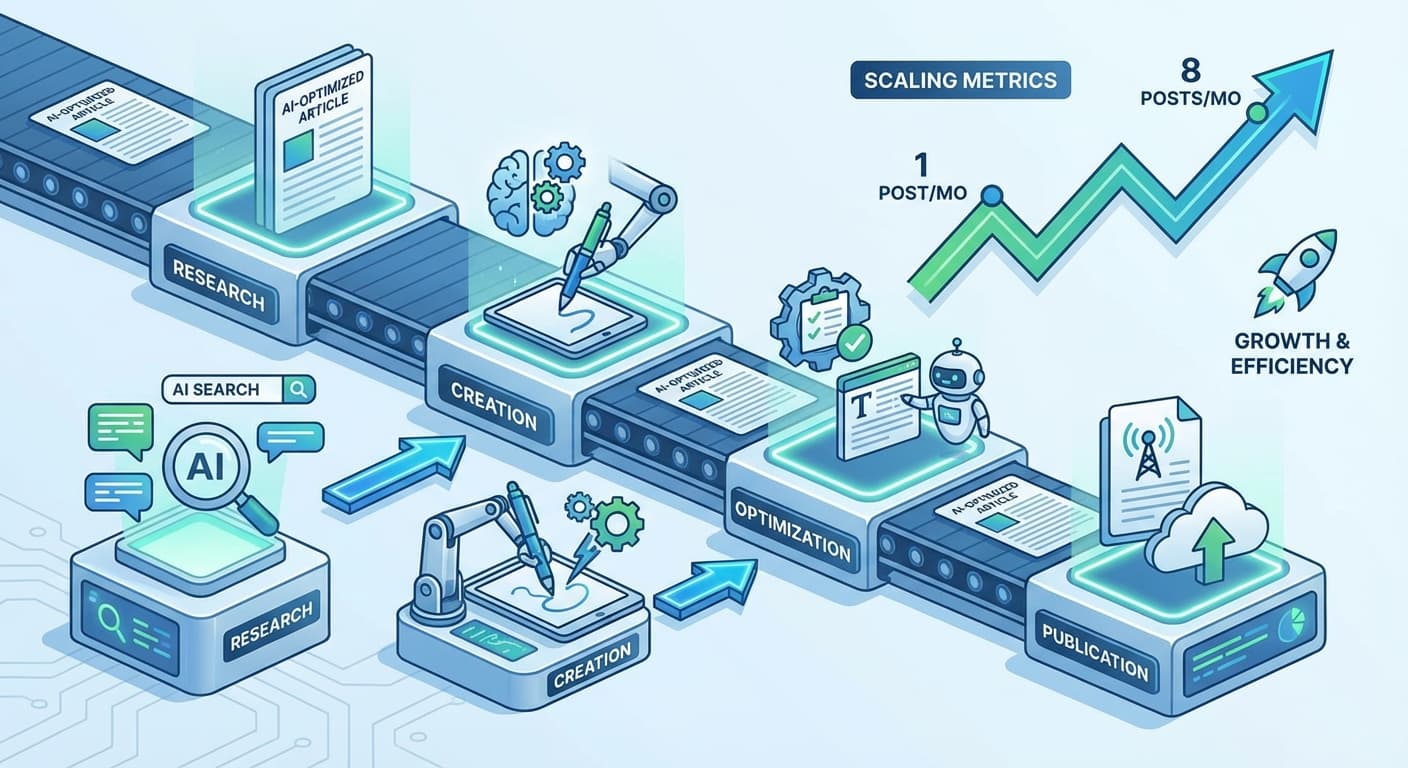
    Research Phase (30 minutes):

  • Use Claude or ChatGPT to identify trending subtopics

  • Generate content outlines based on AI search query patterns

  • Research competitor content gaps
  • Content Creation (2-3 hours):

  • Create detailed outlines manually

  • Use AI for first drafts of specific sections

  • Focus human effort on unique insights and examples
  • Optimization Phase (45 minutes):

  • Optimize for AI search using tools like Citescope Ai's GEO Score analysis

  • Ensure proper structure and semantic richness

  • Add authoritative sources and citations
  • The Weekly Content Production System

    Monday: Research and Planning (2 hours)


  • Analyze trending topics in your niche

  • Review competitor content from the past week

  • Plan 2 pieces for the week ahead

  • Create detailed outlines
  • Tuesday-Wednesday: Content Creation (4 hours total)


  • Write first piece (2 hours)

  • Optimize using AI search best practices

  • Schedule for publication
  • Thursday-Friday: Second Piece and Promotion (3 hours total)


  • Create second piece (2 hours)

  • Optimize and schedule

  • Promote week's content across channels
  • Weekend: Analysis and Adjustment


  • Review AI citation tracking results

  • Analyze which pieces performed best

  • Adjust next week's strategy
  • Optimization Strategies That Beat Volume

    1. Structure for AI Consumption

    AI search engines prefer content that's easy to parse and understand:

  • Clear H2/H3 hierarchy

  • Bulleted lists for key points

  • Short paragraphs (2-3 sentences)

  • Conversational subheadings that match search queries
  • 2. Answer Questions Directly

    Include sections that directly answer common questions:

  • "What is [topic]?"

  • "How does [topic] work?"

  • "Why is [topic] important?"

  • "When should you use [topic]?"
  • 3. Include Authority Signals

  • Link to recent, credible sources

  • Include specific statistics and data points

  • Reference industry experts and studies

  • Add author expertise indicators
  • Quality Control at Scale

    Maintaining quality while increasing volume requires systematic quality control:

    Pre-Publication Checklist:


  • [ ] Answers target query completely

  • [ ] Includes 2-3 authoritative sources

  • [ ] Structured with clear headings

  • [ ] Optimized for AI search visibility

  • [ ] Includes unique insights or examples

  • [ ] Fact-checked and proofread
  • Post-Publication Tracking:


  • Monitor AI engine citations

  • Track search visibility changes

  • Measure engagement metrics

  • Document what works for future content
  • Content Repurposing for Maximum Efficiency

    Stretch your content investment by repurposing strategically:

  • Long-form post → Break into 3-4 shorter pieces

  • How-to guide → Create video walkthrough + social posts

  • Research piece → Extract key stats for infographics

  • Industry analysis → Turn into newsletter series
  • Competing with AI Content Factories

    While competitors flood the space with AI-generated content, differentiate through:

    Human Insights and Experience


  • Share personal case studies and examples

  • Include lessons learned from real implementations

  • Provide contrarian or nuanced viewpoints
  • Real-Time Industry Commentary


  • React quickly to industry news and trends

  • Provide expert analysis on current events

  • Share predictions based on experience
  • Community Engagement


  • Respond to comments and questions

  • Engage in industry discussions

  • Build relationships with other experts
  • Measuring Success in AI Search

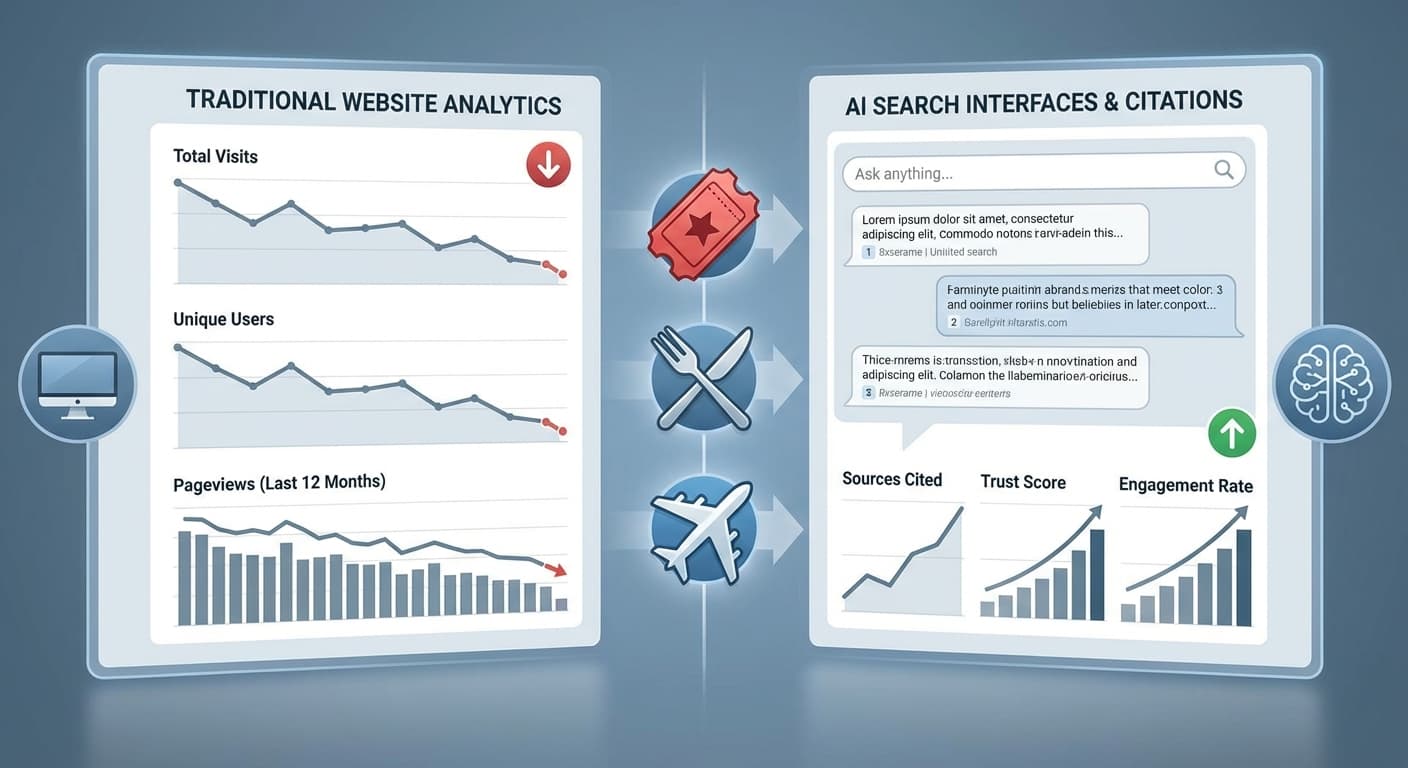
    Track metrics that matter for AI visibility:

  • AI engine citations: How often your content gets referenced

  • Featured snippet captures: Appearing in AI-generated answers

  • Query coverage: Ranking for target search terms

  • Content freshness score: How recently your content was published

  • Authority signals: Backlinks and expert mentions
  • How Citescope Ai Helps Scale Your Content Production

    Scaling from monthly to bi-weekly content production becomes manageable with the right optimization tools. Citescope Ai's GEO Score analyzes your content across five critical dimensions—AI Interpretability, Semantic Richness, Conversational Relevance, Structure, and Authority—giving you a clear roadmap for improvement.

    The platform's AI Rewriter can optimize your content structure in minutes rather than hours, while the Citation Tracker shows you exactly when ChatGPT, Perplexity, Claude, or Gemini reference your work. This feedback loop helps you understand what content patterns work best for your niche, allowing you to replicate successful approaches across your scaled production system.

    Creating Your 90-Day Scaling Plan

    Days 1-30: Foundation


  • Audit current content performance

  • Set up content production systems

  • Create first batch of optimized content

  • Begin tracking AI search visibility
  • Days 31-60: Optimization


  • Analyze what's working best

  • Refine content creation process

  • Increase publication frequency

  • Build content cluster strategy
  • Days 61-90: Scale


  • Achieve consistent bi-weekly publishing

  • Fine-tune quality control processes

  • Expand successful content formats

  • Plan for further scaling if needed
  • Ready to Optimize for AI Search?

    Scaling content production while maintaining quality for AI search engines requires strategy, systems, and the right tools. Citescope Ai helps content teams optimize their work for maximum AI visibility with GEO Scoring, one-click content optimization, and comprehensive citation tracking across all major AI platforms. Start with our free tier and see how your content performs when properly optimized for the AI search era. Try Citescope Ai free today and transform your content strategy from reactive to strategic.

    content scalingAI search optimizationcontent productionGEO strategycontent marketing

    Track your AI visibility

    See how your content appears across ChatGPT, Perplexity, Claude, and more.

    Start for Free