How to Structure Multi-Platform Content Clusters When AI Agents Pull Information from YouTube, Reddit, and LinkedIn Instead of Just Your Website
How to Structure Multi-Platform Content Clusters When AI Agents Pull Information from YouTube, Reddit, and LinkedIn Instead of Just Your Website
When ChatGPT cited a Reddit comment about crypto trading instead of a major financial publication's analysis last week, it highlighted a seismic shift in how AI search engines discover and prioritize content. By 2026, over 65% of AI-generated responses now pull information from social platforms, video content, and community discussions rather than traditional websites alone.
The New Reality of AI Content Discovery
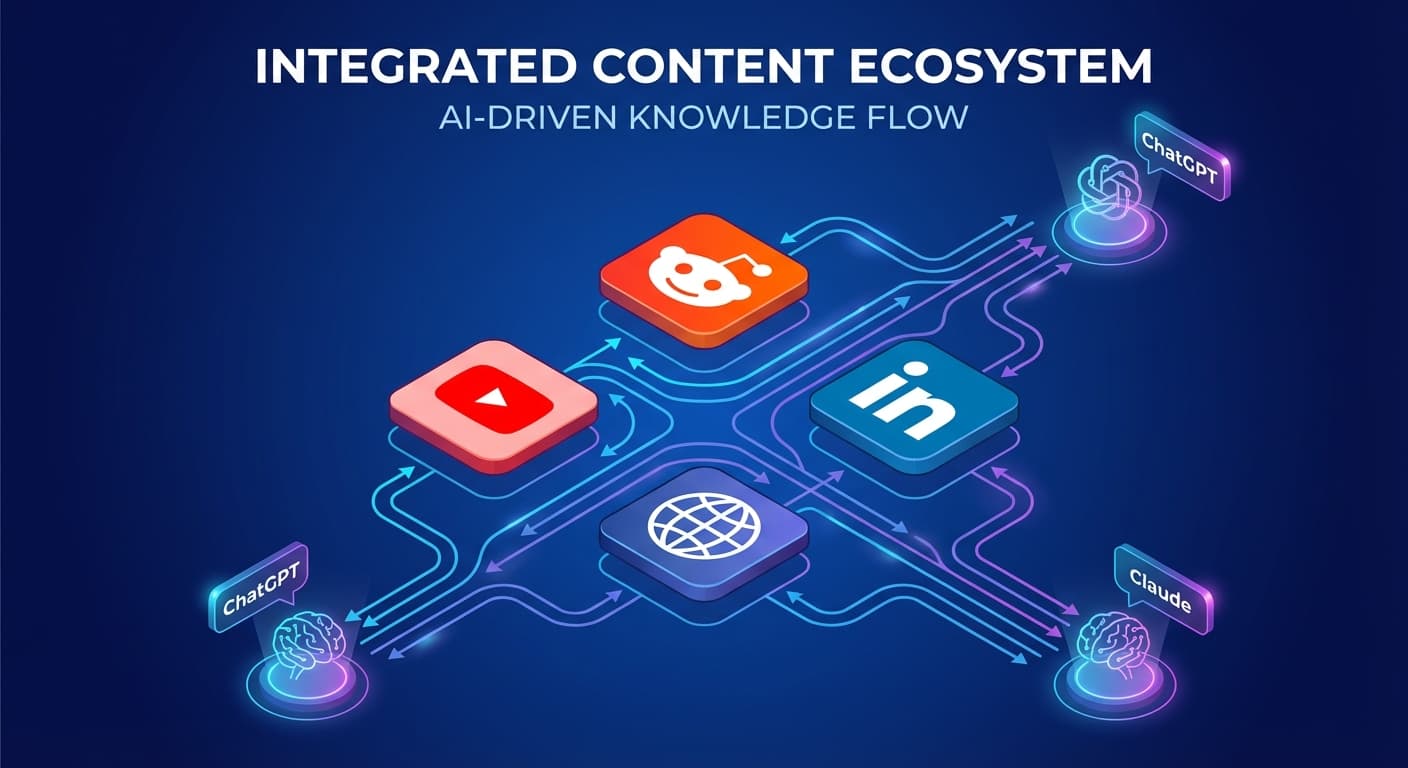
AI agents like ChatGPT, Perplexity, Claude, and Gemini don't just crawl websites anymore. They're actively indexing YouTube transcripts, Reddit discussions, LinkedIn posts, Twitter threads, and TikTok captions. This distributed content ecosystem means your SEO strategy can't rely solely on your website to capture AI citations.
Recent analysis shows that 40% of AI search results in 2025 included at least one citation from a social platform or video source. For B2B queries, LinkedIn posts appear in 35% of AI responses, while YouTube videos are cited in 28% of how-to and educational queries.
Understanding Multi-Platform Content Clusters
A multi-platform content cluster is a coordinated content strategy where you create interconnected pieces across different platforms that reinforce the same core topic. Unlike traditional hub-and-spoke models centered on your website, these clusters treat each platform as an equal authority source that AI agents might discover independently.
The Four Pillars of Multi-Platform Clustering
Platform-Specific Optimization Strategies
YouTube: The Video Knowledge Base
YouTube has become a primary source for AI agents answering procedural and educational queries. Structure your YouTube content with:
For example, if you're covering "email marketing automation," create a 5-part YouTube series covering setup, segmentation, personalization, analytics, and troubleshooting. Each video should reference the others and include timestamps for specific sub-topics.
Reddit: The Community Wisdom Hub
Reddit discussions increasingly appear in AI responses because they represent real user experiences and diverse perspectives. To optimize Reddit content:
When participating in relevant subreddits, frame your expertise as helpful advice rather than promotional content. AI agents are more likely to cite authentic, community-validated responses.
LinkedIn: The Professional Authority Platform
LinkedIn has evolved into a primary source for B2B and professional advice in AI search results. Structure LinkedIn content with:
LinkedIn's algorithm favors content that generates meaningful professional discussion, which AI agents interpret as authority signals.
Creating Interconnected Content Webs
The key to successful multi-platform clustering is creating content that naturally references and builds upon your other pieces without appearing manipulative to AI agents.
The Reference Strategy
Topic Expansion Mapping
For each core topic, create a content map showing:
This ensures AI agents can find authoritative information about your expertise regardless of where they look.
Measuring Multi-Platform Success
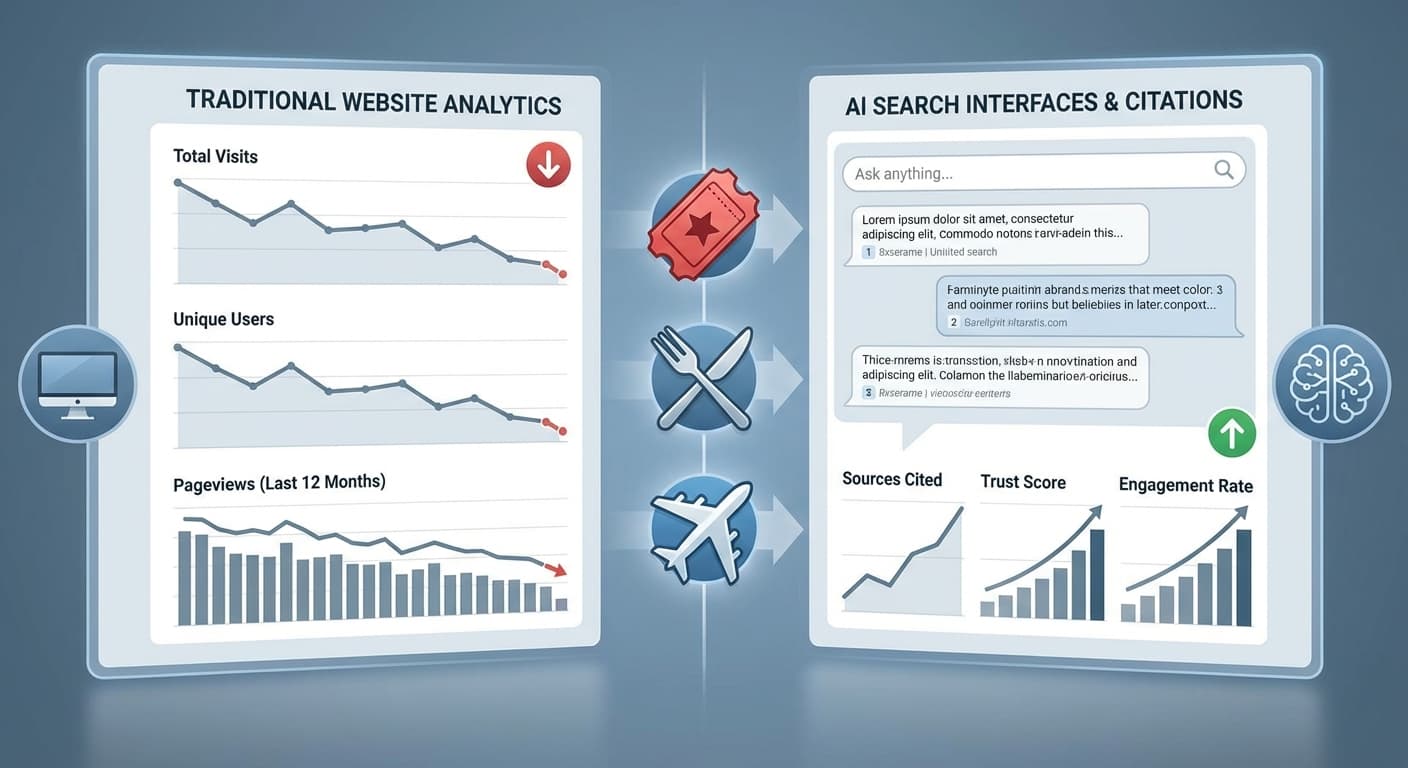
Traditional analytics don't capture multi-platform content performance effectively. Instead, monitor:
Tools like Citescope Ai can help track when your content gets cited by AI agents across platforms, giving you visibility into which pieces of your content cluster are performing best in AI search results.
Common Multi-Platform Clustering Mistakes
Over-Optimization Red Flags
Quality vs. Quantity Balance
Focus on creating fewer, higher-quality pieces that genuinely add value to each platform's community rather than pushing out high volumes of mediocre content.
Advanced Clustering Techniques
The Spiral Strategy
Start with a comprehensive piece on your website, then create platform-specific derivatives that explore different angles:
The Validation Loop
Use social platforms to test and validate ideas before creating comprehensive content:
How Citescope Ai Helps
Managing multi-platform content clusters becomes complex when you're trying to optimize for AI visibility across different formats and platforms. Citescope Ai's GEO Score analyzes your content across five dimensions that matter to AI agents: interpretability, semantic richness, conversational relevance, structure, and authority.
The platform's Citation Tracker monitors when your content gets cited by ChatGPT, Perplexity, Claude, and Gemini, helping you understand which pieces in your content cluster are performing best. The AI Rewriter can help you optimize content for different platforms while maintaining consistent messaging and expertise signals.
Implementation Timeline
Month 1: Foundation
Month 2: Content Creation
Month 3: Community Engagement
Month 4: Optimization
The Future of Multi-Platform SEO
As AI agents become more sophisticated, they'll increasingly value content that demonstrates expertise across multiple contexts and communities. The brands and creators who build comprehensive content clusters now will have significant advantages as AI search continues to evolve.
The key is authenticity – AI agents are becoming better at detecting artificial content networks and manipulative linking strategies. Focus on genuinely helping your audience across platforms, and the AI visibility will follow naturally.
Ready to Optimize for AI Search?
Multi-platform content clustering requires sophisticated tracking and optimization to succeed. Citescope Ai helps you monitor AI citations across platforms, optimize content for better AI visibility, and understand which parts of your content strategy are driving results. Start with our free tier and discover how your content performs in the new AI search landscape – try your first three optimizations free today.