How to Structure Product Data for AI Search Discoverability When Poor Data Quality Makes You Invisible to ChatGPT and Perplexity

How to Structure Product Data for AI Search Discoverability When Poor Data Quality Makes You Invisible to ChatGPT and Perplexity
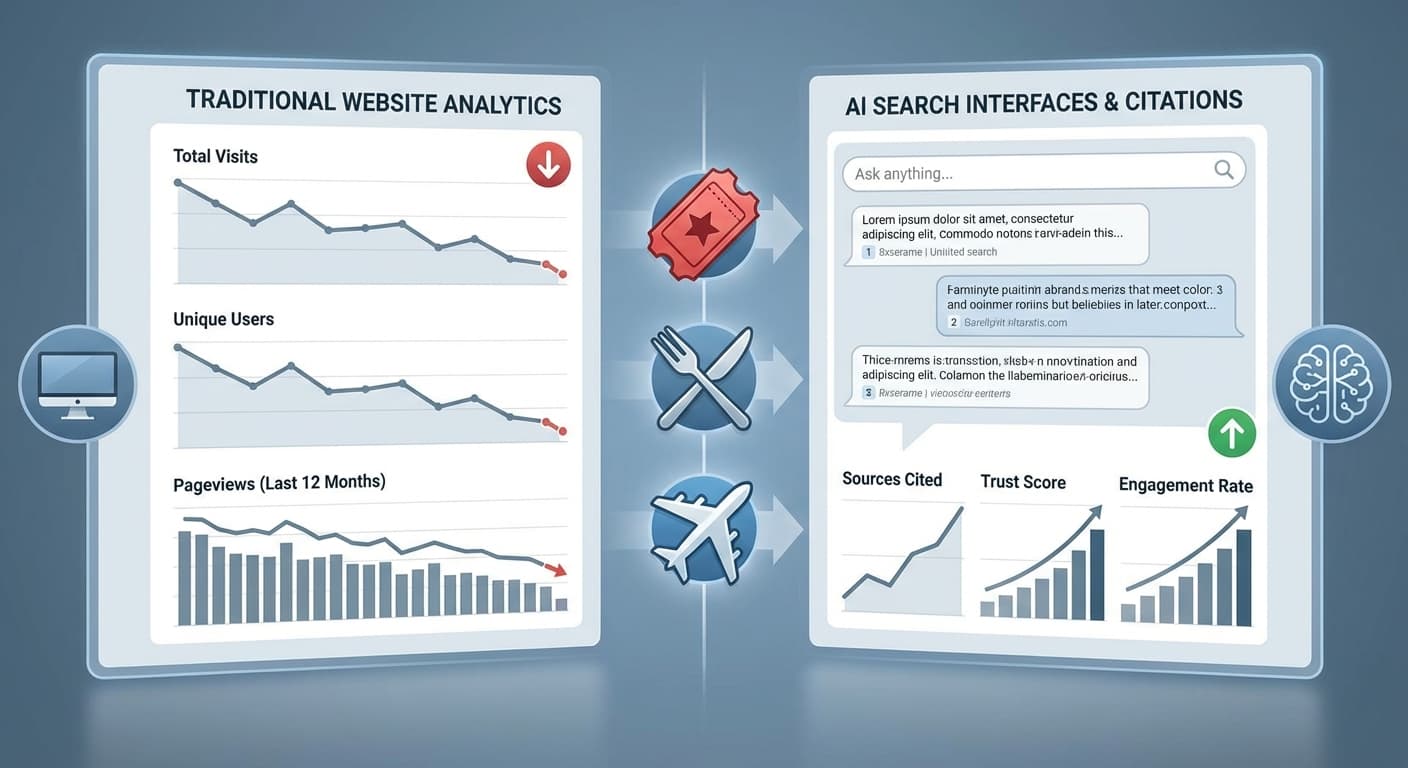
Did you know that 68% of e-commerce brands report their products are completely invisible in AI search results when customers ask questions like "best wireless headphones under $200" or "sustainable skincare products for sensitive skin"? While your competitors are capturing AI-driven product discovery, poor data structuring could be making your entire catalog invisible to the 2.1 billion people now using AI for shopping research.
As AI search engines process over 15 billion product queries monthly in 2026, the stakes have never been higher. ChatGPT, Perplexity, Claude, and Gemini aren't just summarizing web content—they're becoming the new product discovery engines. But here's the problem: these AI models require fundamentally different data structures than traditional SEO.
Why Traditional Product Data Fails in AI Search
Most e-commerce sites structure product data for human browsers and search crawlers, not AI interpretation. This creates several critical gaps:
The Entity Clarity Problem
AI models struggle when product data lacks clear entity relationships. Consider this typical product title:
Bad: "Sony WH-1000XM5 - Black - Wireless - Noise Canceling - Over-Ear"
AI-Optimized: "Sony WH-1000XM5 Wireless Noise-Canceling Headphones | Over-Ear Design | 30-Hour Battery | Bluetooth 5.2 | Black Color"
The second version explicitly defines relationships between brand (Sony), model (WH-1000XM5), category (headphones), key features, and specifications that AI can easily parse.
Missing Contextual Attributes
AI search engines prioritize products that answer "why" and "when" questions, not just "what" questions. Your product data needs to include:
Fragmented Schema Implementation
Many sites implement basic schema.org markup but miss the advanced properties AI models rely on:
additionalProperty for unique featuresisVariantOf for product relationshipshasMerchantReturnPolicy for purchase confidenceshippingDetails for logistics informationThe AI Search Data Quality Framework
1. Entity-First Architecture
Structure your product data around clear entities that AI can understand:
Primary Entity (Product):
Secondary Entities (Attributes):
Tertiary Entities (Context):
2. Semantic Richness Standards
AI models reward semantic density. For each product, include:
Core Semantic Elements:
Extended Semantic Context:
3. Structured Data Optimization
Implement comprehensive schema markup that goes beyond basics:
{
"@type": "Product",
"name": "Sony WH-1000XM5 Wireless Noise-Canceling Headphones",
"brand": {
"@type": "Brand",
"name": "Sony"
},
"category": "Electronics > Audio > Headphones > Over-Ear",
"additionalProperty": [
{
"@type": "PropertyValue",
"name": "Noise Cancellation Technology",
"value": "V1 Processor with Dual Noise Sensor"
},
{
"@type": "PropertyValue",
"name": "Use Case",
"value": "Professional work, travel, daily commuting"
}
],
"audience": {
"@type": "Audience",
"audienceType": "Professionals, frequent travelers, audiophiles"
}
}
Tactical Implementation Strategies
Product Title Optimization
Traditional Approach:[Brand] [Model] [Basic Features]
AI-Optimized Approach:[Brand] [Model] [Category] | [Primary Benefit] | [Key Specs] | [Target Use]
Description Restructuring
Organize product descriptions in AI-friendly formats:
- Primary function and target user
- Key differentiating benefit
- Main use cases
- Feature → Benefit → Use case for each major feature
- Quantified improvements where possible
- Real-world application examples
- Standardized units and measurements
- Compatibility information
- Performance benchmarks
- Position within product line
- Competitive advantages
- Ideal user scenarios
Attribute Standardization
Create consistent attribute naming and values across your catalog:
Standardized Attributes:
AI-Friendly Categories:
Review and Content Integration
AI models heavily weight user-generated content. Optimize by:
How Citescope AI Helps Optimize Product Data
While implementing these strategies manually can be overwhelming, Citescope AI's GEO Score specifically analyzes your product content across the five dimensions AI models prioritize most. The platform identifies exactly which data quality issues are making your products invisible and provides one-click optimization suggestions.
The Citation Tracker feature is particularly valuable for e-commerce, as it monitors when your products get mentioned in AI responses to shopping queries—giving you direct insight into which optimization strategies are working.
Measuring AI Search Visibility Success
Key Performance Indicators
Monitoring Tools and Techniques
Optimization Iteration Process
Advanced Strategies for 2026
Multi-Modal Data Preparation
As AI search evolves to include visual and audio elements:
Real-Time Data Synchronization
AI models favor fresh, accurate information:
Predictive Content Structuring
Anticipate AI query patterns:
Ready to Optimize for AI Search?
Poor product data quality doesn't have to make you invisible in AI search results. Start by auditing your current product data structure against these AI optimization principles, then implement entity-first architecture for your highest-value products.
Citescope AI makes this process simple with automated analysis of your product content's AI readiness and one-click optimization suggestions. Our GEO Score shows exactly how AI-friendly your product data is, while Citation Tracker monitors your products' visibility across ChatGPT, Perplexity, Claude, and Gemini.
Ready to make your products discoverable in AI search? Try Citescope AI free for 30 days and see which of your products are currently invisible to AI engines. Get your first optimization recommendations in under 5 minutes.