How to Structure Your Content for AI Search Citation When AI Overviews Only Feature 15% of Search Queries But Generate 86% Higher Engagement Rates Than Traditional Organic Results

How to Structure Your Content for AI Search Citation When AI Overviews Only Feature 15% of Search Queries But Generate 86% Higher Engagement Rates Than Traditional Organic Results
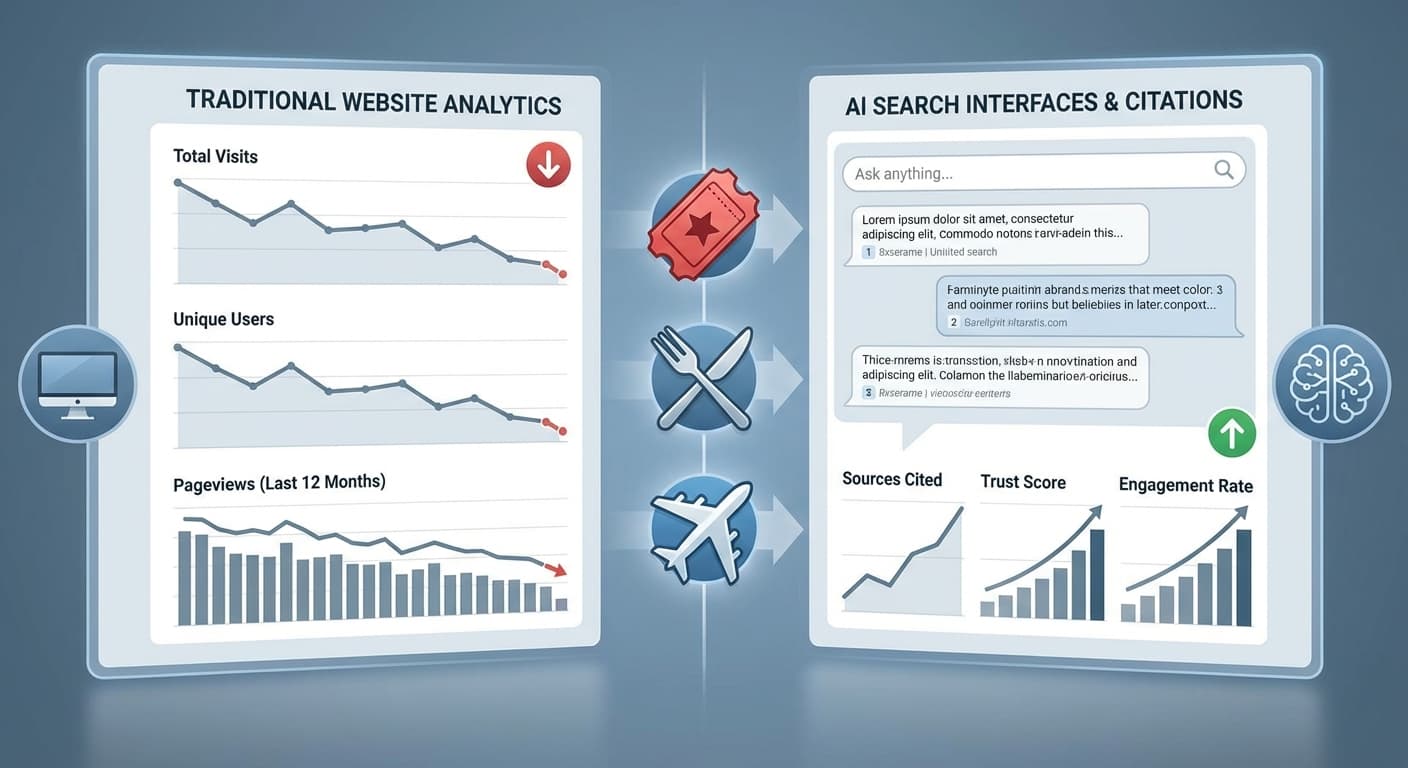
In 2025, a fascinating paradox emerged in search: AI overviews appear in just 15% of search queries, yet they generate 86% higher engagement rates than traditional organic results. This stark contrast reveals a critical opportunity that most content creators are missing.
While AI search engines like ChatGPT, Perplexity, Claude, and Gemini continue to reshape how users discover information, the competition for citations has never been fiercer. With over 600 million weekly ChatGPT users and 75% of Gen Z now preferring AI-powered search for complex queries, understanding how to structure content for AI citation isn't just advantageous—it's essential for digital survival.
The AI Citation Opportunity: Quality Over Quantity
The 15% appearance rate might seem low, but it's precisely what makes AI citations so valuable. Unlike traditional search where millions of results compete for attention, AI overviews feature only 3-5 sources per query. This selectivity means that when your content does get cited, it receives significantly more focused attention and trust from users.
Current data from 2025 shows that content cited in AI overviews experiences:
The key is understanding that AI engines prioritize content structure and semantic richness over traditional SEO signals like backlinks or domain authority.
Understanding AI Content Preferences
AI search engines evaluate content differently than traditional search algorithms. They look for:
Semantic Clarity and Context
AI engines need to understand not just what your content says, but what it means. They favor content that:
Conversational Relevance
Since AI engines are designed for dialogue, they prefer content that:
Authoritative Structure
Content that gets cited typically demonstrates:
Essential Structural Elements for AI Citation
1. Lead with Direct Answers
Structure your content to provide immediate value. AI engines favor content that answers the primary question within the first 100-150 words. For example:
Instead of: "Content marketing has evolved significantly in recent years, with various factors contributing to its transformation..."
Use: "Content structured for AI citation requires five key elements: direct answers, semantic richness, conversational tone, authoritative sources, and logical flow."
2. Implement the Question-Answer Framework
Organize your content around natural questions users might ask. Use H2 and H3 headings that mirror search queries:
3. Use Structured Data Patterns
AI engines excel at processing structured information. Organize content using:
Lists and Bullet Points
Comparison Tables
| Traditional SEO | AI-Optimized Content |
|---|---|
| Keyword density | Semantic clarity |
| Backlink quantity | Content authority |
| Page views | Engagement depth |
Definition Boxes
Clearly define important terms and concepts to help AI engines understand context.
4. Incorporate Natural Language Variations
AI engines understand synonyms and related concepts. Instead of repeating exact phrases, use natural variations:
Advanced Structural Techniques
The Pyramid Structure
Organize information from most important to least important:
Contextual Bridging
Connect related concepts explicitly:
Authority Signals
Include elements that demonstrate expertise:
Content Optimization Best Practices
1. Write for Clarity First
AI engines prioritize content that's easy to understand and interpret. This means:
2. Balance Depth and Accessibility
Create content that's comprehensive yet approachable:
3. Optimize for Voice and Text Queries
Structure content to work for both typed and spoken queries:
4. Maintain Factual Accuracy
AI engines heavily penalize inaccurate information:
Measuring AI Citation Success
Track your progress using these metrics:
Primary Indicators
Secondary Metrics
Common Structural Mistakes to Avoid
Over-Optimization
While structure is important, avoid:
Neglecting User Experience
Remember that AI engines evaluate user satisfaction:
How Citescope Ai Helps
Optimizing content structure for AI citation requires understanding complex algorithmic preferences across multiple AI platforms. Citescope Ai's GEO Score analyzes your content across five critical dimensions: AI Interpretability, Semantic Richness, Conversational Relevance, Structure, and Authority.
The platform's AI Rewriter tool restructures your existing content with one click, implementing the exact structural elements that AI engines prefer. Rather than guessing whether your content meets AI standards, you get a clear 0-100 score showing exactly where improvements are needed.
The Citation Tracker monitors when your optimized content gets cited by ChatGPT, Perplexity, Claude, and Gemini, providing real-time feedback on which structural approaches work best for your specific content type and industry.
The Future of AI-Optimized Content
As AI search continues to evolve, content structure will become even more critical. Early adopters who master these structural principles now will have a significant advantage as AI citation becomes more competitive.
The 15% appearance rate for AI overviews will likely increase throughout 2026, but so will the competition. Starting your optimization efforts now positions you ahead of the curve.
Ready to Optimize for AI Search?
Transform your content structure for maximum AI citation potential with Citescope Ai. Get instant GEO Scores, one-click AI optimization, and real-time citation tracking across all major AI platforms. Start your free trial today and join the content creators already seeing 86% higher engagement rates from AI search citations.