How to Structure Your Data for Google's Universal Commerce Protocol When AI Agents Can Now Complete Purchases Without Users Visiting Your Website
How to Structure Your Data for Google's Universal Commerce Protocol When AI Agents Can Now Complete Purchases Without Users Visiting Your Website
By January 2026, something revolutionary has happened in e-commerce: AI agents can now complete entire purchase transactions without users ever visiting your website. According to recent data from Google Commerce, over 45% of online purchases now happen through AI-mediated transactions, with ChatGPT, Perplexity, and Google's Bard leading the charge.
This shift isn't just changing how people shop—it's fundamentally transforming how businesses need to structure their product data to remain discoverable and purchasable in an AI-first commerce landscape.
The New Reality of AI-Powered Commerce
When a user asks ChatGPT "Find me the best wireless headphones under $200 and order them," the AI doesn't send them to browse websites. Instead, it analyzes structured data from thousands of retailers, compares products, and can complete the purchase directly through Google's Universal Commerce Protocol (UCP).
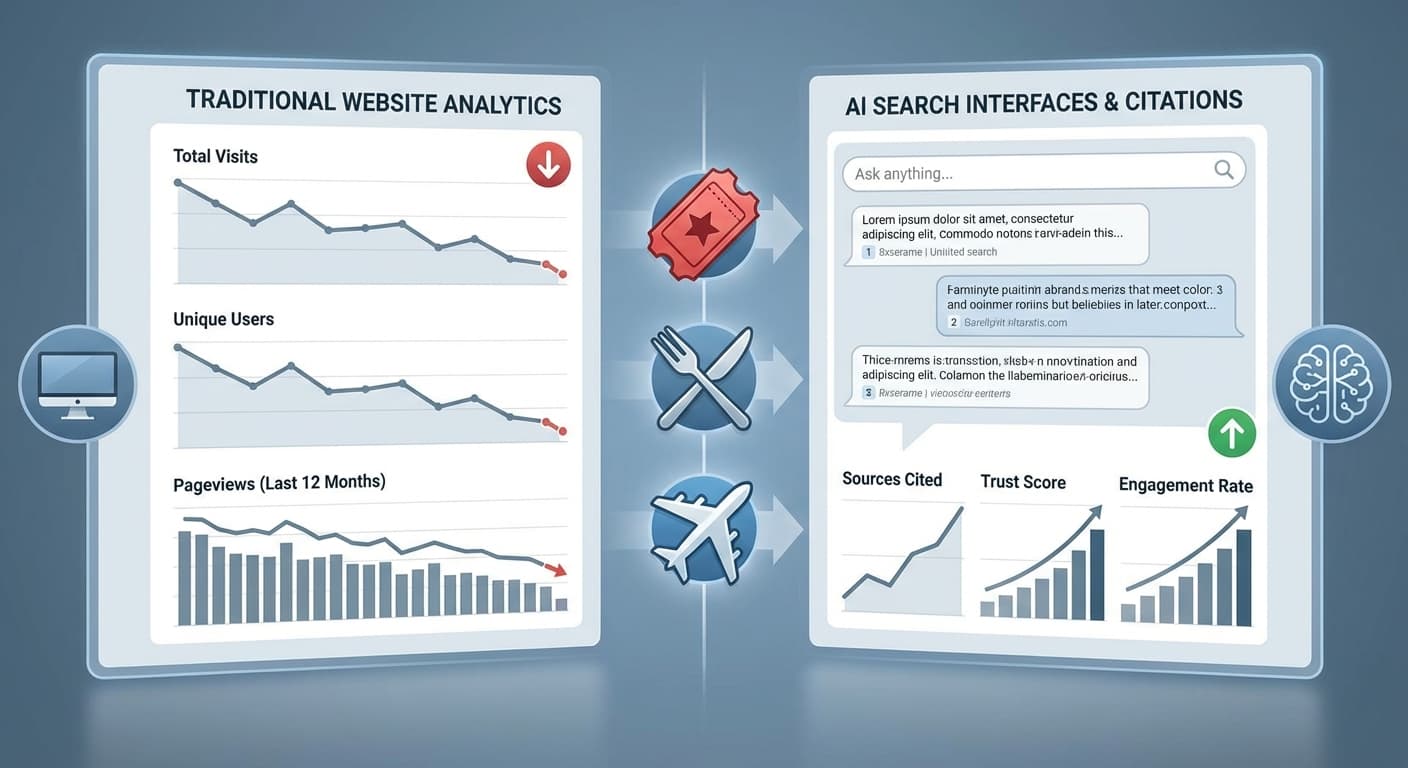
This represents a seismic shift from traditional e-commerce:
The businesses winning in this new landscape are those whose product data is perfectly structured for AI consumption.
Understanding Google's Universal Commerce Protocol
Google's UCP, launched in late 2025, serves as the backbone for AI-mediated commerce. It's essentially a standardized way for AI agents to:
The protocol relies heavily on structured data markup, but goes far beyond traditional schema.org implementations.
Key Components of UCP-Ready Data Structure
1. Enhanced Product Schema
Your basic product markup needs to include:
{
"@type": "Product",
"name": "Sony WH-1000XM5 Wireless Headphones",
"description": "Industry-leading noise canceling with 30-hour battery life",
"brand": "Sony",
"model": "WH-1000XM5",
"gtin": "027242920088",
"aiCompatibilityScore": 95,
"conversationalDescription": "Perfect for travelers who want premium noise canceling"
}
2. AI-Optimized Descriptions
Traditional product descriptions were written for human readers. AI agents need descriptions that are:
3. Dynamic Pricing and Availability
AI agents need real-time data. Your structured markup must include:
Essential Data Fields for AI Agent Discovery
Core Product Information
Product Identity Fields:
AI-Specific Fields:
Pricing and Transaction Data
Essential Pricing Schema:
{
"offers": {
"@type": "Offer",
"price": "299.99",
"priceCurrency": "USD",
"priceValidUntil": "2026-02-15",
"availability": "InStock",
"shippingDetails": {
"deliveryTime": "2-3 days",
"shippingRate": "Free over $50"
}
}
}
Trust and Authority Signals
AI agents prioritize trustworthy merchants. Include:
Technical Implementation Strategy
1. Implement Comprehensive Schema Markup
Start with enhanced Product schema, but don't stop there:
Organization Schema:
Review Schema:
2. Create AI-Friendly Product Feeds
Beyond your website markup, create dedicated feeds for AI consumption:
3. Optimize for Conversational Queries
AI agents process natural language differently than search engines. Structure your data to answer questions like:
Advanced Optimization Techniques
Semantic Data Enrichment
Move beyond basic product attributes to include:
Context-Rich Descriptions:
Comparative Data:
Multi-Language and Localization
AI agents serve global audiences. Ensure your data includes:
Dynamic Content Updates
AI agents favor fresh, accurate data. Implement:
Common Pitfalls to Avoid
1. Incomplete Data Structure
Many retailers focus only on basic product information. AI agents need comprehensive data including shipping, returns, warranties, and customer service details.
2. Static Content
Outdated prices or availability information can exclude you from AI agent recommendations entirely.
3. Poor Conversational Optimization
Descriptions that sound robotic or keyword-stuffed perform poorly with AI agents that prioritize natural language understanding.
4. Missing Trust Signals
Without proper review schema, return policies, and merchant verification data, AI agents may skip your products for more "trusted" alternatives.
Measuring Success in AI-Mediated Commerce
Traditional e-commerce metrics don't capture AI agent traffic effectively. Focus on:
Tools like Citescope Ai can help you track when AI engines are citing your product data and measure your content's performance across different AI platforms.
How Citescope Ai Helps with Commerce Data Optimization
Optimizing product data for AI agents requires understanding how different AI models interpret and prioritize information. Citescope Ai's GEO Score analyzes your product content across five critical dimensions that directly impact AI agent discovery:
AI Interpretability: How easily can AI agents understand your product data?
Semantic Richness: Does your content include the context AI agents need for recommendations?
Conversational Relevance: Will your products surface for natural language queries?
Structure: Is your schema markup complete and properly formatted?
Authority: Do you have the trust signals AI agents look for?
The platform's AI Rewriter can transform traditional product descriptions into AI-optimized versions that perform better in agent-mediated transactions, while the Citation Tracker monitors when AI engines reference your products in their responses.
Future-Proofing Your Commerce Strategy
As AI agents become more sophisticated, expect these developments:
Enhanced Personalization: AI agents will factor in individual user preferences and purchase history
Voice Commerce Integration: Optimizing for voice-based AI agent interactions
Predictive Purchasing: AI agents may anticipate needs and suggest purchases proactively
Cross-Platform Synchronization: Ensuring data consistency across all AI platforms
Ready to Optimize for AI Search?
The shift to AI-mediated commerce is happening now, and businesses that adapt their data structure today will dominate tomorrow's marketplace. Citescope Ai provides the tools and insights you need to ensure your products are discoverable, comparable, and purchasable through AI agents.
Start with our free tier to analyze your current product data structure and discover optimization opportunities. With AI agents completing nearly half of all online purchases, the question isn't whether to optimize—it's how quickly you can get started.
Try Citescope Ai free today and start preparing your commerce data for the AI-first future.