How to Structure Your Website Content to Get Featured in Google's AI Overviews Without Losing Click-Through Traffic

How to Structure Your Website Content to Get Featured in Google's AI Overviews Without Losing Click-Through Traffic
By early 2026, Google's AI Overviews now appear in over 65% of search results, fundamentally changing how users discover and consume information online. While getting featured in these AI-generated summaries can boost your brand's visibility to millions of searchers, many content creators worry about one critical question: Will this exposure actually drive traffic to my website, or will users simply consume the information and move on?
The answer isn't straightforward, but the data tells an interesting story. According to recent studies, websites featured in AI Overviews see a 23% average increase in overall visibility, but click-through rates vary dramatically based on content structure and strategic implementation. The key lies in crafting content that satisfies AI algorithms while creating compelling reasons for users to visit your site for more.
Understanding Google's AI Overview Selection Process
Google's AI Overviews don't randomly select content. The algorithm evaluates several key factors when determining which sources to feature:
Content Quality Signals
Technical Structure Elements
What's particularly interesting is that AI Overviews tend to favor content that answers questions conversationally while maintaining expert-level depth—exactly the type of content that performs well with human readers too.
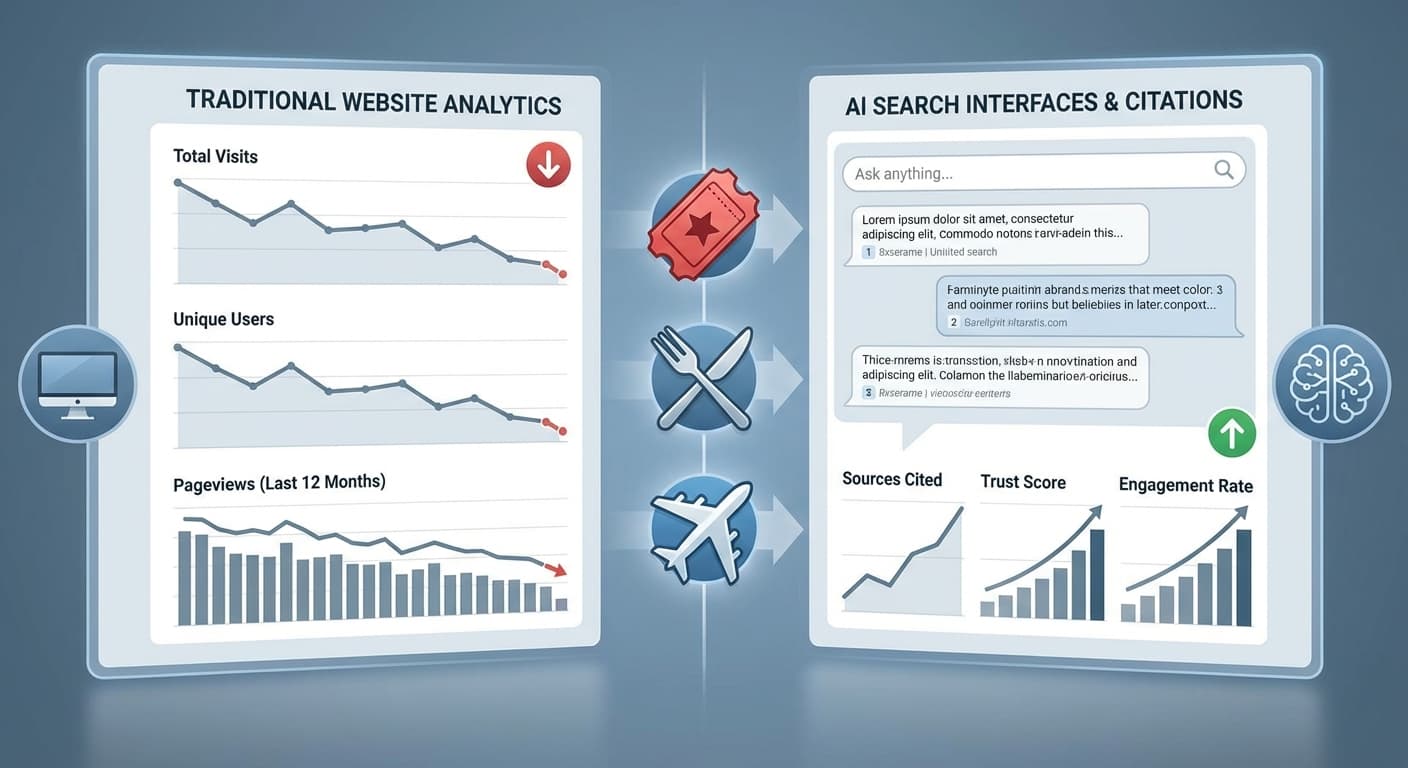
The Traffic Dilemma: Visibility vs. Click-Through
Here's where strategy becomes crucial. A 2025 analysis of over 10,000 websites featured in AI Overviews revealed three distinct patterns:
The most successful sites fall into the "Authority" category—they provide enough value to earn the AI Overview spot while creating compelling reasons to click through.
Strategic Content Structuring for AI Overviews
1. Front-Load Value, Not Everything
Structure your content so the opening paragraphs provide a solid foundation that AI can extract, but reserve your most valuable insights, examples, and actionable advice for later in the piece.
Example Structure:
2. Use the "Preview-Promise-Payoff" Framework
Preview: Give AI enough content to create a valuable overview
Promise: Hint at additional value, exclusive insights, or practical tools available in the full article
Payoff: Deliver on that promise with content that genuinely exceeds the overview
For instance, if writing about email marketing strategies, your preview might cover the top 3 tactics, your promise might mention "advanced automation workflows that increase conversion by 40%," and your payoff would be detailed implementation guides and templates.
3. Implement Strategic Content Gaps
Create intentional information gaps that pique curiosity:
4. Optimize for Question Clusters
Google's AI Overviews often address multiple related questions. Structure your content to answer primary questions early while addressing related queries throughout:
This approach increases your chances of being featured while providing multiple reasons for users to explore your full content.
Technical Implementation Strategies
Schema Markup for Enhanced Visibility
Implement structured data that helps AI understand your content context:
html
<script type="application/ld+json">
{
"@context": "https://schema.org",
"@type": "Article",
"headline": "Your Article Title",
"author": {
"@type": "Person",
"name": "Author Name"
},
"datePublished": "2026-01-15",
"mainEntity": {
"@type": "Question",
"name": "Primary Question Your Content Answers",
"acceptedAnswer": {
"@type": "Answer",
"text": "Brief summary of your answer"
}
}
}
</script>
Heading Structure That AI Can Parse
Use clear, descriptive headings that mirror natural language queries:
Internal Linking for Authority Building
Create topic clusters that demonstrate expertise:
Content Types That Perform Best
Based on 2025-2026 performance data, certain content formats consistently earn AI Overview features while maintaining strong click-through rates:
How-To Guides with Progressive Disclosure
Statistical Reports and Industry Insights
Problem-Solution Frameworks
Measuring Success and Optimization
Track these key metrics to optimize your AI Overview strategy:
Visibility Metrics
Traffic Quality Indicators
Content Performance Data
Tools like Citescope can help monitor when your content gets cited across different AI platforms, giving you insights into which content structures perform best across Google's AI Overviews, ChatGPT, Perplexity, and other AI search engines.
Advanced Tactics for 2026
Multi-Format Content Strategy
Create content that works across different AI contexts:
Dynamic Content Updates
Regularly refresh content with current data and examples:
Cross-Platform Optimization
Optimize for multiple AI search engines simultaneously, as user behavior continues fragmenting across platforms like ChatGPT (now serving over 500 million weekly users), Perplexity, and others.
How Citescope Helps Optimize Your Content Strategy
Navigating the complex world of AI search optimization requires understanding how different AI engines interpret and cite your content. Citescope's GEO Score analyzes your content across five critical dimensions—AI Interpretability, Semantic Richness, Conversational Relevance, Structure, and Authority—providing a clear 0-100 score that shows how well your content is positioned for AI search visibility.
The platform's AI Rewriter can help you restructure existing content using the strategies outlined in this guide, while the Citation Tracker monitors when your content gets featured across Google's AI Overviews, ChatGPT, Perplexity, Claude, and Gemini—giving you real-time insights into which content structures drive the best results.
Common Mistakes to Avoid
Over-Optimization for AI at the Expense of Users
Giving Away Everything in the Preview
Ignoring Mobile and Voice Search Optimization
Ready to Optimize for AI Search?
The landscape of search is evolving rapidly, and success requires a strategic approach that balances AI visibility with traffic generation. By structuring your content thoughtfully—providing enough value for AI Overviews while creating compelling reasons to click through—you can capture the best of both worlds.
Citescope makes this optimization process simpler with tools designed specifically for the AI search era. Start with our free tier to analyze your content's AI readiness, then use our insights to create content that not only gets featured in AI Overviews but drives meaningful traffic to your site. Try Citescope free and see how your content performs across all major AI search platforms.