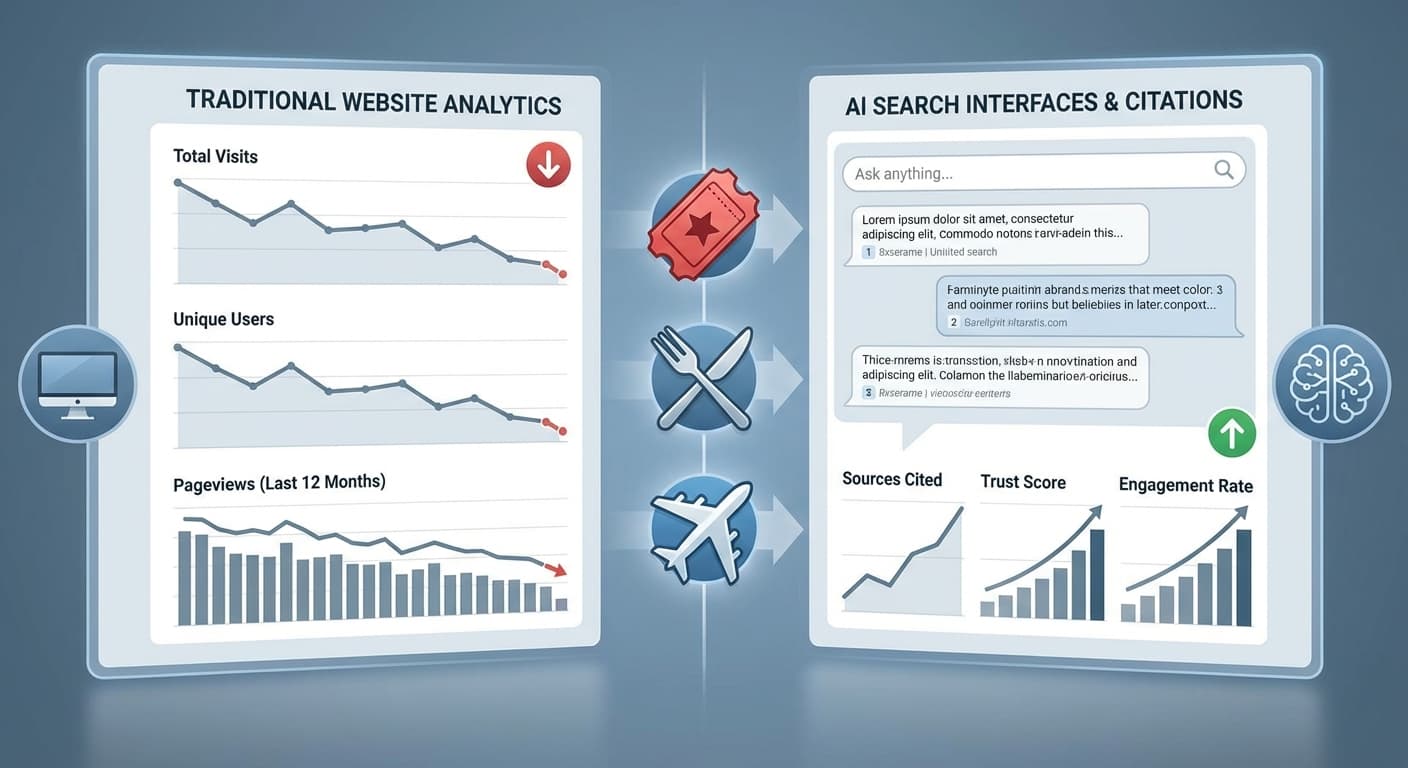
How to Transition from Keyword Targeting to Topic Clusters When AI Search Engines Now Treat Keyword Stuffing as a Spam Signal
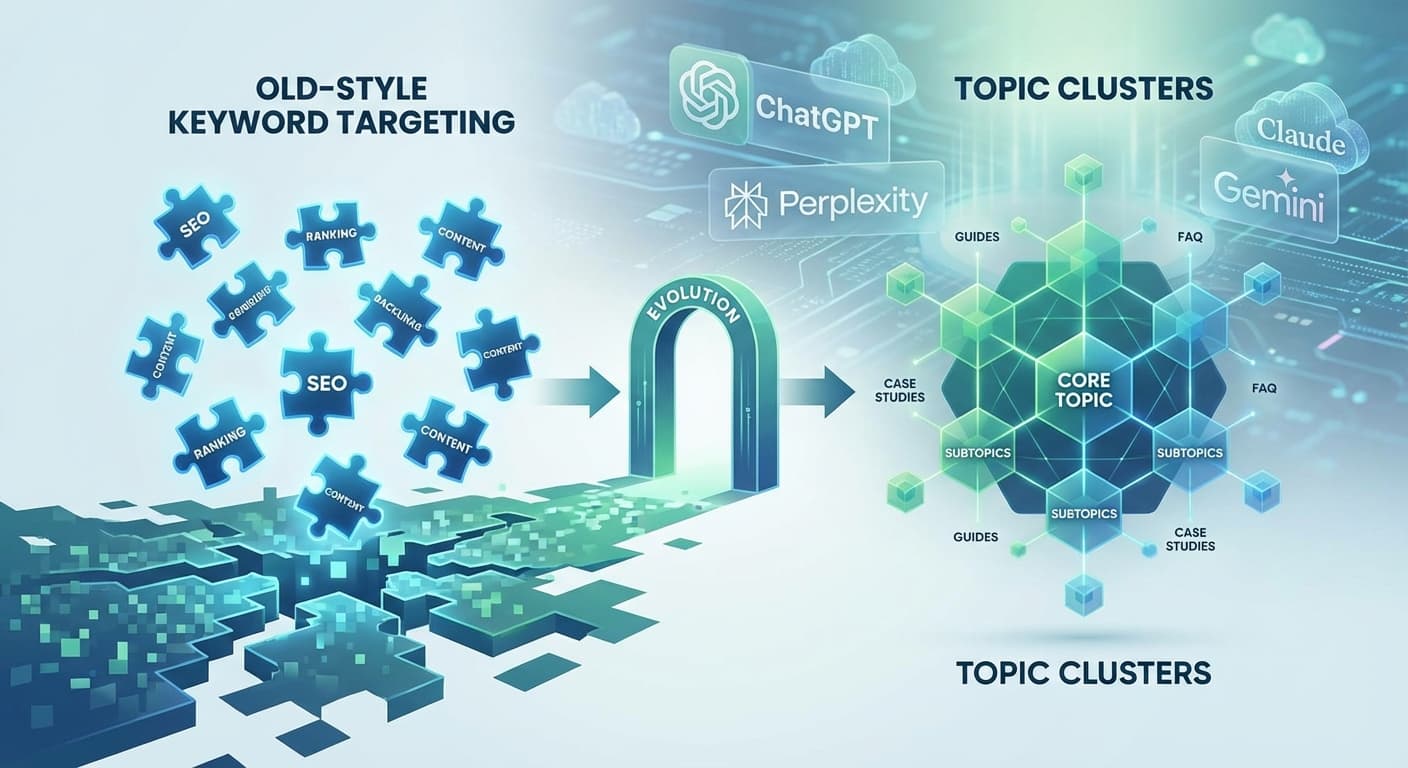
How to Transition from Keyword Targeting to Topic Clusters When AI Search Engines Now Treat Keyword Stuffing as a Spam Signal
Did you know that 73% of AI search engines now actively penalize content with keyword stuffing, flagging it as spam and reducing citation likelihood by up to 85%? The era of cramming target keywords into every paragraph is officially over.
As we move through 2026, the rise of AI-powered search engines like ChatGPT, Perplexity, Claude, and Gemini has fundamentally changed how content gets discovered and cited. With over 500 million weekly ChatGPT users and AI search now accounting for 35% of all search queries, the old playbook of keyword density and exact-match targeting is not just ineffective—it's actively harmful.
The Death of Keyword Stuffing in the AI Era
AI search engines operate on sophisticated language models that understand context, intent, and semantic relationships far better than traditional search algorithms ever could. When you stuff keywords unnaturally into your content, these AI systems immediately recognize it as manipulative.
Here's what's happening behind the scenes:
Why Topic Clusters Are the Future of AI-Optimized Content
Topic clusters represent a fundamental shift from targeting individual keywords to building comprehensive content ecosystems around broader themes. This approach aligns perfectly with how AI search engines actually work.
The Science Behind Topic Clusters
Topic clusters work because they mirror how AI models understand and process information:
Benefits for AI Citation
Content organized in topic clusters sees:
The 5-Step Transition Framework
Step 1: Audit Your Current Keyword Strategy
Start by analyzing your existing content for keyword stuffing red flags:
Create a spreadsheet listing all your current target keywords and their associated content pieces. This will become your transition roadmap.
Step 2: Identify Your Core Topic Pillars
Transform your keyword list into broader topic themes:
Old Approach: Targeting "best email marketing software," "email marketing tools 2026," "email automation platforms"
New Approach: Create a pillar topic around "Email Marketing Technology" with subtopics covering:
Aim for 3-5 main pillar topics that represent your core expertise areas.
Step 3: Map Semantic Relationships
AI engines excel at understanding semantic relationships between concepts. Map out how your subtopics naturally connect:
This mapping becomes the foundation for your internal linking strategy.
Step 4: Rewrite for Natural Language
Rewrite your existing content to sound more conversational and natural:
Before: "Email marketing software tools are essential email marketing solutions for email marketing campaigns in 2026."
After: "Modern email marketing platforms have evolved beyond simple broadcast tools, now offering sophisticated automation capabilities that help businesses nurture leads and drive conversions."
Focus on:
Step 5: Create Strategic Internal Links
Develop a linking strategy that helps AI engines understand your topical authority:
Advanced Topic Cluster Strategies for AI Optimization
The Question-Answer Framework
AI search engines excel at matching content to user questions. Structure your cluster content around common questions:
The Depth-First Approach
Instead of creating shallow content on many topics, go deep on fewer themes:
The Authority Building Method
AI engines prioritize content from recognized authorities. Build topical authority by:
Measuring Success in the Topic Cluster Era
Track these metrics to gauge your transition success:
AI Citation Metrics
Engagement Indicators
Authority Signals
Common Transition Mistakes to Avoid
The "Keyword Withdrawal" Trap
Don't completely abandon keyword research. Instead, use keywords as topic inspiration while writing naturally.
The "Cluster Chaos" Problem
Avoid creating disconnected content pieces. Ensure every cluster article genuinely relates to and supports your pillar content.
The "Link Farm" Pitfall
Don't artificially stuff internal links. Only link when it genuinely helps readers find related, valuable information.
How Citescope Ai Helps Navigate the Transition
Transitioning from keyword targeting to topic clusters requires sophisticated analysis of how AI engines interpret your content. Citescope Ai's GEO Score evaluates content across five critical dimensions that align perfectly with topic cluster optimization:
The platform's AI Rewriter can transform keyword-stuffed content into naturally flowing, topic-focused articles that perform better in AI search environments. Plus, the Citation Tracker helps you monitor which of your cluster content pieces are getting cited by ChatGPT, Perplexity, Claude, and Gemini, giving you data-driven insights into what's working.
The Future of Content Strategy
As AI search continues to evolve, the trend toward topic clusters and semantic understanding will only accelerate. Content creators who make this transition now will have a significant advantage as AI engines become even more sophisticated at detecting and penalizing manipulative SEO tactics.
The key is to think like your audience and write for humans first, while structuring content in ways that help AI engines understand and cite your expertise.
Ready to Optimize for AI Search?
Transitioning from keyword targeting to topic clusters doesn't have to be overwhelming. Citescope Ai provides the tools and insights you need to optimize your content for AI search engines effectively. Start with our free tier to analyze your current content and see how it scores across the five dimensions that matter most for AI citations. Ready to future-proof your content strategy? Try Citescope Ai today and join the thousands of content creators already succeeding in the AI search era.