How to Transition Your Marketing Team from Keyword-Based SEO to GEO When Your Staff Lacks Prompt Engineering Skills and AI Citation Tracking Experience

How to Transition Your Marketing Team from Keyword-Based SEO to GEO When Your Staff Lacks Prompt Engineering Skills and AI Citation Tracking Experience
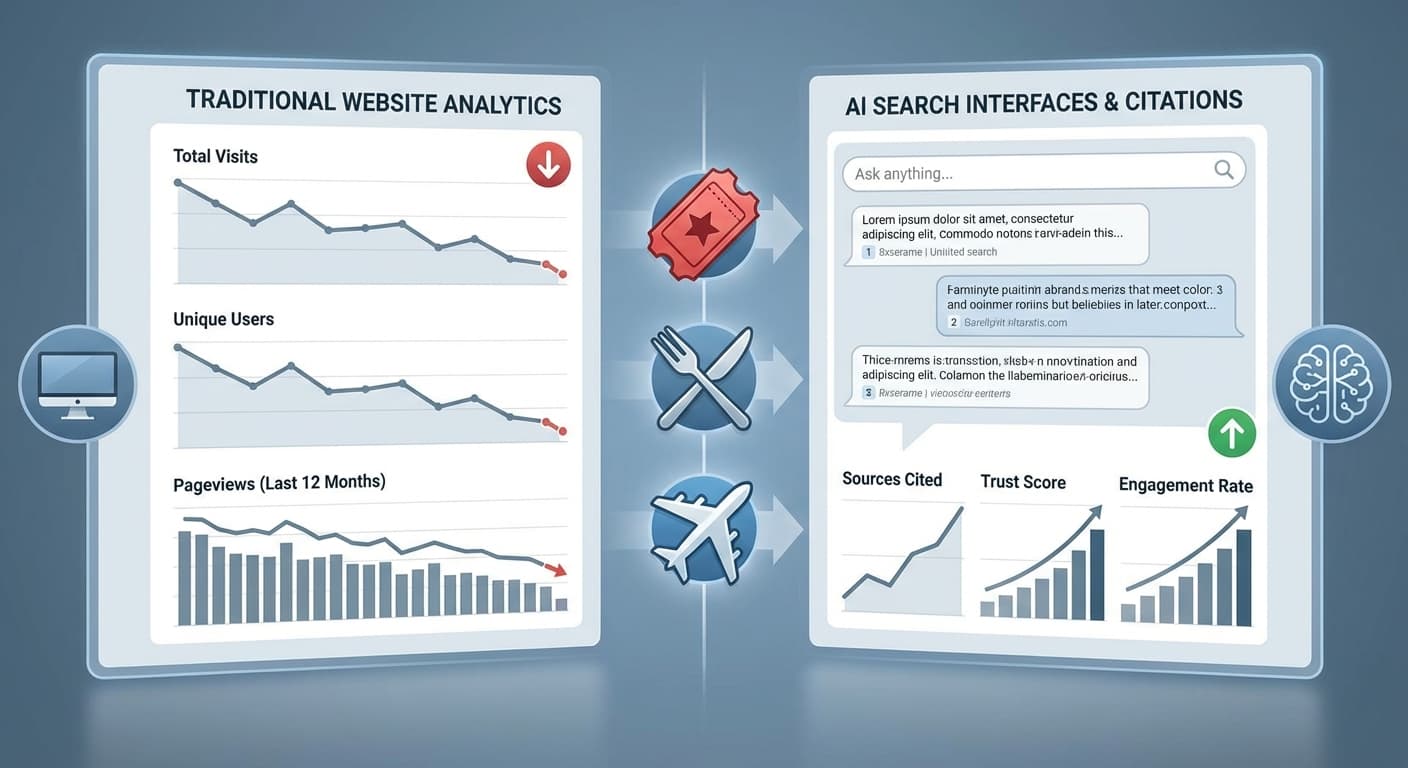
Is your marketing team still optimizing for Google while 73% of Gen Z now uses AI search engines like ChatGPT and Perplexity as their primary research tools? If you're still thinking in keywords while your audience is thinking in conversations, you're not just behind the curve—you're missing entire generations of customers.
The shift from traditional SEO to Generative Engine Optimization (GEO) isn't just another marketing trend. With AI search queries growing by 340% in 2025 alone and over 600 million weekly users across ChatGPT, Claude, and Perplexity, GEO has become essential for content visibility. But here's the challenge: most marketing teams are experts in keyword research, not prompt engineering or AI citation tracking.
The good news? You don't need to rebuild your team from scratch. With the right transition strategy, your existing SEO-savvy marketers can master GEO without becoming AI engineers.
Understanding the Fundamental Shift: Keywords vs. Conversations
The Old Way: Keyword-Centric Thinking
Traditional SEO taught us to think in fragments:
The New Way: Conversational Context
GEO requires thinking in complete thoughts and questions:
This shift doesn't invalidate your team's existing knowledge—it builds upon it. Your marketers already understand user intent and content quality; they just need to apply these skills differently.
Phase 1: Assess Your Team's Current Capabilities
SEO Skills That Transfer to GEO
Your team likely already has these transferable skills:
Skills That Need Development
Identify which team members need training in:
Phase 2: Create Your GEO Transition Roadmap
Month 1: Foundation Building
Week 1-2: GEO Education
Week 3-4: Current Content Audit
Month 2: Skill Development
Prompt Engineering Basics (No Coding Required)
Citation Tracking Fundamentals
Month 3: Implementation and Testing
Phase 3: Practical GEO Implementation Without Advanced Technical Skills
Content Optimization Strategy
Transform Keyword-Focused Content:
Instead of: "10 Best Email Marketing Tools 2026"
Optimize for: "Complete guide to choosing email marketing software that integrates with your CRM and supports automation workflows"
Structure for AI Comprehension:
Citation-Worthy Content Elements
Train your team to include:
Phase 4: Measuring Success Without Complex Analytics
Simple GEO Metrics Your Team Can Track
Setting Realistic Expectations
Common Transition Challenges and Solutions
Challenge 1: "We Don't Know How to Write for AI"
Solution: Start by writing for humans asking detailed questions. AI engines favor content that thoroughly answers user queries with context and supporting information.
Challenge 2: "Citation Tracking Seems Too Technical"
Solution: Begin with manual testing—simply search for your topics in ChatGPT and Perplexity weekly. Look for patterns in what gets cited.
Challenge 3: "Our Content Calendar is Already Full"
Solution: Retrofit existing content rather than creating everything new. Update your top 10 performing posts with GEO principles first.
Challenge 4: "We Don't Have AI Expertise"
Solution: You don't need to become AI engineers. Focus on understanding user intent and providing comprehensive, well-structured answers.
Building Team Confidence Through Quick Wins
30-Day Quick Win Strategy
This approach builds confidence while demonstrating GEO's value without overwhelming your team.
How Citescope Ai Helps Bridge the Skills Gap
While your team is learning GEO fundamentals, tools can accelerate the process. Citescope Ai's GEO Score analyzes your content across five key dimensions—AI Interpretability, Semantic Richness, Conversational Relevance, Structure, and Authority—giving you a clear 0-100 score for optimization potential.
The platform's AI Rewriter can instantly restructure existing content for better AI visibility, while the Citation Tracker monitors when your content gets referenced by ChatGPT, Perplexity, Claude, and Gemini. This eliminates the guesswork and technical barriers that often slow team transitions.
For teams without deep AI expertise, having automated optimization suggestions and citation monitoring means you can focus on strategy and content quality rather than technical implementation.
Creating Your Team Training Schedule
Week-by-Week Implementation Plan
Weeks 1-2: GEO Fundamentals
Weeks 3-4: Content Audit and Planning
Weeks 5-8: Hands-On Optimization
Weeks 9-12: Scale and Refine
Conclusion: Your Team's GEO Future
Transitioning from keyword-based SEO to GEO doesn't require hiring a team of AI engineers or prompt specialists. Your existing marketing team has the foundation—they understand audiences, create quality content, and measure results. The shift to GEO is about applying these skills to conversational, AI-friendly content that provides comprehensive answers to user questions.
Start small, measure results, and build confidence through quick wins. Remember, 67% of businesses that started GEO optimization in 2025 saw citation improvements within 60 days, proving that early adoption pays off even with basic implementation.
The question isn't whether to make this transition—it's how quickly you can adapt while your competitors are still thinking in keywords.
Ready to Optimize for AI Search?
Don't let the technical aspects of GEO slow down your team's transition. Citescope Ai bridges the skills gap with automated content analysis, one-click optimization, and comprehensive citation tracking across all major AI engines. Start with our free tier to optimize 3 pieces of content this month and see how GEO can transform your content's AI visibility. Your team's SEO expertise combined with GEO optimization could be the competitive advantage you've been looking for.