How to Win AI-Mediated Discovery Arbitrage When Answer Engine Optimization Eliminates Your Traffic Capture Opportunity
How to Win AI-Mediated Discovery Arbitrage When Answer Engine Optimization Eliminates Your Traffic Capture Opportunity
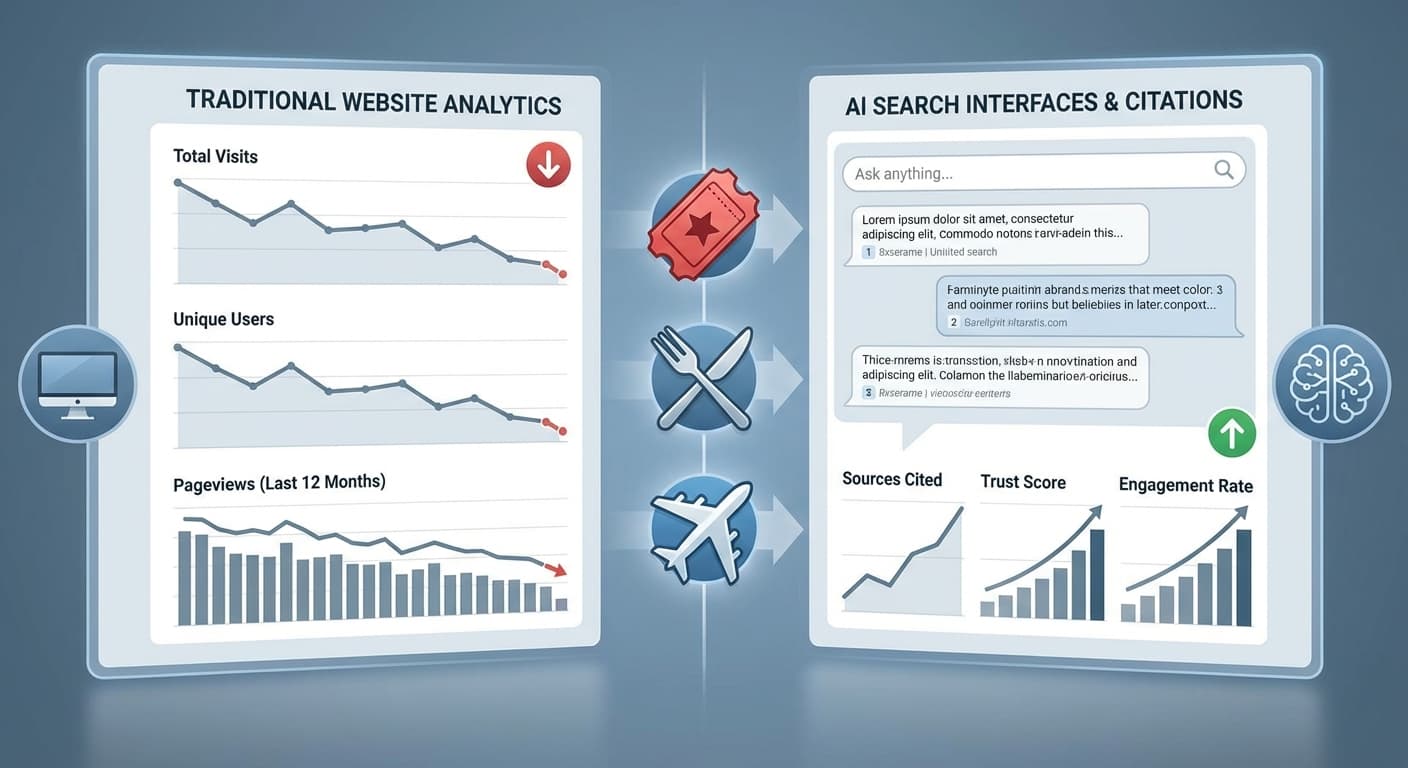
By January 2026, over 40% of all search queries are processed through AI-powered answer engines like ChatGPT, Perplexity, Claude, and Gemini. But here's the twist: while traditional SEO drove traffic to your website, AI search often provides direct answers, eliminating the click-through. Meanwhile, your competitors aren't just optimizing for citations—they're building embedded tools that AI agents recommend as solutions.
Welcome to the new battleground of AI-mediated discovery arbitrage, where the rules have completely changed.
The Death of Traditional Traffic Capture
The shift is dramatic and irreversible. Recent data shows that AI-powered search results now satisfy user queries directly 73% of the time, meaning users never leave the AI interface to visit your website. This phenomenon, known as "zero-click AI search," has fundamentally disrupted the traditional content marketing playbook.
What's Actually Happening
When someone asks ChatGPT "How do I improve my email marketing conversion rates?" they get a comprehensive answer with actionable steps—no website visit required. The AI might cite your blog post, but the user gets their answer without ever seeing your landing page, opt-in form, or product offering.
This creates what we call the Citation Paradox: your content gets credited but generates zero direct business value. You're essentially providing free consulting through AI intermediaries while competitors who understand the new game are winning customers.
The Embedded Tool Strategy That's Winning
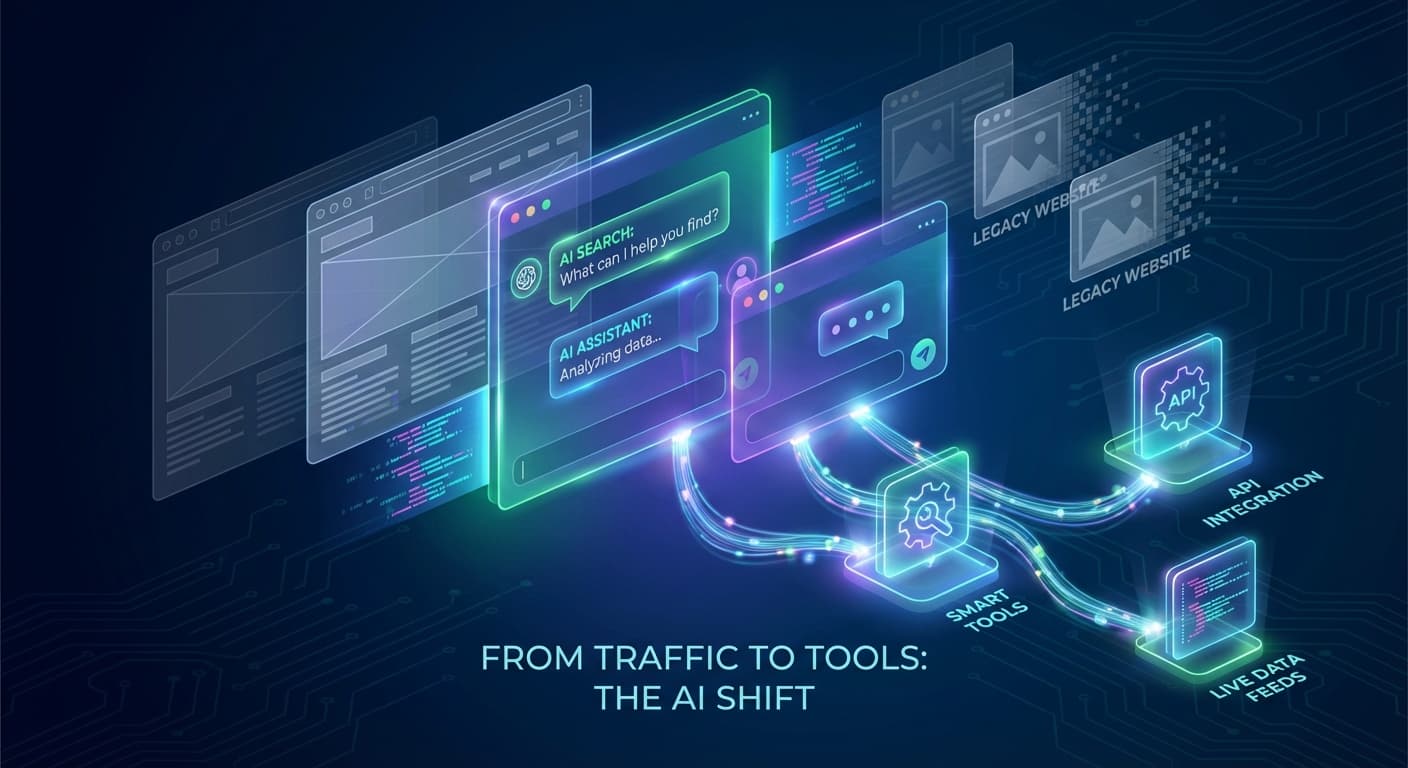
Smart companies have pivoted from hoping for traffic to building tools that AI agents actively recommend. Instead of creating content that gets cited, they're creating solutions that get suggested.
Real Examples of This Strategy in Action
Canva's AI Integration Approach: Rather than just writing blog posts about design principles, Canva built AI-accessible APIs that ChatGPT and Claude can reference when users ask for design help. The AI doesn't just cite Canva's content—it suggests using Canva's actual tools.
HubSpot's Template Libraries: They shifted from content about marketing templates to interactive template generators that AI can directly recommend. When someone asks about email templates, AI agents suggest HubSpot's actual template tools, not just their blog posts.
Notion's AI-Ready Database Templates: Instead of articles about project management, they created structured templates that AI can understand and recommend as solutions.
The Four-Layer AI Discovery Arbitrage Strategy
Layer 1: Citation Foundation
Yes, you still need optimized content that AI engines cite. This establishes authority and keeps you in the conversation. However, citations alone won't drive business results in 2026.
Action Steps:
Layer 2: Tool Integration
Develop tools, calculators, templates, or APIs that AI agents can directly recommend when users need solutions.
Examples:
Layer 3: Partnership Positioning
Position your brand as the go-to solution provider in your category by creating partnerships and integrations that AI systems recognize.
Strategies:
Layer 4: Direct AI Agent Relationships
This is the emerging frontier: building direct relationships with AI platforms through their partner programs and developer ecosystems.
Opportunities:
Converting AI Discovery Into Revenue
The key insight: AI-mediated discovery requires a completely different conversion strategy than traditional SEO traffic.
The New Conversion Funnel
Practical Implementation
Create "AI-First" Lead Magnets: Instead of ebooks that require email signup, build interactive tools that provide value immediately while collecting user data through usage patterns.
Develop Solution-Oriented Content: Write content that doesn't just inform but provides actionable frameworks, templates, or processes that users can implement immediately.
Build Attribution Systems: Since users might not visit your website directly, create systems to track when your tools or resources are being used through AI recommendations.
The Technical Infrastructure You Need
Structured Data Implementation
AI engines need to understand not just what you offer, but how it solves specific problems.
Essential Schema Types:
API-First Approach
Build your tools and resources with APIs that AI systems can access and recommend.
Key Considerations:
Multi-Modal Content Strategy
AI engines are increasingly multi-modal, processing text, images, audio, and video. Your content strategy needs to reflect this.
Implementation:
Measuring Success in the New Paradigm
Traditional metrics like organic traffic and bounce rate become less relevant when AI engines provide answers directly. New metrics emerge:
AI-Specific KPIs
How Citescope Ai Helps You Navigate This Transition
While building embedded tools and API integrations requires significant development resources, optimizing your existing content for AI discovery is something you can start immediately. Citescope Ai's GEO Score analyzes your content across five critical dimensions that AI engines prioritize: AI Interpretability, Semantic Richness, Conversational Relevance, Structure, and Authority.
The platform's AI Rewriter can transform your traditional blog posts into AI-friendly content that's more likely to be cited and recommended. More importantly, the Citation Tracker lets you monitor when ChatGPT, Perplexity, Claude, and Gemini reference your content, giving you insights into which pieces are resonating with AI systems.
Building Your AI-First Content Strategy
Immediate Actions (Next 30 Days)
Medium-Term Strategy (3-6 Months)
Long-Term Vision (6+ Months)
The Competitive Advantage Window
Most businesses are still operating under the old paradigm, focusing solely on traditional SEO while AI search continues to grow. Companies that pivot now to the embedded tool strategy have a significant first-mover advantage.
The window for this advantage is narrowing rapidly. By late 2026, we expect embedded tools and AI-first strategies to become standard practice. The businesses that make this transition now will establish themselves as the default recommendations when AI systems need to suggest solutions in their category.
Ready to Optimize for AI Search?
The shift to AI-mediated discovery isn't coming—it's here. While building embedded tools and API integrations takes time, you can start optimizing your content for AI engines today. Citescope Ai helps you understand how AI systems interpret your content and provides one-click optimization to improve your citation potential across ChatGPT, Perplexity, Claude, and Gemini.
Start with our free tier to optimize 3 pieces of content this month and see how AI-friendly optimization can improve your discovery potential. Then scale your strategy as you build the embedded tools that will drive your long-term competitive advantage.
Try Citescope Ai free today and transform your content for the AI search era.