Why Traditional SEO is Dead in 2026: The Complete Guide to AI Search Optimization

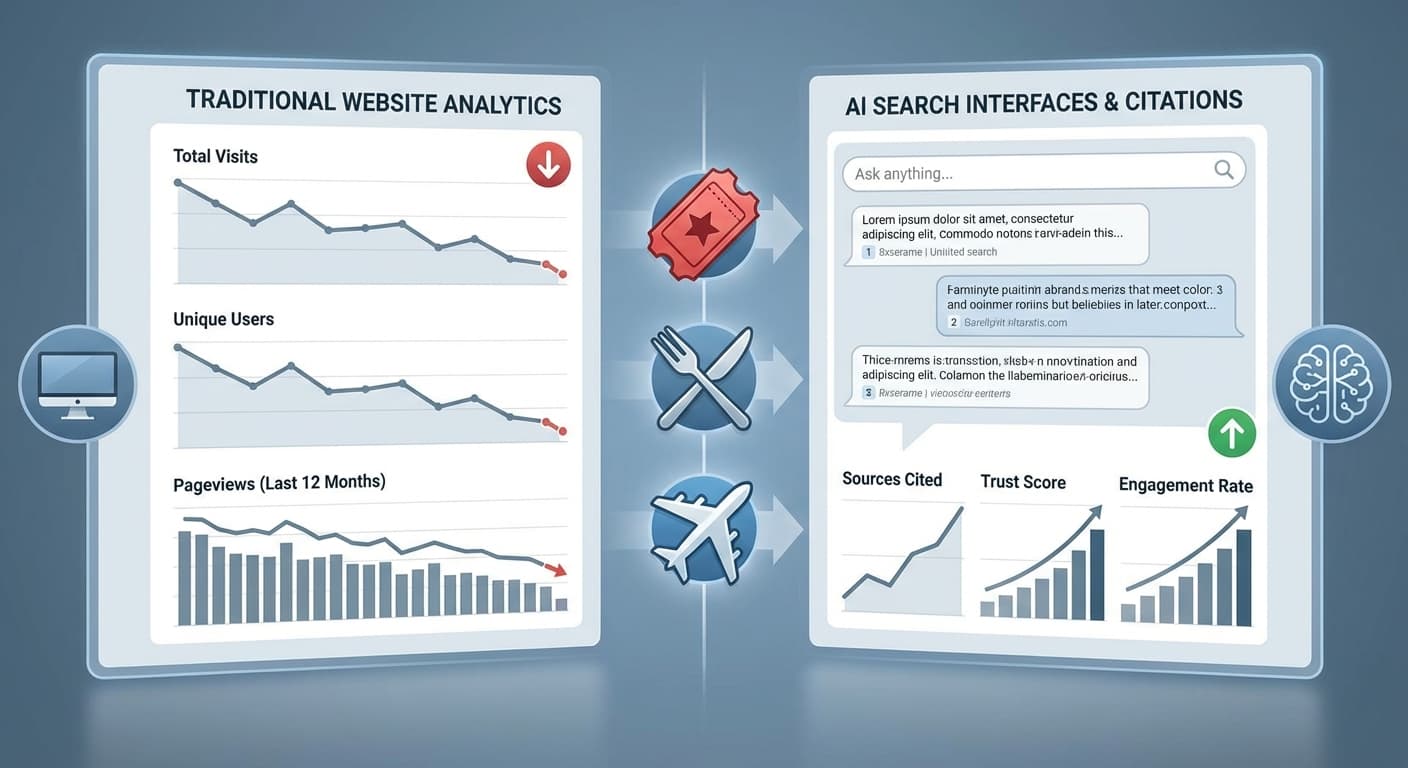
The search landscape has fundamentally shifted. In 2026, over 35% of all search queries are now processed through AI-powered engines like ChatGPT, Perplexity, Claude, and Gemini. Meanwhile, traditional Google searches have declined 18% year-over-year, with Gen Z leading the charge—73% now prefer AI search over traditional search engines.
If you're still optimizing content the same way you did in 2023, you're essentially invisible to the fastest-growing segment of search users. The old playbook of keyword density, backlinks, and page speed optimization simply doesn't apply when AI engines are interpreting, synthesizing, and citing content in entirely new ways.
The Great Search Engine Shift: How AI Changed Everything in 2025-2026
The numbers tell a stark story. ChatGPT alone now processes over 600 million queries weekly, while Perplexity has grown 340% year-over-year. But this isn't just about user adoption—it's about a fundamental change in how information is discovered, processed, and presented.
The Death of the Blue Link Era
Traditional search engines served up a list of links. AI search engines serve up direct answers, complete with citations and sources. This shift means:
Why Traditional SEO Tactics Are Failing in the AI Era
The fundamental problem is that traditional SEO was designed for algorithms that crawl and rank web pages. AI search engines don't just crawl—they understand, synthesize, and reconstruct information. Here's what's no longer working:
#### 1. Keyword-Stuffed Content
AI engines can detect when content is optimized for keywords rather than humans. They actively deprioritize content that feels robotic or overly optimized. In fact, pages with keyword densities above 2.5% see 67% fewer AI citations than naturally written content.
#### 2. Shallow, Clickbait-Style Articles
AI engines prefer authoritative, comprehensive content that actually answers questions thoroughly. The average cited article in 2026 is 2,100 words—nearly double the traditional SEO "sweet spot" of 1,200 words.
#### 3. Traditional Link-Building Strategies
While backlinks still matter for traditional SEO, AI engines focus more on content quality, semantic richness, and how well your content serves as a reliable source. Guest posting for links is far less effective than creating genuinely citable content.
#### 4. Technical SEO Over Content Quality
Page speed and mobile optimization are table stakes, but they won't get you cited. AI engines prioritize content that demonstrates expertise, provides unique insights, and offers practical value.
The New Rules of AI Search Optimization (ASO)
AI Search Optimization requires a completely different approach. Instead of optimizing for crawlers, you're optimizing for language models that need to understand, trust, and cite your content.
Rule 1: Optimize for Understanding, Not Keywords
AI engines excel at understanding context and intent. Instead of targeting specific keywords, focus on:
Rule 2: Write for Citations, Not Rankings
The goal isn't to rank—it's to be cited as a reliable source. This means:
Rule 3: Structure Content for AI Consumption
AI engines prefer content that's easy to parse and understand. This includes:
Essential ASO Strategies That Actually Work in 2026
Strategy 1: The Question-Cluster Approach
Instead of targeting single keywords, identify question clusters—groups of related questions your audience asks. Create comprehensive content that addresses 5-7 related questions in depth.
For example, instead of writing "How to optimize for ChatGPT," create a comprehensive guide covering:
Strategy 2: Authority Through Depth and Specificity
AI engines favor content that demonstrates clear expertise. This means:
Strategy 3: Conversational Optimization
Since users interact with AI engines conversationally, optimize for natural language:
Strategy 4: Multi-Format Content Strategy
AI engines can process various content types, so diversify your approach:
Tools like Citescope can help you analyze how well your content performs across these different dimensions, providing a GEO Score that measures AI interpretability, semantic richness, conversational relevance, structure, and authority.
Strategy 5: Citation-Worthy Data and Research
Create content that serves as a primary source:
Future-Proofing Your Content for Next-Gen AI Search
As AI search continues evolving, several trends will shape the future of content optimization:
Trend 1: Increased Personalization
AI engines are becoming better at understanding user context and personalizing responses. This means:
Trend 2: Real-Time Information Integration
Next-generation AI search will increasingly incorporate real-time data. Future-proof your content by:
Trend 3: Voice and Multimodal Search
As voice search and multimodal AI become more prevalent:
Trend 4: Increased Source Verification
AI engines are becoming more sophisticated at evaluating source credibility:
How Citescope Helps Master AI Search Optimization
Transitioning from traditional SEO to AI search optimization requires new tools and metrics. Citescope addresses this need by:
Whether you're starting with the free tier (3 optimizations per month) or scaling with Pro ($39/month), Citescope provides the insights and tools needed to succeed in the AI search era.
The Bottom Line: Adapt or Become Invisible
The shift to AI search isn't coming—it's here. Content creators who adapt to these new realities will capture an increasingly large share of search traffic and citations. Those who stick to traditional SEO tactics will find themselves competing for a shrinking piece of the pie.
The good news? The principles of AI search optimization—creating genuinely helpful, comprehensive, well-structured content—align with what users actually want. By focusing on value over optimization tricks, you'll not only improve your AI search performance but also build a more engaged, loyal audience.
Ready to Optimize for AI Search?
The transition from traditional SEO to AI search optimization doesn't have to be overwhelming. Citescope provides the tools, insights, and optimization features you need to succeed in the AI search era. Start with our free tier to optimize your first three pieces of content, then scale as you see results. The future of search is here—make sure your content is part of it.